"Chicano writers from El Paso are the most progressive, open-minded, far-reaching, and inclusive writers of them all."

Octavio Romano

Thursday, February 10, 2011

St. Scholastica Day Riot and Town and Gown


St. Scholastica Day Riot and Town and Gown
656 Anniversary of the St. Scholastica Day Riot brings Town and University Relations into Perspective

Town and Gown

Attending a commuter college like UT El Paso, I admit that it is not the college experience that one will get in a college town. Midway through my Bachelors, I visited CU Boulder and was enthralled with the college town. I applied, was accepted, but the question of money kept me from attending. By then UTEP had grown on me. It was not until law school in Lawrence, Kansas did I get to experience a college town: the real town and gown.
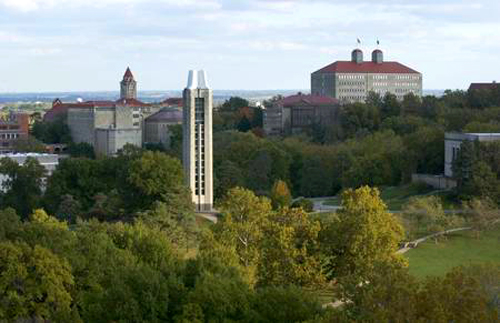
Mt. Oread, Lawrence, Kansas


The Peoples Republic of Lawrence, as some Kansas conservatives called it, or as some leftist call it with a wink of their left eye. Lawrence had a local Anarchist collective and bookstore and for God sakes, if anti-war protesters burned down the union and ROTC building during the Anti-Vietnam War Movement, it had to be good. It is a nearby Mt. Oread neighborhood that is keeps a watchful eye on KU as the university covets thy neighbor's property.

Get Ready to Rumble

However, one should not get to comfortable in a college town. Disputes between the community and the university are constant and they are nothing new. Landowners living on the edge of the university are always attentive to the universities future desire for their land.
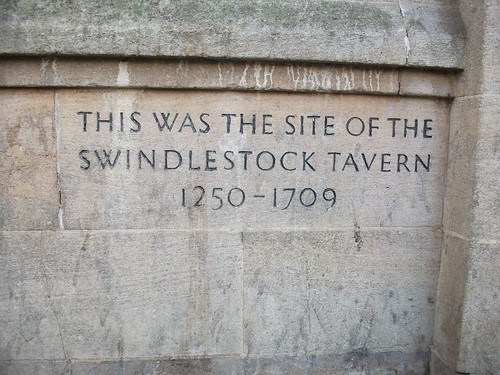


On February 10, 1355, town and gown relations were taken to an extreme in Oxford, England. As with most modern college riots, it all began in a bar, or tavern (bar sound too American). In Swindlestock Tavern, two students complained about the quality of the drinks. Words led to insults and insults led to blows and, of course, I'm not talking about the sexual ones: the students threw their drinks at the taverner's face and beat him.

The Oxford mayor's request that the university's chancellor arrest the students was to no avail. Students who supported the beer-throwing scholars, 200 in number, attacked the mayor and others. For two days, Oxford rioted leaving 63 scholars and 30 locals (mas o menos) dead. The town finally got the upper hand, defeating the students.

Later, the dispute was settled in the university’s favor. Under the settlement, annually, on Feb. 10, the mayor of Oxford and councilors had to march bareheaded through the streets. Furthermore, they had to pay the university a fine of one penny for every scholar killed during the riot. This would occur annually for the next 470 years until 1825, when the mayor that year finally refused to participate. In 1955, Feb. 10, the town and the gown commemorated the St. Scholastica Day Riot giving the mayor an honorary degree and the Vice-Chancellor was made an Honorary Freeman.

Some of histories Gown-Town Altercations

I've read two histories about the founding of Cambridge. One was that it was founded because a dispute between Oxford scholars. A group of Oxford scholars finally left and founded Cambridge. The other version says that the dispute was between town and gown. It was locals and some scholars forcing other scholars to flee. Others say the scholars left on their own accord like the Paris Student Strike of 1229 (see below).


1229 University of Paris

A riot started by students at the University of Paris caused the university to leave Paris for two years. During this time in Europe, students were typically young, entering at age 13 or 14 and staying at the university for 6 to 12 years. 

14th Century depiction of students in Paris


The students wore clergy wardrobe and shaved their heads like monks. During a Mardi Gras-like festival called Shrove Tuesday, students were drinking and a fight broke out between students and a tavern owner. 

Unlike Oxford, this did not involve bad drinks, but the bill. The students were beaten and thrown out of the tavern. Students, with their numbers swelled, returned the next day for vengeance. The student mob broke into the tavern, beat the perpetrators from the night before, and destroyed the tavern. A subsequent riot erupted in the streets.

As the university was under the jurisdiction of the church, the students considered like clergy, the students could not be brought into the government courts and had to be taken to Pope's courts. These courts were reluctant to charge the students. 

Finally, the regent of France (the French king was a kid at this time), demanded something be done about the students and the university finally authorized the Paris police to punish the rioters. Some police later killed some students and the university responded by striking. Students were transferred to other universities, and classes ceased in Paris. The so-called “student quarter” of Paris began to suffer economically.

The Pope would intervene (the Pope was a University of Paris alumnus) granting the university independence from local authority, either ecclesiastical or secular. The university would return to Paris after two years.

14th Century Lisbon

Scholars at the University of Lisbon in Portugal left Lisbon and went to Coimbra over a dispute. The scholar later returned to Lisbon.

Riots can get you into Yale - 18th Century

In 1701, the president of Yale in New Haven, Connecticut, began hosting Sunday services for students on campus as opposed to having the students attend church in New Haven. The president did not like one the local preacher's theology. This alienated many Connecticut clergy and so has been the relationship between New Haven and Yale. 


In 1806, a riot erupted between Havener sailors and Yale students. This one involved weapons. In 1841, Yale students clashed with the local fire department. The student attacked the firehouse and destroyed equipment. New Haveners then threatened to burn the college. The military had to be sent in to maintain peace. 

In 1854, a fight brewed up between New Haveners and Yale students in a theater resulting in the stabbing of the town leader. New Haveners brought two militia canon and aimed it at Yale, but were stopped by law enforcement before cannonballs could demolish at Yale.

Of recent, and I mean the 20th Century, serviceman returning from World War I attacked the campus after they thought they were being insulted by students. The gates of the university were locked so the serviceman broke windows before moving into the town to riot breaking windows of theaters and restaurants. They also assaulted any student they could find. 

In 1959, a snowball fight on New Haven's Streets erupted into a brawl in which police had to break up. Students would pelt the police with snowballs -- and it wasn't even the 60s.

Now, I won't get into student protest as this mostly involves student-on-university disputes as opposed to student/college-town disputes. Similar to the historic Oxford and Paris riots, most modern rampages have involved alcohol.

Boulder Disputes

Boulder, Colorado was the location of a beer riot by students upset over stricter enforcement by police of bars checking identification at bars to cut down on under-age drinking. Furniture was burned on the streets, beer bottles were thrown. 

Riot in Kingston, Canada


Queen's University (Kingston, Canada) had a similar incident of a party escalating into a riot. In 1995, 1,500 party goers showed up to Ezra Street in Waterloo, Ontario (location of Wilfrid Laurier University). Resulting from the alcohol consumption, a riot erupted resulting in 42 arrests. One woman was hit by a piece of concrete and a man was run over by a jeep.

50 Years of Town vs. Gown

An example of a town and gown conflict that has not involved violence but over 50 years of disputes, is the City of Washington and Washington and Jefferson College in Pennsylvania. In the late 60s, master plans called for the campus to expand into Washington neighborhoods and the university would purchase new homes in the area as they became available. 

One neighborhood got itself named a historic district to combat the university's expansion. Meetings about expansion would culminate into shouting matches between residents and university officials. 

In the 1990s, the city council defeated a proposal to close some streets around the campus. Later, the city tried to remove the university tax-exempt status. In 1995, the city tried to enact a service fee for municipal services, a services fee targeted at students. 

In 1998, a new president would try to foster better relation between the city and the university, producing a Blueprint for Collaboration. However, strife was not over as in 2008, the university wanted to purchase an alleyway that ran through campus. The purchase was blocked by city council, but later the city gave the alleyway to the school.

Gym Crow

In the 1960s, one incident between town and gown did not involve students against university, but student assisting the community. Columbia University wanted to construct a gymnasium in a Harlem public park. The proposed design had a “back door” entrance for blacks. It was quickly labeled “gym crow” by Harlem residents and Columbia students. 

Columbia University


Furthermore, others were against the appropriation of public park land in Harlem when Harlem residents would only get limited access to the gym. Several protests by the community and students would follow. Since 1958, Columbia University has evicted more than 7,000 Harlem resident from Columbia-owned property.

Mardi Gras in New Ore... no San Luis Obispo

In San Luis Obispo, there have been town and gown conflicts over the annual Marti Gras celebration. The city is a popular state-wide destination for the Marti Gras festivities and in 2004, the city tried to end public celebrations.

Police move in on Marti Gras Celebration in San Luis Obispo

Previous Marti Gras had small-scale parties that evolved into large celebrations attracting thousands. In 2004, a riot erupted between party goers and police. After parties were shut down, an estimated 5,000 people rioted. Two hundred people were arrested and the police had to use crowd control tactics to break up the crowds. The city would later triple fines for specific ordinance during Marti Gras, especially alcohol-related offenses, underage drinking, public nudity among others. A bill was later introduced to the California legislature that called for the dismissal of any student convicted of breaking the penal code. The estimated cost of policing these celebration has come out to over $1,000,000 for San Luis Obispo.

So one should not get so comfortable, whether they be students, as locals may get fed up; or if they be locals, the students may get fed up. So when thinking about canceling a Cesar Chavez Holiday, not funding a Chicano Studies Program, better think twice. 

As for the town – make sure to serve good beer.


Bookmark and Share

Wednesday, February 09, 2011

Top Blog Posts on a Chicano Writer Blog for Jan. 2011


Top 7 Blog Posts from a Chican@ Writer Blog 
in January 2011

Bueno, I've been taking some time to read through blogs of some Chican@ writers of late and I've been coming across some beautiful stuff. So I made a "Top 7 List" of posts on blogs of Chican@ writers for January 2011. I limited my rating to posts from Chicano Writers themselves, so here it goes (congrads to oh hells nah blog for having three post make the list):

Top 7 Blog Posts from a Chican@ Writer Blog 
in January 2011

7. A Note From Quetzalcoatl Sandoval, The Chicano Poet Blog (Reyes Cardenas)

An intriguing inside information on a Chicano in space.

6. A Very Brief History of Chocolate, on the oh hells nah blog

A yes, our people invented the stuff rant.


"Yikes, someone give her butter!"


 Spare parts and Plastic

3. Noche de reyes/12th night, Rafael Jesús González Blog

A delightful 12th night poem.

2. Jack Johnson Breakdown, on the Dialectical Migrations Blog (Sheryl Luna) 

An honest and straightforward meditation from an award-winning poet.

1. Satan's Billboards, on California Poet Blog (Roberto Vasquez)

A Humorous look at the Satanic

There are probably more Chican@ writer blogs out there. Well, let me step back, there are many out there, but they are not posted much. So for February, let us know of your blog or of others we should be paying attention to. We ask it be the author's own blog.


Bookmark and Share

Tuesday, February 08, 2011

New Books Non-Fiction for Feb 2011 - Topic: Cuba, Latinos, Honduras


New Non-Fiction Titles for February 2011 - Topics: Latinos, Honduras, Cuba
Share

[Kindle Edition]
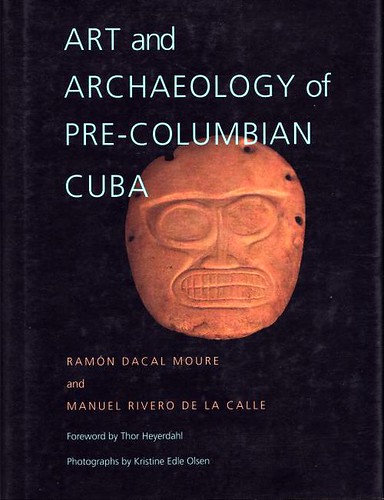
Ramon Dacal Moure (Author), Manuel Rivero De La Calle (Author)
Format: Kindle Edition File Size: 2232 KB
Print Length: 160 pages
University of Pittsburgh Press; 1 edition (January 3, 2011)

The first report of archaeological findings in Cuba since 1959 and the first synthesis of Cuban prehistoric art and archaeology since Mark Harrington’s Cuba Before Columbus, published in 1921. More than one hundred photographs reveal the superb artistry of the Pre-Columbian Ciboney and Taino cultures and give the reader a deep appreciation of these early Cubans.


[Paperback] University of Arizona Press February 1, 2011
ISBN-10: 0816529086 ISBN-13: 978-0816529087
Jon Wolseth (Author)

In urban Honduras, gun violence and assault form the pulsing backdrop of everyday life. This book examines the ways that young men and women in working-class neighborhoods of El Progreso, Honduras, understand and respond to gang and gun violence in their communities. Because residents rely on gangs and Catholic and Evangelical Protestant churches to mediate violence in their neighborhoods, these institutions form the fabric of society.
While only a small fraction of youths in a neighborhood are active members of a gang, most young men must learn the styles, ways of communicating, and local geography of gangs in order to survive.

Due to the absence of gang prevention programs sponsored by the government or outside non-governmental organizations, Catholic and Pentecostal churches have developed their own ways to confront gang violence in their communities. Youths who participate in church organizations do so not only to alter and improve their communities but also to gain emotional and institutional support.

Offering firsthand accounts of these youths and how they make use of religious discourse, narrative practices, or the inscription of tattooed images and words on the body to navigate dangerous social settings, Jesus and the Gang is an unflinching look at how these young men turn away from perpetuating the cycle of violence and how Christianity serves a society where belonging is surviving.

This book will appeal to readers with an interest in Latin American studies, urban anthropology, and youth studies. With its focus on the lives of young men and women, it's also a compelling read for anyone interested in the plight of urban youth trying to escape the gang life.


Hardcover University of Arizona Press February 1, 2011
ISBN-10: 0816529264 ISBN-13: 978-0816529261
Ignacio López-Calvo

Los Angeles has long been a place where cultures clash and reshape. The city has a growing number of Latina/o authors and filmmakers who are remapping and reclaiming it through ongoing symbolic appropriation. In this illuminating book, Ignacio López-Calvo foregrounds the emotional experiences of authors, implicit authors, narrators, characters, and readers in order to demonstrate that the evolution of the imaging of Los Angeles in Latino cultural production is closely related to the politics of spatial location.

This spatial-temporal approach, he writes, reveals significant social anxieties, repressed rage, and deep racial guilt.
Latino Los Angeles in Film and Fiction sets out to reconfigure the scope of Latino literary and cultural studies. Integrating histories of different regions and nations, the book sets the interplay of unresolved contradictions in this particular metropolitan area.

The novelists studied here stem from multiple areas, including the U.S. Southwest, Guatemala, and Chile. The study also incorporates non-Latino writers who have contributed to the Latino culture of the city.

The first chapter examines Latino cultural production from an ecocritical perspective on urban interethnic relations. Chapter 2 concentrates on the representation of daily life in the barrio and the marginalization of Latino urban youth. The third chapter explores the space of women and how female characters expand their area of operations from the domestic space to the public space of both the barrio and the city.

A much-needed contribution to the fields of urban theory, race critical theory, Chicana/o-Latina/o studies, and Los Angeles writing and film, López-Calvo offers multiple theoretical perspectives--including urban theory, ecocriticism, ethnic studies, gender studies, and cultural studies-- contextualized with notions of transnationalism and post-nationalism.


(Counterpoints: Studies in the Postmodern Theory of Education) [Paperback]
Peter Lang Publishing; First printing edition February 14, 2011
ISBN-10: 1433105470 ISBN-13: 978-1433105470

Ghosts of No Child Left Behind politically situates curriculum within a historically and critically informed context to understand structural forces that have contributed to the creation of a population of adolescents who read below a 3rd grade level equivalent. 

This analysis additionally proposes a reconceptualization of literacy curriculum within a critical discourse to facilitate self-actualizing pedagogy for non-reading adolescents — some of whom are incarcerated.
Rooted in a complex understanding of teaching, learning, and knowledge, this book presents vital information to policymakers, administrators, and educators for improving literacy instruction, curriculum, and policy.

It can also inform the general public, especially parents, so that they may advocate for an educational infrastructure that promotes empowering literacy development for every student, including non-reading adolescents and younger struggling readers. 

This book is a phenomenal resource in teacher education courses focusing on literacy, critical pedagogy, policy, bilingual education, special education, and issues in urban education.


[Hardcover] Palgrave Macmillan February 1, 2011
ISBN-10: 0230109373 ISBN-13: 978-0230109377
Juan R. Valdez

How did all things African disappear from Santo Domingo? How did a white Hispanic identity instead come to dominate the country’s collective consciousness? Why did Dominican intellectuals, in trying to create a free and modern society and shield their country from North American imperialism, reengage Spanish neocolonialism?


In an effort to explore these questions, the author analyzes and discusses the socio-historical meanings and implications of Pedro Henríquez Ureña’s (1884-1946) writings on language.

This important twentieth century Latin American intellectual is an unavoidable reference in Hispanic Linguistics and Cultural Studies and his texts make us confront the ideological underpinnings of language, race, and identity in the context of Latin America and the pan-Hispanic community.

[Hardcover]
Routledge; 1 edition February 1, 2011
ISBN-10: 0415875064 ISBN-13: 978-0415875066
Nancy Lopez

There are roughly 45 million Latina(o) people living in the United States today and immigration scholars agree that the population of undocumented immigrants in the U.S. is around 12 million today, many of whom are of Hispanic origin. Immigration scholars also agree that a major unanswered question for the future of U.S. society is how well the children of these population groups will "make it" in the educational system and therefore begin to move up the socio-economic ladder. 

Will their "achievement" in the educational system parallel the experience and success of other immigrant groups of generations past? Or will many of these children experience much higher drop-out rates and if so, with what consequences? And are there policy options to prevent this from happening? Those are the very important issues this book will explore.


Paperback- Wadsworth Publishing; 1 edition February 25, 2011
ISBN-10: 0618470441 ISBN-13: 978-0618470440
Michele Guzman (Author), Nicolas Carrasco (Author), Devika Dibya Choudhuri (Author), Azara Santiago-Rivera (Author) 

Devika Dibya Choudhuri is a licensed professional counselor with more than 15 years of experience working with clients individually, as well as in couples, families, and groups. An associate professor at Eastern Michigan University, she serves as a trainer, coach, consultant, and frequent presenter on diversity and ethical issues.
She also teaches in the graduate counseling program in the community counseling field in courses such as cross cultural counseling, advanced multicultural counseling, counseling skills, group work, couple and family, and counseling women. Her research and publications have focused on the areas of multicultural client issues, counselor supervision, and pedagogy. 

Clinically, Dr. Choudhuri specializes in cross cultural and diversity issues, as well as trauma, assault, and abuse. She carries the National Certified Counselor credential as well as the Approved Clinical Supervisor. Her clinical experience has been in agency and university settings, working with refugee populations, sexual assault and abuse survivors, and immigrant and multicultural populations. 

She received her master's in counseling from the University of Vermont and her Ph.D. in counselor education and supervision from Syracuse University.


Paperback NYU Press February 8, 2011
Language: English
ISBN-10: 0814740901 ISBN-13: 978-0814740903
Paul Smokowski (Author), Martica Bacallao (Author)

Although the United States has always been a nation of immigrants, the recent demographic shifts resulting in burgeoning young Latino and Asian populations have literally changed the face of the nation.

This wave of massive immigration has led to a nationwide struggle with the need to become bicultural, a difficult and sometimes painful process of navigating between ethnic cultures.
While some Latino adolescents become alienated and turn to antisocial behavior and substance use, others go on to excel in school, have successful careers, and build healthy families. 

Drawing on both quantitative and qualitative data ranging from surveys to extensive interviews with immigrant families, Becoming Bicultural explores the individual psychology, family dynamics, and societal messages behind bicultural development and sheds light on the factors that lead to positive or negative consequences for immigrant youth. 

Paul R. Smokowski and Martica Bacallao illuminate how immigrant families, and American communities in general, become bicultural and use their bicultural skills to succeed in their new surroundings The volume concludes by offering a model for intervention with immigrant teens and their families which enhances their bicultural skills.


(Latinos in the United States) Paperback
Michigan State University Press February 2011
ISBN-10: 0870139967 ISBN-13: 978-0870139963
Ruben O. Martinez (Editor) 

Over the past twenty years, the Latino population in the Midwest has grown rapidly, both in urban and rural areas. As elsewhere in the country, shifting demographics in the region have given rise to controversy and mixed reception.
Where some communities have greeted Latinos openly, others have been more guarded. Despite their increasing presence, Latinos remain the most marginalized major population group in the country.

In coming years, the projected growth of this population will require greater attention from policymakers concerned with helping to incorporate them into the nation’s core institutions. 

This eye-opening collection of essays examines the many ways in which an increase in the Latino population has impacted the Midwest — culturally, economically, educationally, and politically.

Drawing on studies, personal histories, legal rulings, and other sources, this book takes an interdisciplinary approach to an increasingly important topic in American society and offers a glimpse into the nation’s demographic future.


Paperback Stylus Publishing (February 2011)
ISBN-10: 1579224644 ISBN-13: 978-1579224646
Michael Cuyjet (Editor), Mary F. Howard-Hamilton (Editor), Diane L. Cooper (Editor)

As the diversity of the students on campus increases, the importance for everyone in authority to understand students’ distinct cultures and how they perceive our institutions, and equally, to understand our own privilege, and often unconscious cultural assumptions, has never been greater.
This book presents a comprehensive set of resources to guide students of education, faculty, higher education administrators, and student affairs leaders in creating an inclusive environment for under-represented groups on campus.

It is intended as a guide to gaining a deeper understanding of the various multicultural groups on college campuses for faculty in the classroom and professional staff who desire to understand the complexity of the students they serve, as well as reflect on their own values and motivations.

The contributors introduce the reader to the relevant theory, models, practices, and assessment methods to prepare for, and implement, a genuinely multicultural environment. Recognizing that cultural identity is more than a matter of ethnicity and race, they equally address factors such as gender, age, religion, and sexual orientation. In the process, they ask the reader to assess his or her own levels of multicultural sensitivity, awareness, and competence.

The book approaches multiculturalism from three perspectives, each of which comprises a separate section: awareness; cultural populations; and cultural competence practice.

Section One defines multiculturalism and multicultural competence, considers changing student demographics, explores the impact environment has on culture, and provides the readers with criteria for assessing their cultural competence and awareness of their own racial identity.

Section Two addresses the cultural characteristics of specific ethnic or cultural populations, emphasizing their commonalities, and describing programs and practices that have successfully promoted their development. Each chapter includes discussion questions, and/or suggested activities that practitioners can undertake on their own campuses.

Individual chapters respectively cover the culture and experiences of African Americans, Asian and Pacific Island Americans, Latinas/os, Native Americans, biracial and multiracial students, the disabled, international students, non-traditional students, students of faith, women, lesbian, gay, bisexual, and transgender students, and analyze White Americans’ attitudes to issues of privilege, racial identity, and social justice.

The inclusion of a chapter on the cultural characteristics of White students provides an opportunity for members of the majority culture to perceive of themselves in a cultural sense, and to appreciate their own culture as a first step in allowing them to recognize and appreciate other cultures.

The concluding section offers suggestions on how to use the book’s insights to achieve systemic change in the college environment.

The book is intended as a text for students, and as a practical guide for faculty, academic administrators, student affairs professionals, and others who want to foster an environment in which all students can succeed. It includes case studies, discussion questions, examples of best practice, and recommends resources to use in the classroom.


Hardcover Peter Lang Publishing; First printing edition February 28, 2011
ISBN-10: 1433112531 ISBN-13: 978-1433112539
Rhina Toruño-Haensly (Author, Editor)

Crossing Cultures/Cruzando culturas focuses on the creation of literary works and how these works reflect the life experiences of the authors. The purpose of this book is to inspire young Mexican-American, Hispanic, and Latino people by demonstrating that education is the key to life through the example of authors who have become successful in spite of their modest beginnings. 

Their love for education and their drive to improve themselves has turned them into nationally and internationally known authors recognized by major publishing companies. Their books in English have been translated quickly into other languages. 

The interviews reveal not only the authors' origins but also how they were able to overcome difficulties and challenges in their lives. The interviewed novelists include Mario Bencastro, Aristeo Brito, Rolando J. Diaz, Graciela Limon, and Demetria Martinez. Interviews conducted in English with Mexican-American writers are included in their original English version along with a proper Spanish translation. 

This book comprises a valuable resource for university students who are pursuing a degree in Spanish, Chicano studies, and ethnic studies that facilitates understanding the various dynamics of the Hispanic experience through literature.


[Two volumes] [2 volumes] (Child Psychology and Mental Health)
[Hardcover] Praeger February 28, 2011
ISBN-10: 0313382964 ISBN-13: 978-0313382963
Natasha Cabrera (Author), Francisco A Villarruel Ph.D. (Author), Hiram E. Fitzgerald (Author)

What effect does growing up in an ethnic minority and perhaps in an immigrant family have on development? That is the overarching question Latina and Latino Children's Mental Health sets out to answer. The work examines all of the myriad physical, psychological, social, and environmental factors that undermine or support healthy development in Latino American children, from biology to economics to public policy.
The first volume of this two-volume set focuses on early-life experiences and the second on youth/adolescent issues, treating such topics as children's development of a sense of self, development of linguistic skills, peer relationships, sexual orientation, and physical development. 

The work analyzes familial relationships, often an important resource that helps young people build resilience despite the stresses of migration. And it looks at patterns of behavior, social status, and social-goal orientations that differentiate Latino/a children and adolescents from their African American and European American peers.


(Studies in Medical Anthropology) Hardcover
Rutgers University Press January 21, 2011
ISBN-10: 0813548926 ISBN-13: 978-0813548920
Sabrina Marie Chase (Author) 

Surviving HIV/AIDS in the Inner City explores the survival strategies of poor, HIV-positive Puerto Rican women by asking four key questions: 
  • Given their limited resources, how did they manage an illness as serious as HIV/AIDS? 
  • Did they look for alternatives to conventional medical treatment? 
  • Did the challenges they faced deprive them of self-determination, or could they help themselves and each other? 
  • What can we learn from these resourceful women? 
Through an exploration of life and death among these resourceful women, the book provides the groundwork for inciting positive change in the U.S. health care system


(Journeys to Leadership Series) Paperback
Stylus Publishing February 2011
ISBN-10: 1579223532 ISBN-13: 978-1579223533
Mimi Wolverton, Salwa A. Zaki, Esther Elena López-Mulnix

Latinas in the Workplace highlights the stories of eight exceptional women. It is the third book in the Journeys to Leadership series that features stories about extraordinary women who have found paths to success in male-dominated arenas.
Even though each took a different route to success, these women share an overarching, almost implicit, understanding of what they aspired to: the freedom to choose where and how to invest time and energy, to establish professional and personal balance, and enjoy the luxury of defining that balance.

Despite their different professional aspirations, their journeys are rooted in similar ground tilled long before they entered the work world — a strong sense of family, influential religious traditions, and formidable ties to their cultural heritage.

The eight Latinas showcased in this book – a foundation president, two business CEOs, a doctor, a former college president, a teacher and author, and two school superintendents – grew up with a determination to get educated that was fostered by parents and grandparents.

All of them hold advanced degrees. Engrained in each of them is a sense of honor, the need to treat others with respect, and an inner strength — qualities nurtured by family members.

While each had to contend with negative forces, whether from within or outside their culture, and drew strength from the experience, they also acknowledge that being able to navigate two cultures, and being bilingual, has given them a unique perspective and two distinct ways of dealing with people.

Although Latinos constitute one of the fastest growing segments of our population, these Latina leaders represent a relatively small percentage of women in leadership in the United States. They hope that their stories inspire not only their contemporaries but the next generation of Latinas as well.


Bookmark and Share

Monday, February 07, 2011

Lunes con Lalo: Some Not Too Objective Observations on The Movement and the Drug Cult


Painting by Emmanuel Martinez of Abelardo and Dolores Delgado

Lunes con Lalo Delgado
from The Chicano Movement: Some Not Too Objective Observations

The Movement – Drug Cult – Crime

by Abelardo "Lalo" Delgado
The decoys for real movement involvement are many, and the abuses in the name of the Chicano Movement, many more. Mistaking liberation with freedom to abuse is not peculiar of us Chicanos only. All other ongoing movements have their share of phonies and pseudo-involved, semi-committed plagiarists. 

Among us, then, are some who think that being Chicanos, declaring ourselves free, will absolve us from any social responsibilities. The contrary is true. By being Chicanos, and by being in the movement, more obligations must be shouldered. 

We do not with to go back to the old pachuco battles in which we unleashed our frustrations of living under the dominance of an Anglo culture where we wished to remain intact in our own world by blowing pot, sniffing glue, hitting the needle, popping pildoras (pills), or organizing gangs to knife one another.

We are still, however, doing these things to a letter degree, but trying to do them in the name of the Chicano Movement just won't go. We do not disclaim those Chicanos; for one of the characteristics of the movement is trying to embrace all Chicanos, but efforts are being made, and must continue, to get these Chicanos away from dope and crime, and to join the movement.

Some rationale is even given to shoplifting in relation to the movement. We say we are not shoplifting, but “liberating.” While this may sink with some of us, it gives a wrong impression of the movement and accomplishes what I call losing ourselves in the quest, so that when we find what we are looking for, we have lost ourselves. 

It is, however, simple to understand that those bent on crime, who do their thing for mere “kicks” or with little purpose, would do better to risk their lives for something more meaningful.

When another rationale is explained for using drugs, I cannot help bu show how square I really must be in, failing to see it their way. They claim that because Indian tribes used drugs to get a high in their spiritual rites, we, the direct descendants of those tribes, can go ahead and do likewise. If the rationale applies, then we are kind of phony, for we fail to want to emulate many of the other men-things the Indians did. 

It isn't that I'm launching an anti-dope movement and using this chapter to preach it, but I have seen much in my thirty-nine years that tell me that those choosing to serve the drug cult serve very little else. A hooked guy is not good to the movement, for his every action is directed in keeping his vicio (habit) well supplied, and he would not hesitate putting movement matters second or betraying his carnales.

The movement calls for priest-like dedication, in which even families must take a second place. It is that serious, and one can do very little else. The question of grass I one that has me puzzled, and I cannot offer a suggestion on something I am not sure about myself. I know many movement people who use the weed, and are neither dependent on it nor interrupted in their quest for justice. The pot question is being presently scientifically debated as being injurious or leading to hard stuff, and the only hang-up is the legal one. 

I may say this, “if you are in the movement and can afford to take time out to fight a 'bust' for grass, pay the fine, or discredit the movement in the eyes of the jefitos, then, it is green light for you.” Most of us know that the vast majority of Chicanos are prudish when it comes to this and take no second looks; but go on to condemn blindly even good “Grifos.”

A revolutionary act, as many would like to claim their petty crimes are, is something well thought out and noble and involves a risky sacrifice for La Causa. Few, if any, crimes committed by Chicanos fall into this category. 

The Chicano Movement, when you take a good look at what it really is, is not a very attractive thing. The movement calls for sacrifice even beyond that which most of us are already enduring. It calls for creativeness and not merely emulating others; it calls for hard work and for catching very little resting pauses here and there. It is not like the army, a two-year stretch, but a lifetime commitment.

Bookmark and Share


Other parts of this series:

Part IV Goals 
 
from The Chicano Movement: Some Not Too Objective Observations by Abelardo B. Delgado, (Denver: Colorado Migrant Council, 1971), prepared by the Colorado Migrant Council. Published with permission from the Delgado Family. Special thanks for Dolores Delgado. (c) Abelardo Delgado 1971, all right reserved. This may not be republished with out the permission of the Delgado estate.


More El Paso Writer News
Rafael Jesus Gonzalez reads at the Fronterizos in Exile reading, Dec. 29, 2010, Loft Light Studio, El Paso. Photo: Federico Villalba

Rafael Jesus Gonzalez in Riverbabble 

Rafael Jesus Gonzalez has four pieces published in Riverbabble: A Journal of Poetry, Short Fiction, and Criticism. Check them out. Also, Rafael will be reading at the Galeria de la Raze on Feb. 18. Here are the details:

LUNADA - Literary Lounge
Spoken Word * Música * Open Mic
Friday, February 18, 2011 | 7:30 pm

Lunada 2011 Spring Season Opener: "Fronteras Reales e Imaginarias/Borders Real & Imaginary" An evening of poetry, music and visual art, guest curated by César Barragán, featured poet Rafael Jesús González, and hosted by Sandra García Rivera.

The waxing Spring Season begins with an evening of poetry, music and visual art, "Fronteras Reales e Imaginarias / Borders Real & Imaginary"/Jeux Sans Frontiers / Juegos sin Fronteras./Games Without Borders" Guest Curated by César Barragán, the featured poet Rafael Jesús González, will be reading from his new book of moon poems La musa lunática / The Lunatic Muse, and visual artists Joaquín Alejandro Newman and Sean Levon Nash will be featured in a live collaboration.

LUNADA is the Bay Area's only full moon bilingual literary ritual and performance gathering. Located in the heart of the Mission District at Galería de la Raza in San Francisco, each Lunada features community poets, local legends, visiting mystics, and other mero meros of the stage. Guest curated by some of the Bay Area's most dynamic word slingers and artists, LUNADAS are community gatherings where stories, food, songs, and spirit are shared.

Open Mic sign-up at 7:15pm at the entrance. Musicians and first timers are always welcome.

Show starts at 7:30pm
$5 entrance, or FREE with food dish to share, or with Galería membership.

GALERIA DE LA RAZA
2857 24th St (at Bryant) in The Mission.
San Francisco, CA
www.galeriadelaraza.org
info@galeriadelaraza.org
415-826-8009

Granados on Education

Christine Granados is quoted in a San Antonio Current article on funding education by Roberto Ontiveros:

“Let’s set the record straight. When most people, educators, say ‘low income students,’ it’s a euphemism for Mexican-American students,” said Christine Granados, author of Brides and Sinners in El Chucho, which won her the Alfredo Cisneros Del Moral Foundation Award in 2006. “We all know and see that the Mexican-American population is growing in Texas and throughout the United States. As a matter of record and fact, Mexican-Americans are at the bottom of the wage-earning scale and are considered low income, poor, or whatever it is we’re calling the non-middle class nowadays.” READ Creativity at Ground Zero

Oscar Martinez on Treaty of Guadlupe Hidalgo

Oscar Martinez is quoted in an Arizonan Daily Wildcat article Museum displays piece of history. The article concerns a portions of the Treaty of Guadalupe Hidalgo that will be on display at the Arizona State Museum in February for its 163 anniversary (treaty). READ MORE.

Centro Victoria and Gilb

The Victoria Advocate has an article on Centro Victoria where Dagoberto Gilb is executive director. Gilb is quoted. READ IT NOW.

Paredes on new Texas law school

Raymund Paredes is quoted on a story about a new public law school in Texas: Lean times, yet 2 new law schools pitched.

Saenz on the Chicano Movement and New Award

Ben Saenz is quoted in UT El Paso Borderzine, an article that focuses on the Chicano Movement. Saenz says, "“We move forward all these years—after the civil rights movement and we talk about the Chicano Movement, but there is no movement per se. That doesn’t mean that there is nothing happening,” said Sáenz. “We want to ask ourselves, ‘Where do we stand now?’ It continues in a radically new way.” READ MORE

Saenz has won the Westchester Fiction Award for Last Night I Sang to the Monster (Cinco Puntos Press). The award honors the literary achievement of up to 10 young adult novels each year.

Bookmark and Share


Chicano Writing News
Share
Gary Soto Museum

I caught on Michael Medreno's Facebook wall that there is a Gary Soto Museum Gary Soto Musuem located in the Old Administration Building at Fresno City College.

Tragedy a la queer; New book by Lorenzo Herrera y Lozano and Friends


Our most popular posts to date has been our interview with Lorenzo Herrera y Lozano. He has a new book with Adelina Anthony and Dino Foxx called Tragic Bitches: An Experiment in Queer Xicana and Xicano Performance PoetryTragic Bitches documents the process and poetry of three queer Xicana/o artists seeking to revel and heal in the darkest and most vulnerable spaces of love, desire and loss.

Cisneros and Rice on NPR

Check out this very good interview with Sandra Cisneros and David Rice on National Public Radio's Talk of the Nation: New And Established Writers Redefine Chicano Lit. "The situation has gotten worse for us," says Sandra Cisneros.

Victor Villasenor in Wyoming

Victor Villasenor visits the University of Wyoming tomorrow, Feb. 7, at 7:30pm. Villasenor's "Rain of Gold" trilogy is now being developed for a seven-part HBO miniseries. READ MORE.

Barrio Writers Program

Sarah Rafael Garcia, an author and founding director of the Barrio Writers program in Santa Ana and Anaheim, was honored recently by the Orange County Board of Education and Superintendent of Schools with an Outstanding Contributions to Education Award.

Chicana Jane Austen Take

I saw previews of "Prada to Nada" which is suppose to be a take on Jane Austen's Sense and Sensibility. Read more.

Monton on Montoya

A nice feature on Malaquias Montoya. "Montoya’s art blends a brutal toughness and a desperate compassion in dealing directly with political themes — torture as an instrument of U.S. foreign policy (plus the denials that we engage in torture — one piece uses the actual words of someone accused of torturing detainees at Abu Ghraib who said “we’re just softening them up for interrogation”), the growing gap between rich and poor in the U.S. itself and the brutality and viciousness with which Americans, especially the military, throw their weight around the world and demand other countries bend to their will. Among the influences he cited were Mexican muralists José Clemente Orozco and David Alfaro Siquieros (two of the three great painters of the Mexican revolution who were called Los Tres Grandes — the third was Diego Rivera), along with newer artists Elizabeth Catlett and Kathe Kollwitz." Check out Chicano Arts Pioneer Takes On Globalization and War. 

Rock stuck on your arm?

Check out this American Public Media piece on Tammy Gomez: "t all started innocently enough. She was on her way out the door when she remembered something in her closet. That's when the unexpected happened." READ/HEAR MORE.
 

Bookmark and Share