"Chicano writers from El Paso are the most progressive, open-minded, far-reaching, and inclusive writers of them all."

Octavio Romano

Wednesday, April 13, 2011

New Books in April 2011 Topic: Mexico and New Acquisitions from March 2011


New Books in April 2011: Topic: Mexico
Share

All book descriptions are those of the publisher.

The Stridentist Movement in Mexico: The Avant-Garde and Cultural Change in the 1920s
Paperback Lexington Books (April 16, 2011)
ISBN-10: 0739131575 ISBN-13: 978-0739131572
Elissa Rashkin 

Stridentism (estridentismo) was a literary, artistic, and cultural movement founded in Mexico in the 1920s by poets Manuel Maples Arce, Germn List Arzubide, and Salbador Gallardo, prose writer Arqueles Vela, painters Fermin Revueltas, Ram-n Alva de la Canal, Leopoldo MZndez, and Jean Charlot, and sculptor Germn Cueto. This book is a wide-ranging study of Stridentism that emphasizes the multifaceted nature of its contributions and addresses key debates in this period of Mexican cultural history.

U.S. Economic and Trade Relations With Canada and Mexico
Hardcover Nova Science Pub Inc (April 2011)
ISBN-10: 1612094473 ISBN-13: 978-1612094472
Daniel S. Morales (Editor), Luis A. Medina (Editor) 

This book presents and discusses the economic and trade relations between the United States, Canada and Mexico. Topics discussed include Canada-U.S. relations; the United States-Canada trade and economic relationship; NAFTA and the future of commercial trucking across the Mexican border and the Cuban migration to the United States.


Hacia el Futuro: Energy, Economics and the Environment in 21st Century Mexico
(Advances in Global Change Research Series) 
Paperback Springer; 1st Edition. edition (April 4, 2011) 
ISBN-10: 9048171911 ISBN-13: 978-9048171910
Maria Eugenia Ibarrarán and Roy Boyd 

The book focuses on the impact of future energy policies on fossil fuel use, environmental quality, and economic growth in Mexico over the next 20 years. 

The first part examines the growth of the Mexican energy sector and its link to international trade, government revenues, economic welfare, income distribution and environmental pollution. The scientific linkages between greenhouse gas emissions and climate change are presented with the economic theory behind various emission abatement strategies. The authors examine the harmful effects of climate change on economic well being in Mexico and explain the role of Mexico and Latin America in current climate change negotiations.

The second part develops a dynamic Computable General Equilibrium model of the Mexican economy, paying attention to the energy sector and its linkages with other aspects of the aggregate economy. Conclusions for Mexico are placed in the wider context of the Americas. The effects of climate change policy are contrasted with that in Venezuela, Argentina and Brazil. Finally, by employing an integrated US-Mexican model the authors look at possible advantages of emissions trading between these two countries.

This book could serve as a supplemental text in a number of different classes in environmental and resource economics, development, modelling, and negotiation of international treaties. Executives from the energy sector would also benefit in the United States, Mexico, and throughout Latin America.


Mixtecs, Zapotecs, and Chatinos: Ancient Peoples of Southern Mexico
(Peoples of America Series) [Digital]Digital: 352 pages
Wiley-Blackwell (April 22, 2011)
Arthur A. Joyce 

Mixtecs, Zapotecs, and Chatinos: Ancient Peoples of Southern Mexico examines the history of the rich and complex societies that arose and flourished in the southern Mexican state of Oaxaca. 

Shortly after its founding as a hilltop epicenter of Zapotec culture in about 500 bc, Monte Albán became what is widely considered to be the first city in the Highlands of Mexico. 

Yet between 300 bc and ad 800, many other powerful urban polities developed in the disparate geographic regions surrounding the Valley of Oaxaca, including in the highland valleys of the Mixteca and lower Río Verde Valley along the Pacific Coast. 

By drawing upon the most recent archaeological, ethnographic, epigraphic, linguistic, and iconographic evidence, Mixtecs, Zapotecs, and Chatinos reveals the lengthy, complex strands of historical and cultural interactions woven among the diverse pre-Hispanic societies of Oaxaca. 

Along with comparing patterns in the settlement, art, architecture, and writing that developed in these regions, Joyce also uses contemporary social theory to challenge previous approaches and address many key problems in the archaeology of the Americas such as the rise and fall of civilizations and the role of religion and ideology in political control.

Informed by thoughtful analysis of recent evidence, anthropological breakthroughs, and ongoing fieldwork, Mixtecs, Zapotecs, and Chatinos will add clarity to the debates surrounding ancient Mesoamerican civilizations.

The Illusion of Ignorance: Constructing the American Encounter with Mexico, 1877-1920  
Paperback University Press of America (April 16, 2011)
ISBN-10: 0761853545 ISBN-13: 978-0761853541
Janice Lee Jayes

The Illusion of Ignorance examines the cultural politics of the American encounter with Porfirian Mexico as a precursor and model for the twentieth-century American encounter with the world. 

Detailed discussions of the logistics of conducting diplomacy, doing business, or traveling abroad in the era give readers a vivid picture of how Americans experienced this age of international expansion, while contrasting Mexican and American visions of the changing relationship. 

In the end, Mexico's efforts to promote Mexico as a partner in progress with the U.S. was lost to an American illusion schizophrenically divided between fantasies of American leadership toward, and refuge from, modernity. The Illusion of Ignorance argues that American ignorance of the experience of other nations is not so much a barrier to better understanding of the world, but a strategy Americans have chosen to maintain their vision of the U.S. relationship with the world.


The Last Caudillo: Alvaro Obregn and the Mexican Revolution
(Viewpoints Series) Paperback Wiley-Blackwell; 1 edition (April 26, 2011)
ISBN-10: 1405199032 ISBN-13: 978-1405199032
J?rgen Buchenau

The Last Caudillo presents a brief biography of the life and times of General Alvaro Obregón, along with new insights into the Mexican Revolution and authoritarian rule in Latin America.
  • Features a succinct biography of the life and times of a fascinating figure in Mexico's revolutionary past
  • Represents the most analytical and up-to-date study of caudillo/military strongman rule
  • Sheds new light on the networks and discourse practices that support rulers such as the Castros in Cuba and Hugo Chávez in Venezuela, and the emergence of modern Mexico
  • Offers new insights into the role of leadership, the nature of revolution, and the complex forces that helped shape modern Mexico

EVOLUCION DE LA VIVIENDA INGLESA EN TAMPICO: La influencia del modelo de vivienda inglesa en la Costa del Golfo de México
Spanish Edition Paperback Editorial Académica Española (April 1, 2011)
Language: Spanish
ISBN-10: 3844335862 ISBN-13: 978-3844335866
José Adán Espuna Mújica

Construir y modificar el medio ambiente natural se ha permeado en la conciencia de los usuarios de las vivienda, con la intención de lograr su particular concepto de comodidad. 

Como consecuencia, de la utilización cada vez mayor de aparatos electromecánicos que ayuden a atenuar los efectos del clima, ha minimizado el análisis del entorno, en donde se evalúen las ventajas de un espacio adecuado al contexto natural de la zona, trayendo como consecuencia el deterioro del medio físico y la inadecuación de la arquitectura al sitio. 

Esto trajo consigo la evolución o transformación de la vivienda, pues en aras del progreso, se han modificado los materiales constructivos, desde la utilizada en la ?arquitectura sin arquitectos?, elaborada con madera, cartón ?enchapopotado? como se le denomina en la zona a la lámina de cartón asfáltico y el ladrillo de barro, elaborado manualmente, hasta los diseños hechos por algunos arquitectos o algunas compañías extranjeras, importantes en la construcción de vivienda, como lo fue la Compañía Mexicana de Petróleo ?El Águila?, que se estableció hacia 1910 en Tampico.


A Comparison of Tomb Art: Examples from New Kingdom Egypt and Classic Period Oaxaca, Mexico
Paperback VDM Verlag Dr. Müller (April 1, 2011)
ISBN-10: 3639343204 ISBN-13: 978-3639343205
Valeri Madigan 

Many wonder about the true meaning of art in tombs. Do they all have the same meaning? Or does each culture have their own reason behind painting elaborate scenes on tomb walls that no one may ever see? 

This is a compilation of images from tombs in Egypt and Oaxaca, Mexico that relate to the specific afterlife beliefs of each respective culture. The Egyptian examples focus on what is needed to get into the afterlife and convincing the gods that an individual belongs. In contrast, the Oaxacan examples focus on convincing the ancestors to keep watch over the family after an individual is gone. 

There has not been much research on this topic before now, so this analysis should help anyone interested in learning about tomb art motifs. Also, it is hard to find any information on Oaxacan tomb art so hopefully this can be used as one source to help shed light on their particular culture.


Bartolom de las Casas and the Conquest of the Americas
[Digital]
Lawrence A. Clayton (Editor) 

This is a short history of the age of exploration and the conquest of the Americas told through the experience of Bartolomé de las Casas, a Dominican friar who fervently defended the American Indians, and the single most important figure of the period after Columbus.
  • Explores the period known as the Encounter, which was characterized by intensive conflict between Europeans and the people of the Americas following Columbus’s voyages
  • Argues that Las Casas, ‘protector of Indians,' was primarily motivated by Scripture in his crusade for justice and equality for American Indians
  • Draws on the 14 volume Complete Works of Las Casas as a window into his mind and actions
  • Encourages students to understand history through the viewpoint of individuals living it

The Carnegie Maya III: The Carnegie Institution of Washington Notes on Middle American Archaeology and Ethnology, 1940-1957
Hardcover University Press of Colorado (April 18, 2011)
ISBN-10: 1607320592ISBN-13: 978-1607320593
John M. Weeks (Author, Editor)

The third in a series of volumes intended to republish the primary data and interpretive studies produced by archaeologists and anthropologists in the Maya region under the umbrella of the Carnegie Institute of Washington's Division of Historical Research, The Carnegie Maya III makes available the series Notes on Middle American Archaeology and Ethnology.

The series began in 1940 as an outlet for information that may have been considered too unimportant, brief, or restricted to be submitted for formal publication. However, these notes are often of great interest to the specialists for whom they are designed and to whom their distribution is restricted. 

The majority of the essays-most of which are on the Maya-are on archaeological subjects, epigraphy, ethnohistory and ethnography, and linguistics. As few original copies of the Notes series are known to exist in U.S. and Canadian libraries, the book will make these essays easily accessible to students, academics, and researchers in the field.
The corresponding e-book contains the complete set of The Carnegie Maya, The Carnegie Maya II, and The Carnegie Maya III, thus making hundreds of documents from the Carnegie Institution's Maya program available in one source.


Huichol Territory and the Mexican Nation: Indigenous Ritual, Land Conflict, and Sovereignty Claims
(First Peoples Series)
Hardcover University of Arizona Press (April 1, 2011) Language: English
ISBN-10: 0816529302 ISBN-13: 978-0816529308
Paul M. Liffman

The Huichol (Wixarika) people claim a vast expanse of Mexico's western Sierra Madre and northern highlands as a territory called kiekari, which includes parts of the states of Nayarit, Jalisco, Durango, Zacatecas, and San Luis Potosí. This territory forms the heart of their economic and spiritual lives. 

But indigenous land struggle is a central fact of Mexican history, and in this fascinating new work Paul Liffman expands our understanding of it. Drawing on contemporary anthropological theory, he explains how Huichols assert their sovereign rights to collectively own the 1,500 square miles they inhabit and to practice rituals across the 35,000 square miles where their access is challenged. 
Liffman places current access claims in historical perspective, tracing Huichol communities' long-term efforts to redress the inequitable access to land and other resources that their neighbors and the state have imposed on them.

Liffman writes that "the cultural grounds for territorial claims were what the people I wanted to study wanted me to work on." Based on six years of collaboration with a land-rights organization, interviews, and participant observation in meetings, ceremonies, and extended stays on remote rancherías, Huichol Territory and the Mexican Nation analyzes the sites where people define Huichol territory. 

The book's innovative structure echoes Huichols' own approach to knowledge and examines the nation and state, not just the community. Liffman's local, regional, and national perspective informs every chapter and expands the toolkit for researchers working with indigenous communities. By describing Huichols' ceremonially based placemaking to build a theory of "historical territoriality," he raises provocative questions about what "place" means for native peoples worldwide.


The Maya World of Communicating Objects: Quadripartite Crosses, Trees, and Stones  
Hardcover University of New Mexico Press (April 15, 2011)
ISBN-10: 0826347630 ISBN-13: 978-0826347633
Miguel Angel Astor-Aguilera

Although anthropologists have been observing and analyzing the religious practices of Mayan people for about a hundred years, this perceptive study suggests that anthropological interpretation of those practices and of Maya cosmology has never escaped the epistemological influence of Christianity. 

Whereas sacred objects used in Christian rituals are treated with deifying awe, objects such as Mayan crosses can be recycled, bartered with, communicated with, manipulated, disregarded, or destroyed the apparent equivalent of extorting or defacing a holy image of Christ or the Virgin Mary. Astor-Aguilera holds that we cannot fully understand these indigenous practices by fitting them to our European Cartesian mindset but must instead recognize and try to understand native Mayan epistemology. 

The binary based western concept of religion, he suggests, is not the best framework for understanding experiential Mayan cosmology or practice. Using ethnographic, archaeological, and glyphic evidence, he traces modern Mayan attitudes toward ritually charged objects and imagery back to the Classic Maya. No scholar of Mesoamerican religion, archaeology, or history can afford to overlook this long overdue approach to a widely misunderstood subject.


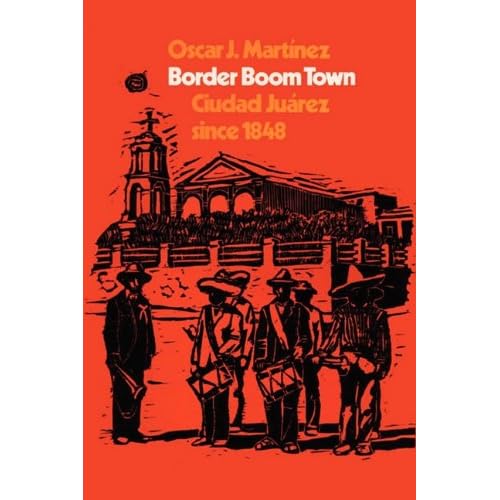
Border Boom Town: Ciudad Juárez since 1848
Paperback University of Texas Press (April 15, 2011)
ISBN-10: 0292729820 ISBN-13: 978-0292729827
Oscar J. Martíne

Bookmark and Share

Border Boom Town traces the social and economic evolution of Ciudad Juárez, the largest city on the U.S.-Mexican border and one of the fastest-growing urban centers in the world. 

Recent Acquisitions in March 2011


Randy Lopez Goes Home: A Novel
(Chicana & Chicano Visions of the Americas Series)
Hardcover Univ of Oklahoma Pr (Trd) (June 10, 2011)
ISBN-10: 0806141891 ISBN-13: 978-0806141893
Rudolfo A. Anaya

A new novel by the master storyteller that explores what it means to go home
When he was a young man, Randy Lopez left his village in northern New Mexico to seek his fortune. Since then, he has learned some of the secrets of success in the Anglo world and even written a book called Life Among the Gringos. But something has been missing. Now he returns to Agua Bendita to reconnect with his past and to find the wisdom the Anglo world has not provided. In this allegorical account of Randy s final journey, master storyteller Rudolfo Anaya tackles life s big questions with a light touch.

Randy s entry into the haunted canyon that leads to his ancestral home begins on the Day of the Dead. Reuniting with his padrinos his godparents and hoping to meet up with his lost love, Sofia, Randy encounters a series of spirits: coyotes, cowboys, Death, and the devil. Each one engages him in a conversation about life. It is Randy s old teacher Miss Libriana who suggests his new purpose. She gives him a book, How to Build a Bridge. Only the bridge which is both literal and figurative, like everything else in this story can enable Randy to complete his journey.

Readers acquainted with Anaya s fiction will find themselves in familiar territory here. Randy Lopez, like all Anaya s protagonists, is on a spiritual quest. But both those new to and familiar with Anaya will recognize this philosophical meditation as part of a long literary tradition going back to Homer, Dante, and the Bible. Richly allusive and uniquely witty, Randy Lopez Goes Home presents man s quest for meaning in a touching, thought-provoking narrative that will resound with young adults and mature readers alike.


Paperback Wings Press (April 1, 2011)
ISBN-10: 091672770X ISBN-13: 978-0916727703
Sofia M. Starnes

Written in a modern and experimental style, this poetry compilation by Sofia M. Starnes contemplates the aesthetics of faith. Often drawing from Bible stories, this collection indirectly alludes to Christian themes and creates extended metaphors that spill from one poem to another. Filled with passionately physical imagery, this is Starnes’s quest for spiritual union with the Trinity.

Bookmark and Share

Eduardo Corral and Carolina Monsivais to Tonight

Wed, April 13, 2011, 7pm. UT El Paso's Undergraduate Creative Writing Society presents The buttered toast Reading Series with special guests, Eduardo C. Corral, Carolina Monsivais, Barbara Jane Reyes at the UTEP Centennial Museum [Tom Lea Gallery].


Friday, April 08, 2011

New Chicano(a) Titles in April 2010


New Chicano(a) Titles in April 2010

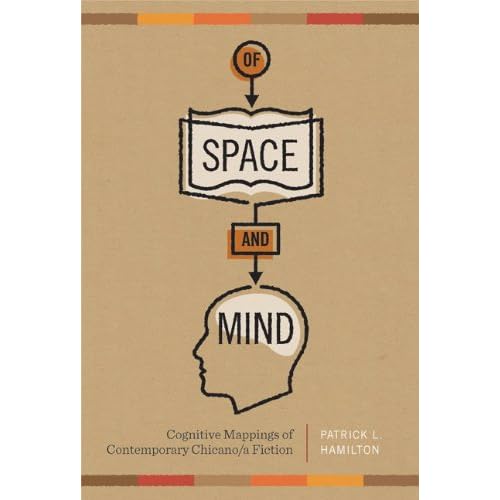
Of Space and Mind: Cognitive Mappings of Contemporary Chicano/a Fiction
(Cognitive Approaches to Literature and Culture Series)
Hardcover University of Texas Press April 1, 2011
ISBN-10: 0292723636 ISBN-13: 978-0292723634
Patrick L. Hamilton 

Chicano/a fiction is often understood as a literature of resistance to the dominant U.S. Anglo culture and society. But reducing this rich literary production to a single, binary opposition distorts it in fundamental ways. 

It conflates literature with life, potentially substituting a literature of protest for social activism that could provoke real changes in society. And it overlooks the complex range of responses to Anglo society that actually animates Chicano/a fiction.

In this paradigm-shifting book, Patrick L. Hamilton analyzes works by Rudolfo Anaya, Ana Castillo, Denise Chávez, Rolando Hinojosa, Arturo Islas, John Rechy, Alfredo Véa, and Helena María Viramontes to expand our understandings of the cultural interactions within the United States that are communicated by Chicano/a fiction. 

He argues that the narrative ethics of "resistance" within the Chicano/a canon is actually complemented by ethics of "persistence" and "transformation" that imagine cultural differences within the United States as participatory and irreducible to simple oppositions. 

To demonstrate these alternative ethics, Hamilton adapts the methodology of cognitive mapping; that is, he treats the chosen fictional texts as mental maps that are constructed around and communicative of the narrative's ethics. 

As he reads these cognitive maps, which envision Chicano/a culture as being part of U.S. society rather than as "resistant" and separate, Hamilton asserts that the authors' conception of cultural difference speaks more usefully to current sociopolitical debates, such as those about gay marriage and immigration reform, than does the traditional "resistant" paradigm.


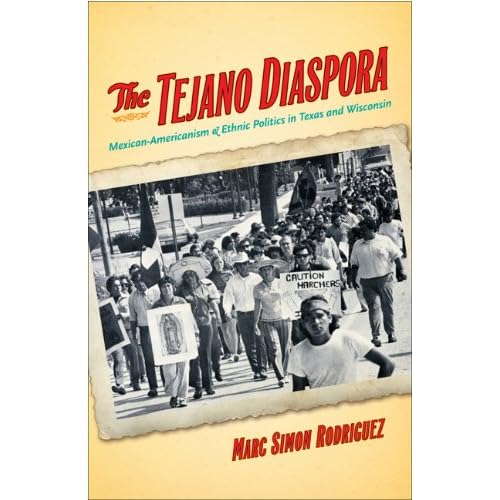
The Tejano Diaspora: Mexican Americanism and Ethnic Politics in Texas and Wisconsin  
Hardcover The University of North Carolina Press (April 4, 2011)
ISBN-10: 9780807834640 ISBN-13: 978-0807834640
Marc Rodriguez

Each spring during the 1960s and 1970s, a quarter million farm workers left Texas to travel across the nation, from the Midwest to California, to harvest America's agricultural products. 

During this migration of people, labor, and ideas, Tejanos established settlements in nearly all the places they traveled to for work, influencing concepts of Mexican Americanism in Texas, California, Wisconsin, Michigan, and elsewhere. 

In The Tejano Diaspora, Marc Simon Rodriguez examines how Chicano political and social movements developed at both ends of the migratory labor network that flowed between Crystal City, Texas, and Wisconsin during this period.

Rodriguez argues that translocal Mexican American activism gained ground as young people, activists, and politicians united across the migrant stream. Crystal City, well known as a flash point of 1960s-era Mexican Americanism, was a classic migrant sending community, with over 80 percent of the population migrating each year in pursuit of farm work. 

Wisconsin, which had a long tradition of progressive labor politics, provided a testing ground for activism and ideas for young movement leaders. By providing a view of the Chicano movement beyond the Southwest, Rodriguez reveals an emergent ethnic identity, discovers an overlooked youth movement, and interrogates the meanings of American citizenship.


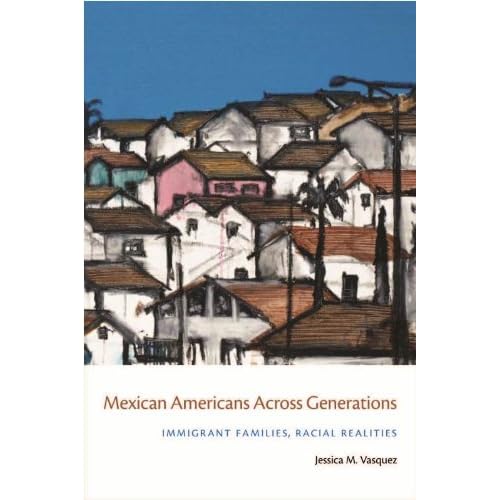
Mexican Americans Across Generations: Immigrant Families, Racial Realities 
 Paperback NYU Press (April 18, 2011)
ISBN-10: 0814788297 ISBN-13: 978-0814788295
Jessica Vasquez

While newly arrived immigrants are often the focus of public concern and debate, many Mexican immigrants and Mexican Americans have resided in the United States for generations. 

Latinos are the largest and fastest-growing ethnic group in the United States, and their racial identities change with each generation. While the attainment of education and middle class occupations signals a decline in cultural attachment for some, socioeconomic mobility is not a cultural death-knell, as others are highly ethnically identified. 


There are a variety of ways that middle class Mexican Americans relate to their ethnic heritage, and racialization despite assimilation among a segment of the second and third generations reveals the continuing role of race even among the U.S.-born.

Mexican Americans Across Generations investigates racial identity and assimilation in three-generation Mexican American families living in California. Through rich interviews with three generations of middle class Mexican American families, Vasquez focuses on the family as a key site for racial and gender identity formation, knowledge transmission, and incorporation processes, exploring how the racial identities of Mexican Americans both change and persist generationally in families. 

She illustrates how gender, physical appearance, parental teaching, historical era and discrimination influence Mexican Americans' racial identity and incorporation patterns, ultimately arguing that neither racial identity nor assimilation are straightforward progressions but, instead, develop unevenly and are influenced by family, society, and historical social movements.


Tamales, Comadres, and the Meaning of Civilization
Paperback Wings Press April 1, 2011
ISBN-10: 0916727815 ISBN-13: 978-0916727819
Ellen Riojas Clark (Author), Carmen Tafolla (Author)

This culinary history unwraps the extensive culture surrounding the tamale, bringing together writers, artists, journalists, and Texas’ regional leaders to honor this traditional Latin American dish. It is filled with family stories, recipes, and artwork, and also celebrates tamaladas—the large family gatherings where women prepare the tamales for the Christmas festivities. Humorous and colorful, this collection reveals the importance of community and good food.


Eva's Kitchen: Cooking with Love for Family and Friends
Hardcover Clarkson Potter April 5, 2011
ISBN-10: 0307719332 ISBN-13: 978-0307719331
Eva Longoria (Author), Marah Stets (Author) 

Eva Longoria may be most recognized for her role as Desperate Housewives’ saucy Gabrielle Solis, but on her own time, there are few places she would rather be than in the kitchen, cooking the food she loves for her family and friends. 

Here is the food Eva loves to eat, and the recipes in Eva’s Kitchen trace her life story, taking readers on her culinary journey—from the food she was brought up on to the recipes inspired by her travels abroad to the dishes she serves during casual nights at home.

Having grown up on a ranch with every meal based on what was in the family fields, Eva believes, like so many of us, that good cooking relies on local, fresh, easy-to-find ingredients. In Eva’s Kitchen, she teaches readers essential cooking skills and she sprinkles in the histories and traditions behind her favorite dishes, including personal stories and anecdotes that capture the warmth, humor, and joy of her most memorable meals.

In her first cookbook, Eva welcomes you into her kitchen, offering 100 of her favorite dishes—many of which are family recipes collected over the years—all fused with her passion for cooking. She also shares memories of her Texas ranch upbringing, her very first cooking adventures, vacations overseas, nights in with her girlfriends, and last-minute pre–red carpet meals.

Inspired by her heritage, Eva highlights the essentials of great Mexican cooking, Texas style—with her family’s recipes and techniques for making the world’s best tamales, homemade tortillas, Spanish rice, and Pan de Polvo (Mexican pastry), to name a few. She also offers dishes from a variety of international cuisines, from Latin American to Italian and French, inspired by her globe-trotting travels. 

A taste of Lemon Dover Sole whisks Eva to a tiny hotel-restaurant she once visited on a trip to Normandy; the recipe for Cannellini Beans with Crushed Red Pepper was a souvenir from a trip to Florence; kimchi adds a kick to her Spicy Roasted Brussels Sprouts, a Thanksgiving staple; and Yellow Squash Soup with Lemon brings her full circle, back to her family’s vegetable garden in Corpus Christi.

With full-color food photographs, intimate portraits of her family and friends, and a glimpse into Eva’s home and her lesser-known domestic side (family first, acting second, she says), Eva’s debut cookbook will entice her loyal fans and inspire home cooks to broaden their culinary horizons and create memorable meals for the people they love.


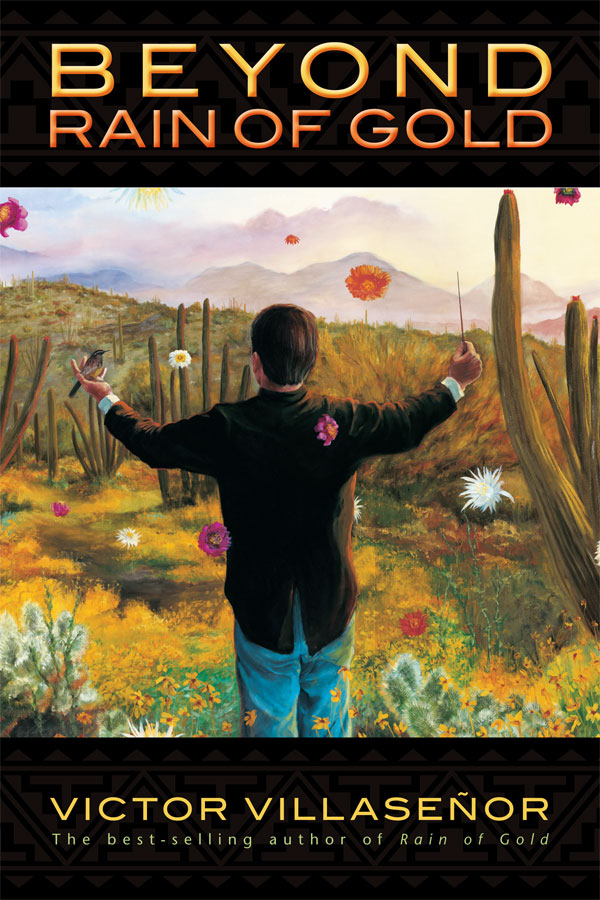
Beyond Rain of Gold
Hardcover Hay House April 1, 2011
ISBN-10: 1401931227 ISBN-13: 978-1401931223
Victor Villasenor

Beyond Rain of Gold is the incredible story of acclaimed author Victor Villaseñor’s initiation into the spiritual realm.
     
Decades ago, after penning the nonfiction epic Rain of Gold, the writer embarked on a life-changing journey. In the process of ensuring that his family’s saga would be published as the authentic, true account it was, Villaseñor forged a sacred bond with his father and his indigenous ancestors, who were guiding him from the Other Side. The book eventually became a national bestseller and an enduring favorite of millions of readers.

Yet the story doesn’t end there. Villaseñor’s connection with the Spirit World continued to deepen, awakening him to the ongoing miracles inherent in everyday living. He discovered that his life had suddenly taken on a magical quality, with events occurring that transcended the boundaries of what is normally considered “reality.”

A series of mystical encounters with Spirit convinced Villaseñor that not only is there no firm line between life and death—but that the time has come in our collective “human-story” to usher in a new era of abundance, peace, and harmony on our beloved Mother Earth and among all of humanity!
     
Similar to Carlos Castaneda’s body of work, this exciting, raw, and honest book courageously delves into altered states of consciousness that exist alongside ordinary reality . . . ultimately revealing the Spiritual Wisdom that is available to each and every one of us.

Beyond Rain of Gold will truly transform the way you see the world—on both a personal and planetary level!


Bridging: How Gloria Anzaldúa's Life and Work Transformed Our Own
Hardcover University of Texas Press (April 1, 2011)
ISBN-10: 0292725558 ISBN-13: 978-0292725553
Ana Louise Keating (Editor), Gloria González-López (Editor) 

The inspirational writings of cultural theorist and social justice activist Gloria Anzaldúa have empowered generations of women and men throughout the world. 

Charting the multiplicity of Anzaldúa's impact within and beyond academic disciplines, community trenches, and international borders, Bridging presents more than thirty reflections on her work and her life, examining vibrant facets in surprising new ways and inviting readers to engage with these intimate, heartfelt contributions.

Bridging is divided into five sections: The New Mestizas: "transitions and transformations"; Exposing the Wounds: "You gave me permission to fly in the dark"; Border Crossings: Inner Struggles, Outer Change; Bridging Theories: Intellectual Activism with/in Borders; and "Todas somos nos/otras": Toward a "politics of openness." Contributors, who include Norma Elia Cantú, Elisa Facio, Shelley Fisher Fishkin, Aída Hurtado, Andrea Lunsford, Denise Segura, Gloria Steinem, and Mohammad Tamdgidi, represent a broad range of generations, professions, academic disciplines, and national backgrounds. 

Critically engaging with Anzaldúa's theories and building on her work, they use virtual diaries, transformational theory, poetry, empirical research, autobiographical narrative, and other genres to creatively explore and boldly enact future directions for Anzaldúan studies.

A book whose form and content reflect Anzaldúa's diverse audience, Bridging perpetuates Anzaldúa's spirit through groundbreaking praxis and visionary insights into culture, gender, sexuality, religion, aesthetics, and politics. This is a collection whose span is as broad and dazzling as Anzaldúa herself.


Dallas's Little Mexico
(Images of America Series)
Paperback Arcadia Publishing (April 4, 2011)
ISBN-10: 0738579793 ISBN-13: 978-0738579795
Sol Villasana

Little Mexico was Dallas's earliest Mexican barrio. 

"Mexicanos" had lived in Dallas since the mid-19th century. The social displacement created by the Mexican Revolution of 1910, however, caused the emergence of a distinct and vibrant neighborhood on the edge of the city's downtown. 

This neighborhood consisted of modest homes, small businesses, churches, and schools, and further immigration from Mexico in the 1920s caused its population to boom. By the 1930s, Little Mexico's population had grown to over 15,000 people. 

The expanding city's construction projects, urban renewal plans, and land speculation by developers gradually began to dismantle Little Mexico. By the end of the 20th century, Little Mexico had all but disappeared, giving way to upscale high-rise residences and hotels, office towers of steel and glass, and the city's newest entertainment district. This book looks at Little Mexico's growth, zenith, demise, and its remarkable renaissance as a neighborhood.

Bookmark and Share

Thursday, April 07, 2011

Our People Are Not Reading Our Literature, Part IV


Our People Are Not Reading Our Literature, Part IV
Share


For previous entries in this series:

I was just going through some papers the other day and realized when my I came across my copy of the National Endowment for the Arts Reading at Risk Survey and Report, that I never concluded our series “Our People Are Not Reading Our Literature.”

Those of you who are new to our blog, this series focused on the literature-reading rates of the nation.

In looking at the Summary and Conclusion of the NEA survey, they quote Myron Magnet's essay “What use is literature?”: “date are meaningless until we can articulate a story that makes sense out of them, and literature makes sense out of the data of human experience.”

So who is reading literature nowadays?

Looking at the 2002 Survey of Public Participation in the Arts (SPPA), it shows that many people “enjoy literature.” It is novels, short stories, poetry, and plays that get the most attention from those 18 or older (that's 47 percent or about 96 million people).

As you may remember, poetry had a dismal popularity among readers. As a personal reflexion, I also find this everywhere I go. People don't know who are Chicano(a) poets are and if they do, it is usually veterano(as) like Lalo Delgado, Alurista, and others, which may say something about what the masses like and what they do not. I find Chicano(a) writers, especially the poets, are into who the other Chicano(a) poets are and what they are writing, however, outside of that group, it gets pretty depressing.

Though the survey showed that those 18 and under are least likely to read poetry, and those ages 18 to 23 are least likely to read any literature, the survey does point out how the popularity of the “slam” has increased poetry appreciation in the younger age groups.

Poetry, the survey shows, is about as popular as “attendance at jazz performances or at classical music events” and about “as many people read plays as attend life opera or ballet.”

As for novels and short stories, they have the largest audience: “About one in six literary readers (17%) read 12 or more books in 2002.”

As for literary events, 1 in 10 (9%) “listened to live or recorded reading of novels or books, and about 6% listened to poetry readings during the survey year.” Now this survey is 2002, and much has happened since then with the IPAD, Nook, and other readers. Furthermore, the MP3 is used more nowadays, so people may listen to recorded book more. As least for Amazon, electronic books have outsold hardback books, but have not yet outsold paperbacks.

Creative writing is still occurring but at small numbers. About 7% of the population wrote creative works of their own, and 9% “used the Internet to learn about, read, or discuss topics related to literature.

Factors in Participation

In looking at factors and participation, as always, those with more eduction are much more likely to read than those with low eduction. The survey found reading rates for women where higher than those of men. Furthermore, reading and listening to literature participation rates are higher for urban dwellers and those with higher incomes.

Whites have the highest participation rates of any ethnic group in “almost all literature-related activities.” The exception was the high participation of African-Americans listening to poetry.

In looking at age groups, the older age groups seem to enjoy literate at almost equal rates, but it was the youngest age groups where participation was the lowest.

Regionally, literature participation is “most popular in the West...” It is followed by the Northwest, the Midwest, and then the South.

The survey does not show clearly how much TV watching is an influence on how much a person reads, however, it did show that a person who watches 4 hours or more of TV a day “had negative impact on the chances of someone reading 12 books or more per year.” Furthermore, watching TV appears to have no positive impact on people reading more.

In general, literary readers watched less TV then non-readers, the different is slight.

Literary rates and levels do affect literature participation, but the survey stated that more research is needed.

Participation in Other Arts Activities

People, especially kids, attending art museum and performing arts events, “ are significant indicators offer literature participation, even adjusting for education, ethnicity, race, and other factors.”

Bueno, we will go the summary of “Trends in Literature Participation” next week. In the mean time, read, attend plays, take your kids out to these things, and read some more.!

Bookmark and Share


Events tonight

Martin Espeda reads this afternoon
Thursday, April 7, 1pm. Poet Martin Espada reading at Doña Ana Community College in Las Cruces, NM. Contact Denise Chávez, bbf@borderbookfestival.com for information.

Carolina Monsivais reads tonight 
Thursday, April 7, 5:30 PM – 7:00 PM. El Paso Community College Celebrates Poetry Month with a Reading Featuring Todd McKinney and Carolina Monsiváis. EPCC ASC Boardroom, 9050 Viscount Blvd. Free – Public is Invited. Sponsored by EPCC Spring Arts Festival 

Bookmark and Share

Also, make sure to check out the Border Book Festival schedule events as Sandra Cisneros and Martin Espada among other are in town. Check out schedule. 

Bookmark and Share

Wednesday, April 06, 2011

Today, Protest the Killing of Javier Sicilia's son at Mex Consulate in El Paso

Today, Wednesday, protest of killing of the son of Javier Sicilia, a poet. Vigil at the Mexican Consulate in El Paso at 3:30 PM.

New Books in April by El Pasoans


New Books in April by El Pasoans

Our Lady of Controversy: Alma López's "Irreverent Apparition" 
Chicana Matters Series Paperback
University of Texas Press (April 1, 2011) 
ISBN-10: 0292726422 ISBN-13: 978-0292726420
Alicia Gaspar de Alba (Editor), Alma López (Editor) 

Months before Alma López's digital collage Our Lady was shown at the Museum of International Folk Art in 2001, the museum began receiving angry phone calls from community activists and Catholic leaders who demanded that the image not be displayed. 

Protest rallies, prayer vigils, and death threats ensued, but the provocative image of la Virgen de Guadalupe (hands on hips, clad only in roses, and exalted by a bare-breasted butterfly angel) remained on exhibition.

Highlighting many of the pivotal questions that have haunted the art world since the NEA debacle of 1988, the contributors to Our Lady of Controversy present diverse perspectives, ranging from definitions of art to the artist's intention, feminism, queer theory, colonialism, and Chicano nationalism. Contributors include the exhibition curator, Tey Marianna Nunn; award-winning novelist and Chicana historian Emma Pérez; and Deena González (recognized as one of the fifty most important living women historians in America).

Accompanied by a bonus DVD of Alma López's I Love Lupe video that looks at the Chicana artistic tradition of reimagining la Virgen de Guadalupe, featuring a historic conversation between Yolanda López, Ester Hernández, and Alma López, Our Lady of Controversy promises to ignite important new dialogues.


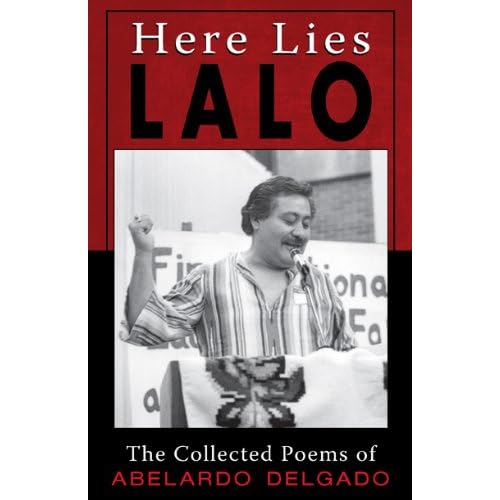
Here Lies Lalo: The Collected Poems of Abelardo Delgado 
Paperback Arte Publico Pr (April 30, 2011)
ISBN-10: 1558856943
ISBN-13: 978-1558856943
Abelardo " (Author), Lalo" (Author), Delgado (Author), Jarica Linn Watts (Editor)

"Stupid America, remember that chicanito / flunking math and English / he is the Picasso / of your western states / but he will die / with one thousand masterpieces / hanging only from his mind." In his poem, "Stupid America," Chicano activist poet Abelardo "Lalo Delgado decries the lack of opportunity faced by his people: children let down by the educational system; artists and poets unable to express their creativity. "That chicano / with a big knife / he doesn t want to knife you / he wants to sit down on a bench / and carve ... / but you won t let him."

Known as the "poet laureate de Aztlan" and called "the grandfather of Chicano literature" in his 2004 obituary in The New York Times, Delgado used his words to fight for justice and equal opportunity for people of Mexican descent living in the United States. 

A twelve-year-old when he emigrated from northern Mexico to El Paso, Texas, Delgado's development as a poet and writer coincided with the Chicano Civil Rights movement, and so his poems both reflect the suffering of the oppressed and are a call to action. "We want to let america know that she / belongs to us as much as we belong in turn to her / by now we have learned to talk / and want to be in good speaking terms / with all that is america."

Available for the first time to mainstream audiences, Delgado's poems included in this landmark volume were written between 1969 and 2001, and are in Spanish, English, and a combination of both languages. While many of his poems protest mistreatment and discrimination, especially as experienced by farm workers, many others focus on love of family and for the land and traditions of his people.

Delgado wrote and self-published 14 books of poetry--none of which are available today--and five of them are included in this long-awaited volume. These poems by a pioneering Chicano poet and revolutionary are a must-read for anyone interested in the Chicano Civil Rights movement and the origins of Chicano literature.


Border Boom Town: Ciudad Juárez since 1848 
Paperback University of Texas Press (April 6, 2011)
ISBN-10: 0292729820ISBN-13: 978-0292729827
Oscar J. Martínez

Border Boom Town traces the social and economic evolution of Ciudad Juárez, the largest city on the U.S.-Mexican border and one of the fastest-growing urban centers in the world. In this evocative portrait, Oscar J. Martínez stresses the interdependence of Juárez and El Paso, a condition that is similar to relations between other "twin cities" along the border.

Using a wide variety of local historical materials from both sides of the Río Grande, Martínez shows how Juárez entered the modern era with the arrival of the railroads in the 1880's, serving as a principal port of exit for waves of Mexican emigrants bound for the United States. In more recent years, increased migration to the area has resulted in extraordinary expansion of the population, with significant impact on both sides of the boundary.

Proximity to the highly industrialized country to the north and remoteness from Mexico's centers of production have brought a multiplicity of assets and liabilities. Juárez's vulnerability to external conditions has led to alternating cycles of prosperity and depression since the establishment of the border in 1848.

With the stimulus of new development programs in the 1960's and 1970's designed to integrate this neglected area into the national economic network, Juárez enjoyed the biggest boom in its history. However, government efforts to improve socioeconomic conditions failed to solve old problems and gave rise to new social ills. Ironically, the "Mexicanization" campaign on the border has led to unprecedented levels of foreign dependency.

Martínez's analysis shows that integrating the northern Mexican frontier into the national economy remains an elusive and complex problem with which Mexico will continue to grapple for years to come.


Bookmark and Share

Events

Thursday, April 7, 5:30 PM – 7:00 PM. El Paso Community College Celebrates Poetry Month with a Reading Featuring Todd McKinney and Carolina Monsiváis. EPCC ASC Boardroom, 9050 Viscount Blvd. Free – Public is Invited. Sponsored by EPCC Spring Arts Festival
Thursday, April 7, 1pm. Poet Martin Espada reading at at Doña Ana Community College in Las Cruces, NM. Contact Denise Chávez, bbf@borderbookfestival.com for information.

Bookmark and Share

Tuesday, April 05, 2011

El Paso Writers Update for Week of April 3, Part I


El Paso Writers Update for Week of April 3, Part I
News on Carlos Morton in Malta, Review of Rich Yañez' new novel, Luis J. Rodriguez, Jennifer Cervantes and more.
Share

UTEP MFA professor Rosa Alcala had her poem "Fushigi na Chicharron" featured on Poet.org yesterday. Check it out.

Luis J. Rodriguez

Luis J. Rodriguez will read tonight, April 5 at the University of New Mexico in the College of Education at 6:30pm. For more info, click here

See Luis J. Rodriguez' ran on Arizona Teachers Letter is Sleepy Lagoon All Over Again which was originally published on Fox News Latino.

Octavio Solis' "Lydia"

The 23 Lambda Award nominations are out. Nominated is in drama is "Lydia" by Octavio Solis (Samuel French). Read more

Bert Corona

It appears red baiting still goes on even after you died. El Paso native Bert Corona, who died in 2001, is the target of conservative wackos in Odessa, Texas. "Parents and taxpayers in school districts around the country would be wise to watch for Corona’s programs in their cities." says the right-wing New American. Read more in W.Texas town to send migrant students to socialist conference in D.C.

Josefina Lopez


Dagoberto Gilb is in the news as Centro Victoria in Victoria, Texas welcome Jesús Salvador Treviño, award-winning screenwriter Josefina López, singer-songwriter Davíd Garza and Chicano writer Rolando Hinojosa-Smith. READ MORE.


While on the topic of Victoria, Christine Granados is briefly mention in "Top Chicano artist to visit UHV class, give public presentation" about artist Cesar Martinez.

Adam Gwon

Check out this article on Adam Gwon, Octavio Solis collaborator on their new musical Clouds. See California Musical Fest to Include 1776, Adam Gwon's Cloudlands, Stephen Schwartz's Fairy Tale. 


Check out Rigoberto Gonzalez' review of Richard Yañez new novel Cross Over Water in this past Sunday's El Paso Times. READ THE REVIEW


Left to right, Sal Castro and Mario T. Garcia

Sal Castro and Mario T. Garcia are interviewed by the UNC Blog about their book Blowout!. Read Interview: Sal Castro and Mario T. Garcia on Grassroots Activism.


The New Mexico State University Library in Las Cruces will celebrate El dia de los ninos/El dia de los libros April 13 by presenting a writing workshop for adults led by Jennifer Cervantes, author of the children's book, "Tortilla Sun." The workshop, which is free and open to the public, will be offered at 7 p.m. in the second floor Zuhl Library conference room. READ MORE.

Carlos Morton in Malta

Carlos Morton is in Malta for two weeks of workshops. Check out Malta Today for this article 'You're a poet, you can do whatever you want!' about Morton's visit. Carlos, don't take that planned side trip to Libya!

More later this week folks.


Bookmark and Share

The Movement and Familia: Some Not Too Objective Observations by Lalo Delgado


The Chicano Movement: Some Not Too Objective Observation
La Familia

by Abelardo B. Delgado
I'm fortunate to have come back from the Midwwest Chicano Conference where I did not only get a chance to capture a live specimen to speak of in this chapter, but three. 

I am referring to three of the, perhaps, most beautiful families in the whole Chicano Movement. I say “perhaps,” because I'm sure in your community there is also a family that is involved and committed to La Causa as much as my three examples, if not more so.

The three families are the Dominguez, the Castillos, and the Gonzales. The Dominguez and Gonzales are from Colorado, and the Castillos are from the Westside in Saint Paul. Of these families, if we are to capture their true value in the Movement, we must refer to the very earthy Chicano phrase, “Son de toda madre.” 

The value lies in the total family effort and spirit which could have only come about after much pain and suffering, and after having had agood roots to start with. As Mr. Gonzales (he would object to the 'Mr.' but as a sign of respect, we will leave it in), put it – “from the two-year old to the eighty-two year old abuelita, it is a total commitment.” Castillo has his strong sons and beautiful daughters. Dominguez has his talented children. All three families possess the common characteristics of Chicano values which, in turn, makes them uncommonly precious.

I had just landed in Sioux Falls and wonder if there are any Chicano families here. 

To continue: the common characteristics of the Chicano families in the Movement are (1) they are saturated with first-hand information of the injustices rendered to Chicanos which continue to abound, (2) they have been victims of discrimination, put-downs, neglect, abuse, and exploitation. 

These families have always been on the receiving end. We were always sensitive to the shafting, but few of us were ever able to know where it was coming from. These families are examples of the new breed of our-spoken, defying, challenging, resisting, acting Chicanos. 

Thus, the term “activist” used in that context not only applies, but we admit it with pride. These families make their lives “a casa abrierta” where other Chicanos can come in for inspiration consolation, advise “animo,” and their value multiplies with each one whoever comes in contact with them.

Why it is of extra value to involve the whole family in the movimiento is very evident. First, it is in keeping with the cultural heritage we bear. Second, it makes for a cohesive effort which has more weight, and frankly, it saves the family in that it gives it meaning in life and augments the amor.

You see the deterioration all about us in which any family relations are accidental and isolated; where dialogue between loved ones is reduced to formalities, curt and forced replies, grunts, and plain hatred. The boy cannot wait to escape the prison called “home.” 

The wife and husband seek fulfillment away from each other. These ailments are White middle-class America, but like termites, they have eaten into our Chicano communities. More and more fail as we try to approximate ourselves to those foreign values displayed on T.V. Commercials.

It would be healthier for the whole American scene if all turned communist or found another cause – ecology – anything to give it the meaning needed for existence. We are in that sense lucky to rediscover our Chicanismo, our carnalismo, our nation, our causa, our revolucion, our plan of attack. I happen to know first-hand of the opposite, of what it means not to have your family with you in the Movement, for each move you make becomes a painful anchor.

Bookmark and Share


Other parts of this series:

 
from The Chicano Movement: Some Not Too Objective Observations by Abelardo B. Delgado, (Denver: Colorado Migrant Council, 1971), prepared by the Colorado Migrant Council. Published with permission from the Delgado Family. Special thanks for Dolores Delgado. (c) Abelardo Delgado 1971, all right reserved. This may not be republished with out the permission of the Delgado estate.

Wednesday, March 23, 2011

Institutional Change and the Chicano Movement: Some Not Too Objective Observations


Institutional Change and the Chicano Movement
Some Not Too Objective Observations
by Abelardo B. Delgado
Somewhat less romantic or idealistic, is the dedication of life-times to education and institutional change. 

Basing the concept on the old-fashioned notion that natural change is more lasting, more effective, and more meaningful. 

Some Chicanos within the movement have pledged themselves to institutional change. Examining any life you wish, from the lowest socially and economically speaking, to the most affluent and aristocratic, we see life responding to old-established institutions, but tend to do some steering and setting up of the rules, leaving poor individuals no “agraviando mas de nosotros Chicanos” to move according to these institutions which mercilessly slash our destinies.

These institutions, not necessarily in that order of the importance with which they shape or destroy our lives, are the educational, political, economical, and the church and business institutions: the family, the welfare system, the prison, the law enforcement agencies, the employment agencies, and other octopus-like state, local, and federal agencies. 

Examine yourself any day, and see if during one single day you do not respond to these institutions more than a dozen times. For the sake of corralling them, we refer to them as “The System.” 

A reason for believing such well-founded bodies can be altered, is that it was we humans who originally got them in motion, and we are capable of either destroying them or changing them. Changing them is not necessarily the easier of the two, but I guess because some are lazy in nature and do not wish the burden of starting from scratch and creating others in their place, they settle for changing the wrong or putrid parts of these systems by healthier parts.

Most Chicanos in the Movement have a better answer, and that is the one of setting up counter-institutions of their own making and of their own control. Examples are the Colegio Chicano Jacinto Trevino and the Escuela de las Tres Culturas, Tlatelolco, to mention two challenges into educational systems. They are saying, “Look, you have not done so hot with us Chicanos; let us give it a try ourselves.” Aztlán, in itself, is a replacement of the whole nation which was deaf and dumb to our needs. 

What, I ask, can we do to substitute our beloved Catholic Church which is so rooted in us and yet has done us so much harm?

I must interrupt here to inject a report and an insight. Again, I'm on a plane headed back to Denver from the Midwest Chicano Conference where we have learned that our number one institutional reformer had been placed in jail. Cesar Chavez is in jail until he calls off the lettuce boycott. 

The national reaction which will follow in the next day is of historical significance as we proceed to change the institution of historians by not only writing our own history, but making it.

At the conference, ten “Becas Scholarships” for Chicano law students were received. What we must interpret that to mean is that we are finally getting to the mightiest institution of them all, the economic one, for steering our own destinies means exactly steering our own economic destiny, since the other one has at best, kept us at the fringe. 

When you interpret the Movement in getting our fair share of the pie in our own country, you can bet those used to dispersing but crumbs are going to react and try to anticipate our direction and advance ahead to stop our every move.

Institutions are willing to use flexibility and even allow us to lick their walls, but when we talk seriously of making them responsible to us, we threaten their matrix, and the fight pursuing is more viscous and bloody than a bloody revolution.

Bookmark and Share

Other parts of this series:

 
from The Chicano Movement: Some Not Too Objective Observations by Abelardo B. Delgado, (Denver: Colorado Migrant Council, 1971), prepared by the Colorado Migrant Council. Published with permission from the Delgado Family. Special thanks for Dolores Delgado. (c) Abelardo Delgado 1971, all right reserved. This may not be republished with out the permission of the Delgado estate

Tuesday, March 22, 2011