Friday, May 25, 2012


Monday, May 07, 2012
Lunes con Lalo: SOUL FOOD: Abelardo Delgado and the Word

SOUL
FOOD: Abelardo Delgado and the Word
By
Felipe de Ortego y Gasca
Scholar
in Residence/Founding Member, Past Chair, and Member of the Executive
Committee (2008-2011), Department of Chicana/Chicano and Hemispheric
Studies, Western New Mexico University, Silver City, New Mexico 88062
Share
Words
are the poet’s stock-in-trade; no one knows the power of words like
poets and writers. I believe in the power of the word. Lalo Delgado
had an abiding faith in the power of the word. Proof of that faith is
manifest in the thousands of words Lalo Delgado wrote and left for us
in his poetry and prose, much of it still unpublished. I’m reminded
here of the 19th
century American poet Emily Dickenson who in her lifetimes only had
one poem published and left a trove of unpublished works.
There
is indeed no power greater than the power of language, the medium
that binds speakers of distinct languages together. So powerful and,
perhaps, so fearful was the power of the word that when God said “Let
there be light,” the word created “light.” Does anyone suppose
that when God said “Let there be light” there would be no light?
Of course ordinary mortals today would hardly expect light to be
[appear] just by saying the words “let there be light.”
It
appears that God so understood the power of the word that He
scattered humankind over the face of the earth and separated them by
a diversity of languages so they could not longer work together as
one people. Did humankind speaking one language threaten the eminence
of God? Is that why He diversified humankind by separate languages?
Or was it that God saw in the one language that humans spoke a
narcissistic threat to the human race in their zeal to become like
God?
It
doesn’t matter — we have since then come to understand the power of
language. Palabras are indeed food for the soul.
Abelardo
Delgado was the first poet to whom I applied the sobriquet “Poet
Laureate of Aztlan.” Later I used that sobriquet with Ricardo
Sanchez, not to diminish Abelardo Delgado’s standing as a poet of
Aztlan but to point out that at regular intervals Chicanos ought to
recognize different individuals as Poets Laureate of Aztlan just as
the Poet Laureate of the United States changes regularly.
Nevertheless, Abelardo Delgado holds the distinction of being the
first Poet Laureate of Aztlan.
There’s
a popular expression that one doesn’t get a second chance to make a
first impression. I was impressed with Abelardo Delgado from the
moment I first met him in the early 60’s. However, my most
memorable moment of him was when he was doing a reading in South El
Paso during the Cabinet Committee Hearings held there in in October
of 1967 — that was 45 years ago. I was covering the hearings for The
Nation Magazine
in New York (December 11, 1967). By this time, Abelardo was already
committed to the movimiento.
There was something about his poetry que
pegaba
urgently but not roughshod. To me, that perhaps best characterizes
Abelardo Delgado’s poetry and persona.
At
first glance, he appeared larger than he really was, not because of
his girth but because of how he stood and projected himself. I don’t
recall ever seeing Lalo without a smile, a smile that was at once
disarming mientras
que paloteaba.
His poetry is at once both a challenge and an assurance. In Stupid
America he
is chiding America while at the same time reaching out to embrace it
in the spirit of confraternity.
This
is what is most enduring about Abelardo’s poetry. It invites one to
participate in its unfolding. For example. In Stupid
America
the persona of the poem (we may assume it’s Abelardo) starts the
introit to the poem like the Duke in Robert Browning’s My
Last Duchess:
Stupid
America, see that Chicano
With
a big knife
On
his steady hand
He
doesn’t want to knife you
He
wants to sit on a bench
And
carve christfigures
But
you won’t let him.
Enganchado,
the reader is drawn deeper into the poem with another recitation:
Stupid
America, hear that Chicano
Shouting
curses on the street
He
is a poet
Without
paper and pencil
And
since he cannot write
He
will explode.
The
unfolding here starts out like the first recitation but takes an
unexpected tack in its comparison that leaves the reader poised to
draw the inevitable conclusion of the last strophe.
Stupid America,
Remember that Chicanito
Flunking math and English
He is the Picasso
Of your western states
But he will die
With one thousand
masterpieces
Hanging only from his mind.
The
structure of the poem reminds me of the 19th
century English poet Robert Browning’s Rabbi
Ben Ezra
who takes his pupils on a mental journey, saying “Come, grow old
along with me, the best is yet to be; the first for which the last
was made . . .” Except that in Abelardo’s poem “the first”
cannot actuate “the last” because the Chicanito
“will die” and we can only imagine his potential as a “Picasso
of your western states.”
This
is hardly the work of “archaic” poets as Gary Soto has
characterized Delgado, Sanchez, Alurista, and Gonzalez. That’s like
saying Shakespeare is an archaic poet. He may be of a distant
generation, but he still speaks to the ages as Ben Jonson knew. About
the works of these poets, Soto adds, “they were not very well
written(Partial
Autobiographic Interview with Twenty Chicano Poets,
Wolfgang Binder, ed., Germany: Palm & Erlangen, 1985; 198).
Stupid America strikes me as an extraordinarily well-written poem
with structural integrity in the best tradition of poetics as I have
indicated in my comparison of Delgado and Browning.
The
tendency in American poetry has been toward introspective
angst-ridden autobiographic pieces. Chicano Movement poetry of the
60’s, starting with Corky Gonzalez’ epic I
am Joaquin,
deconstructed that tradition while serving as countertexts to dispel
the images of Chicanos in mainstream privileged texts. Chicano
writers, particularly Chicano poets, construed their responsibility:
to identify the enemy, promote the revolution, and praise the people.
Early on, these were the threads Abelardo Delgado established in his
poetry. He was a people’s poet. He carried the fire of their
aspirations in his heart.
It
was a big heart: Abelardo’s. At the end of the 60’s and the early
70’s, Abelardo’s view of Chicanos and mine were identical though
I expressed my view principally in prose. After World War II, during
my studies at the University of Pittsburgh, I had aspirations to be a
poet. I wrote much poetry during the 50’a and in the early to mid
60’s read my works with many El Paso poets including Abelardo
Delgado and Jesus Rafael Gonzalez. And though I joined Cesar Chavez’s
efforts early in the 60’s, I was not a Chicano poet -- I was a Chicano
writing poetry.
In 1964, Paso del Norte Press brought out a chapbook
edition of my poetry entitled Sangre
y Cenizas
in Spanish. In 1952, my early work The
Wide Well of Hours
(Pittsburgh: New World Society) was in English. Neither of those
works are movement poetry though the latter deals with the angst of a
larger humanity while the former entails a highly stylized anguish of
recollection.
The
first movement poem I essayed was Hijos
de la Chingada
published in Nosotros
Magazine
in El Paso in 1970. The poem brought upon me the wrath of many
Chicano formidables in the community who, like Plato in his Republic,
thought my poem was a corrupting influence on Chicano students at the
University of Texas at El Paso, especially since I was then Director
of the Chicano Studies Program and expected to set the standards of
decorum for the students.
Abelardo
Delgado and Ricardo Sanchez came to my rescue. They defended me
publicly as a Chicano and defended my First Amendment right to
express myself as I had. Of course there was nothing subversive or
salacious about the poem. I was simply expressing the case already
proffered by the Mexican poet Octavio Paz that mejicanos (los
mestizos) were the offspring of an indigenous mother and a Spanish
father eiconicized by the historical figure of Malintzin (later
called Doña Marina), the Tlaxcalan woman who became Cortez’s
consort and whose child with him has been historically considered
the “first” Mexican mestizo.
Thus, the word malinche (with the semantic weight of “traitor).
Octavio
Paz posited that ever since, mejicanos have thought of her as la
Chingada — the
violated one (but that she deserved it because of her treason). I
don’t side with Octavio Paz’s rendition of that historical event.
Nevertheless the symbolism of Malintzin and mestizaje is powerful and
closer to the reality of Chicano origins as Malintzin’s children
than Coronado’s children. I made that point in my piece on
“Montezuma’s Children” in 1970 (The
Center Magazine,
November/December), a scathing piece on the shameful condition of
Chicanos in American education and recommended for a Pulitzer that
year by Senator Ralph Yarbrough of Texas who read the piece into the
Congressional
Record.
In
1971, Abelardo Delgado and Ricardo Sanchez both came to work at
Chicano Studies at UTEP where I was Director of the Program. Even
then, Abelardo had interests in Denver where he was closely allied
with Corky Gonzalez and the Crusade for Justice. Though ostensibly
different from each other poetically, Delgado and Sanchez are really
two sides of the same coin. Their poetic focus is on the people and
their plight. Sanchez is the old-testament voice in the whirlwind;
Delgado is the ole-testament shepherd waiting for the comforting
voice of God.
Just
before he died I sent Lalo a brief note in which I said:
“Im sorry you’re ailing,
old friend. At 78 God is not yet through with me and God still has
many things for you to do. Todavia
queda mucha lucha.
During a Summer Session at UT Brownsville I used Stupid America in
one of the Sabal Palms Lectures I delivered there. The audience
responded to the poem just as we all did when you first wrote it
almost 40 years ago. Your work in Chicano poetry will stand as a
testament to struggles we’ve endured as Chicanos in proclaiming our
presence in this country; and your poetry will stand as the legacy
you’ve bestowed on our progeny.”
In
1971, when I was putting together We
Are Chicanos,
the first critical anthology of Mexican American Literature published
by Washington Square Press, I included four poems by Abelardo —one
of which was Stupid
America.
And in my study of Backgrounds of Mexican American Literature,
Abelardo Delgado was featured prominently.
Abelardo
Delgado is gone now.
So is
Ricardo Sanchez. Voices of yesterday, sonorous, compelling. Lalo’s
passing brings to mind Milton’s poem about Lycidas — gone
but not forgotten. Que viva, Lalo Delgado!
Copyright
© 2012 by the author. All rights reserved.

Friday, April 20, 2012
4-20 Revisits
Saving ASARCO's smokestack to create “superjoint” to cost $14M
Preserving ASARCO's smokestack to make a
giant marijuana joint to the benefit of UT El Paso (UTEP) students
would cost $14 million a new study says.
http://plumafronteriza.blogspot.com/2010/10/saving-asarcos-smokestack-to-create.html
Report: Criminals smuggle up to $39 billion in drugs while CBP and Hudspeth County Sheriff Arrest Willie Nelson
The
Government Accountability Office is calling for urgent action after
Mexican cartels smuggled up to $39 billion worth of drugs into the
United States, all during Willie Nelson's 4-and-half-hour arrest and
booking in Hudspeth County, TX last month.
The
Metro Organization for TexasTea Acquisitions or MOTA, estimates the
while Customs and Border Protection and Hudspeth County Sheriff were
occupied with Nelson, an estimated $39 billion was smuggled through
Hudspeth County alone.
Tuesday, March 13, 2012

UT El Paso Student Health Services Prepares for Chipotle Grand Opening
Share
AP Associated Pest

UT El Paso (UTEP) Student Health Services Prepares for Chipotle Grand Opening
Cholera Epidemic Imminent
by Dolores Tómago
Posted: 03/13/2012 12:17:33 AM MDT
UTEP Student Health Services has gone into “Disaster Alert” as El Paso's first Chipotle is set to open this week across from UTEP's Don Haskin's Center.
Chipolte a national chain known for putting everything but the kitchen sink into a burrito will open on North Mesa Street this week, much to the annoyance of the local medical community.
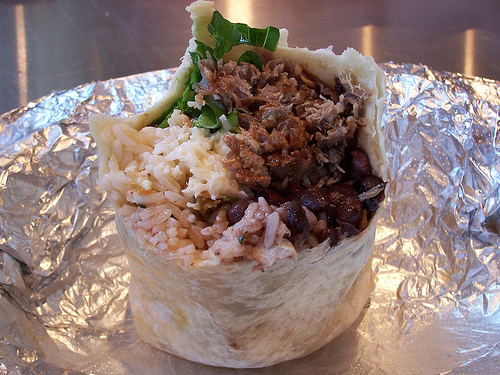
Culinary expert, Ben B. Rito says Chipotle has not figured out how the Mexican secret to making burritos simple, so they put everything from sour cream, guacamole, rice, beans, salsa, meat, onions, all the ingredients to make the modern Mexican's stomach churn.”
“So far we don't know why Chipotle burritos have no effect on gringos,” says El Paso Medical Disaster Director, Endamundo Hoy. “But when Mexicans and Chicanos eat at Chipolte, they can expect several days on the toledo or a full-out Cholora epidemic.”

“We had to order quadruple are regular supply of Pepto-Bismol, Imodium, and Keopectate,” said UTEP's health services director Ben Preparado, “We think we are fully prepared for the impending disaster once students return to class next week.”

But rumors that the city may run out of diarrhea medicine has prompted Mayor John Cook to ask Proctor and Gamble, Janssen Pharmaceutica, Chattem, Inc., makers of diarrhea medicine, to double their production.
 |
| UTEP sets up disaster center |
“We don't expect many students to be affected this week,” said UTEP president Diana Natalicio, “but once they return to school after Spring Break next week, we may call upon the Red Cross to set up a disaster site in the UTEP Student Union.”
UTEP professor Dr. Wes Studi Shicanos, an expert on Chicano and indigenous eating habits said the opening of Chipotle will have severe repercussion for Westside El Paso. “To date, Westside Chicanos have not seen this much mierda since the elections of City Rep. Cortney Niland and Beto O'Rourke.”
Related Stores:
Researchers draw closer to unraveling the difference between beans and tortillas, and tortillas and beans
Tuesday, March 06, 2012
Rodolfo F. Acuña: The Tucson-Nogales Trip
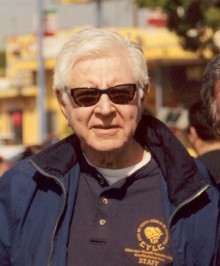
The Tucson-Nogales Trip
By
Rodolfo F. Acuña
As I mentioned in previous correspondence, CSUN MEChA and students from the Asian American Studies Department visited Tucson-Nogales on February 24-26, 2012.
It was draining because of the distance, size of the group, and the intensity. As always, the Tucsonenses were gracious and made you feel like family.
For me, the highlight was the first night when Sal Baldenegro, Guadalupe Castillo, Raquel Goldsmith and Isabel Garcia gave their testimonies, recounting over forty years of activism, from the campaigns to get Mexican American students into the University of Arizona, the border struggles, to today’s fight against censorship and the attacks on the Tucson Unified School District’s Mexican American Studies. It capped a learning experience that spans three trips to ground zero.
The students interacted with high school students.
As Professor Emeritus Christine Sleeter wrote about the Tucson program on February 15, 2012 in Education Week:
“Over a 13-year period, the program served 6,438 students (5,726 of whom were Latino, and 712 of whom were not Latino). On Arizona’s achievement tests in reading, writing, and math, its students also outscore students of all racial and ethnic groups in the same schools but not in that program—a remarkable record. As schools nationwide struggle to close racial achievement gaps, Tucson’s Mexican-American studies program should be one from which we are learning.”
This data puts to rest the myth that the program was limited to Mexican Americans. It is more startling because 60/70 percent of the district’s students are Latino.
According to Professor Sleeter, the MAS program works. She asks:
“Then why was the Mexican-American studies program in Tucson terminated? And why did Arizona ban ethnic studies? I believe the core issue is fear of the knowledge Mexican-American students find precious and empowering. Ethnic studies names racism and helps students examine how racism works in their everyday lives, how it was constructed historically, and how it can be challenged. For students of color, ethnic studies draws on knowledge from within racially oppressed communities, and affirms what students know from everyday life, taking the concerns of students seriously and treating them as intellectuals. In so doing, well-designed programs (like Tucson’s), taught by well-prepared teachers who believe in their students, connect students’ ethnic identity with academic learning and a sense of purpose that takes racism into account.”
The truth be told, what is happening in Arizona is orchestrated by the special interests of associations such as ALEC – American Legislative Exchange Council, that controls the state legislature, and the Southern Arizona Leadership Council, that controls southern Arizona. They have economic and political stakes in keeping Mexicans and poor people in their place, which today is increasingly in the prisons.
Sadly, educators have been complicit in keeping Mexican Americans and others in their place. At all levels of public education, there is a woeful lack of interest or knowledge of the special needs of Mexican American children. While many classroom teachers can be singled out, the core problem rests on the shoulders of administrators who are paid to give guidance to instructional programs.
At the University of Arizona, there are 58 professors of education; only five of whom have Spanish-surnames. In Adolescent Development, out of eleven not one is Mexican American; AT Risk Students does not have a Spanish-surname instructor; Bilingual Education, two out of ten; Counseling, not one; Early Childhood Education, one of eight; Identity, not one; Language and Cultural Studies, one of six; Language Learning, one of fourteen; Learning and Instruction, one of fourteen; worse of all out of fifteen listed in Teaching, not one has a Spanish surname; and in Teacher Preparation, one of 32 has a Spanish-surname.
The numbers would tend to support the notion that, although 60 percent of the students in the university’s service area are Latino, the education of Mexican American is not high on the UA’s priorities. This makes it critical that the surrounding districts have strong leadership, which is not the case.
TUSD Superintendent of Schools John Pedicone has less than two years classroom experience teaching Mexican American students, and this was in a middle-class neighborhood in Tucson. Pedicone served several years as superintendent before retiring, but there is no indication that he was interested in pedagogy for Mexican American students. Pedicone taught part time at the UA, demonstrating no interest in Mexican American students.
In my fifty-five years of teaching: two years teaching K-12 at a Yeshiva; ten years as a master teacher in the L.A. City Schools; three years at a community college; and the rest in the state university system, I have never met a superintendent so ill prepared as John Pedicone
The tragedy is that he is earning over $300,000 a year for knowing so little about the education of students who are the majority of his district. Pedicone would make a great maître d' at an upscale restaurant, but not one in charge of the education of students who need good teaching and a good curriculum.
Worse Pedicone has brought in underlings with fewer qualifications about Mexican Americans than he has. According to sources in Denton, Houston and San Antonio, who know Assistant Superintendent of Government Programs and Community Outreach Lupita Cavazos-Garcia, she has almost no experience in teaching Latinos in any subject but math. They described her as ineffectual and self-serving. I searched the University of Texas Library for her dissertation, there was no listing. I checked her out in the Proquest dissertation data bank, no listing. Based on her surname, not qualifications, Garcia was put in charge of dismantling MAS.
Garcia called MEChA “anti-American” and “anti-Semitic,” offering no proof. Moreover, Garcia, originally from South Texas, denies the existence of racism.
In this context, KGUN9 reporter Valerie Cavazos asked me whether there could be a compromise. (That is what the letter below is about).
Any compromise has to be based on reason. The starting point has to be what is best for the students, not what an individual or business group wants. Latinos have a history of compromising. From the beginning, bilingual education was bartered away in bits and pieces. Urban renewal took away the barrio land for the public “good.”
As long as Pedicone and company do not want to talk about the failure of the Tucson mainstream programs, there can be no compromise. If sixty percent of Toyotas or any other automobile brand had to be junked, that company would be in serious trouble. American education is failing students, and those in power want to compromise? In the case of Tucson, it is like trading in a Mercedes for a jalopy. They want to trade non-functioning schools for a program with proven results.
The first thing I learned as a teacher trainer is that students have to want to come to school. They have to like you, and value what you are teaching. I think of John Dewey daily, and his dictum that a student failure is a teacher failure. Using that standard, Pedicone and his gaggle of administrators are failures.
Some Americans would like Mexican Americans and other minorities to admit that racism and inequality is their problem; according to them, it isn’t an American problem. However, foreign visitors from the beginning of the Republic have laid the blame on an inchoate American culture that is easily rattled.
American xenophobia has its roots in feelings inferiority, and Americans try to justify themselves by thinking they are exceptional.
The sad part about this struggle is the lack of outrage about what is happening in Arizona: the nullification of the U.S. Constitution, Arizona’s defiance of federal court orders, the assassination of nine year old Brisenia Flores, and the disparate treatment of Mexican Americans.
That is why we are taking our students to ground zero. We don’t want them to forget, so when minorities are the majority in 2050, we won’t be the same as they are. They must remember that just because a Pedicone wears a white shirt and a tie that does not make him intelligent. Racists come in different shapes and colors.
Like my mother used to say there is a difference between schooling and education, between meanness and altruism.
I was particularly moved by the reaction of one of my students at the wall between the two Nogales’s.
“It was an odd feeling being so close to something that has sparked so many debates,” said Daniel Mulato, 22, a senior double majoring in psychology and Chicana/o studies, about the Nogales border. “It really hit me when I saw a baby shoe left right at the border. This could be someone’s little sister’s shoe,” he said.
It doesn’t matter what color the child was, it was a child. It is a lesson Pedicone should learn.
Dear Ms Cavazos [KGUN9 news segment on Sunday]:
The written summary of our interview misrepresents what I said.
First, I did not suggest that the TUSD Mexican American Studies Program compromise. As you know, I do not live in Tucson, so it would be presumptuous for me to recommend a compromise.
Rudy interviewed by KGUN9.
What we discussed was, where does a discussion begin?
In my opinion, it would be insane to begin a discussion at the point when the program has been gutted and its books have been banned. Any discussion has to begin with what is best for students.
For example, Arizona is last in the nation in per capita spending per student. The dropout rate is between 60-70 percent, depending on where the push out begins. Although 43 percent of the students are of Mexican American/Latin ancestry, they are not represented proportionately in the American story. There also has to be a discussion about the qualifications of teachers, and if they are prepared to meet the special needs of Mexican American students.
Second, we discussed escalating tuition rates in the context of financial inequalities, and how it contributes to the widening gap between rich and poor.
Third, I did not say or imply that racial issues had disappeared. I said that we have to put more emphasis on the causes of racism. In this context, we discussed the charter schools that are disproportionately white. For example, if the district is 60 percent Mexican it stands to reason that 60 percent of the charter school should reflect this reality. Racial issues have to be put into context as well as the fact that in Arizona the charter schools are owned by interests outside the state of Arizona. In California, charter schools are part of the local school districts that are responsible for their oversight.
This coupled with the fact that Arizona representatives receive more campaign contributions from sources outside the state than from inside threaten American democracy. Before racism can be abolished we have to deal with inequality. The point was also made that the barriers to getting into college in the 70s differed from today. Today the main obstacle is the refusal of corporations to pay for the cost of social production. This barrier today takes on a class dimension, and at the university level this inequality is threatening every race (although not equally).
Fourth, in my opinion a discussion on “integrating” Mexican American Studies into so-called general curriculum could perhaps occur if, let’s say, the TUSD guaranteed that 1) the State of Arizona would contribute as much per student as the top ten states nationally; 2) that it would guarantee that the dropout rate among Mexican American students would not exceed 5 percent; 3) that teachers and counselors specializing in the education of Mexican Americans be hired in proportionate numbers; and 4) that the state guarantee that the contributions of Mexican Americans be taught in all social science, humanities and art classes. Perhaps at this point, a dialogue would be possible. It would be crazy to enter a dialogue based on John Pedicone’s my way or the highway approach–he is not God, although he may think he is.
We talked at great lengths about reason. Agreements are only fair when there is respect. There can be no agreement if there is a gun pointed at your head. Reason also assumes that the facts be considered. I said that it was unreasonable to dismantle a program with proven results, and trade it for a program that fosters segregation and drops out 60 percent of its students. (Let’s face it, American education has failed)
I agreed to the interview because I thought that there could be a reasonable discussion. I was warned by many Tucsonenses not to trust you. But I wanted to break down barriers, and perhaps, not reach an agreement, but know each other’s views. This is not possible if you distort what I say.
As Mexican Americans we have the duty to be good professionals which is to seek the
truth.
Venceremos,
Rodolfo F. Acuña, PhD
Professor Emeritus
California State University Northridge
-----
Our thanks to Profe Acuña for letting us repost is posts!
Saturday, March 03, 2012
New Chicano(a) Titles for January and February 2012: New Books by Saenz, Anaya, Gary Soto
New Chican(a) Titles for
January and February 2012
New Books by Anaya, Saenz, Gary Soto!
Share


January and February 2012
New Books by Anaya, Saenz, Gary Soto!
Share

Critical Race Counterstories Along the Chicana/Chicano Educational Pipeline
Hardcover Routledge; 2 edition (January 2012)
ISBN-10: 0415874548 ISBN-13: 978-0415874540
Chicanas/os are part of the youngest, largest, and fastest growing racial/ethnic 'minority' population in the United States, yet at every schooling level, they suffer the lowest educational outcomes of any racial/ethnic group.
Using a 'counterstorytelling' methodology, Tara Yosso debunks racialized myths that blame the victims for these unequal educational outcomes and redirects our focus toward historical patterns of institutional neglect. She artfully interweaves empirical data and theoretical arguments with engaging narratives that expose and analyse racism as it functions to limit access and opportunity for Chicana/o students.
By humanising the need to transform our educational system, Yosso offers an accessible tool for teaching and learning about the problems and possibilities present along the Chicano/a educational pipeline.

The Struggle in Black and Brown: African American and Mexican American Relations during the Civil Rights Era (Justice and Social Inquiry)
Paperback University of Nebraska Press (January 1, 2012)
ISBN-10: 080326271X ISBN-13: 978-0803262713
It might seem that African Americans and Mexican Americans would have common cause in matters of civil rights. This volume, which considers relations between blacks and browns during the civil rights era, carefully examines the complex and multifaceted realities that complicate such assumptions—and that revise our view of both the civil rights struggle and black-brown relations in recent history.
Unique in its focus, innovative in its methods, and broad in its approach to various locales and time periods, the book provides key perspectives to understanding the development of America’s ethnic and sociopolitical landscape.
These essays focus chiefly on the Southwest, where Mexican Americans and African Americans have had a long history of civil rights activism. Among the cases the authors take up are the unification of black and Chicano civil rights and labor groups in California; divisions between Mexican Americans and African Americans generated by the War on Poverty; and cultural connections established by black and Chicano musicians during the period.
Together these cases present the first truly nuanced picture of the conflict and cooperation, goodwill and animosity, unity and disunity that played a critical role in the history of both black-brown relations and the battle for civil rights. Their insights are especially timely, as black-brown relations occupy an increasingly important role in the nation’s public life.
No Undocumented Child Left Behind: Plyler v. Doe and the Education of Undocumented Schoolchildren (Citizenship and Migration in T)
Hardcover NYU Press (January 1, 2012)
ISBN-10: 0814762441 ISBN-13: 978-0814762448
The 1982 U. S. Supreme Court case of Plyler v. Doe, which made it possible for undocumented children to enroll in Texas public schools, was a watershed moment for immigrant rights in the United States.
The Court struck down both a state statute denying funding for education to undocumented children and a municipal school district's attempt to charge an annual $1,000 tuition fee for each undocumented student to compensate for the lost state funding. Yet while this case has not returned to the Supreme Court, it is frequently contested at the state and local level.
In No Undocumented Child Left Behind, Michael A. Olivas tells a fascinating history of the landmark case, examining how, 30 years later, Plyler v. Doe continues to suffer from implementation issues and requires additional litigation and vigilance to enforce the ruling.
In No Undocumented Child Left Behind, Michael A. Olivas tells a fascinating history of the landmark case, examining how, 30 years later, Plyler v. Doe continues to suffer from implementation issues and requires additional litigation and vigilance to enforce the ruling.
He takes a comprehensive look at the legal regime it established regarding the education of undocumented school children, moves up through its implementation, including direct and indirect attacks on it, and closes with the ongoing, highly charged debates over the Development, Relief, and Education for Minors (DREAM) Act, which aims to give conditional citizenship to undocumented college students who graduated from US high schools and have been in the country for at least five years.
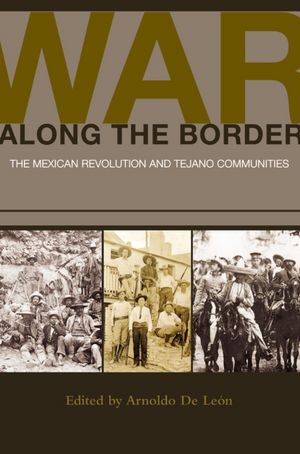
University of Houston Series in Mexican American Studies, Sponsored by the Cente -
TAMU Press (January 13, 2012)
ISBN-10: 1603445250 ISBN-13: 978-1603445252
Scholars contributing to this volume consider topics ranging from the effects of the Mexican Revolution on Tejano and African American communities to its impact on Texas’ economy and agriculture. Other essays consider the ways that Mexican Americans north of the border affected the course of the revolution itself.

Paperback Heinemann-Raintree (January 1, 2012)
ISBN-10: 1432960075 ISBN-13: 978-1432960070
John DiConsiglio
Why was the Mexican American War so important in the formation of the modern United States? Could Texas have survived as an independent nation or part of Mexico? This book seeks to relate the overall events and chronology of the war and shows its impact on everyday lives.
Paperback University of Texas Press (January 18, 2012)
ISBN-10: 0292739834 ISBN-13: 978-0292739833
Frank D. Bean (Author), Gray Swicegood (Author)
The Mexican American population is the fastest growing major racial/ethnic group in the United States. During the decade 1970–1980, the Mexican origin population increased from 4.5 million to 8.7 million persons. High fertility, not immigration, was responsible for nearly two-thirds of this growth.
Recent and historical evidence shows that women of Mexican origin or descent bear significantly more children than other white women in the United States. Mexican American Fertility Patterns clarifies the nature and magnitude of these fertility differences by analyzing patterns of childbearing both across ethnic groups and within the Mexican American population.
Using data from the 1970 and 1980 U.S. Censuses and from the 1976 Survey of Income and Education, the authors evaluate various hypotheses of cultural, social, demographic, and/or economic factors as determinants of fertility differences. Empirical analyses center on the interrelationships between fertility and generational status, language usage and proficiency, and female education.
This timely report concludes that Mexican American fertility is closest to that of other whites under conditions of greater access to the opportunity structures of the society.

Paperback Graphia; Reprint edition (January 17, 2012)
ISBN-10: 0547577346 ISBN-13: 978-0547577340
What do Gaby Lopez, Michael Robles, and Cynthia Rodriguez have in common? These three kids join other teens and tweens in Gary Soto's new short story collection, in which the hard-knock facts of growing up are captured with humor and poignance.
Filled with annoying siblings, difficult parents, and first loves, these stories are a masterful reminder of why adolescence is one of the most frustrating and fascinating times of life.

Integrating the 40 Acres: The Fifty-Year Struggle for Racial Equality at the University of Texas
Paperback University of Georgia Press (January 15, 2012)
ISBN-10: 0820340855 ISBN-13: 978-0820340852
Dwonna Goldstone (Author)
You name it, we can't do it. That was how one African American student at the University of Texas at Austin summed up his experiences in a 1960 newspaper article--some ten years after the beginning of court-mandated desegregation at the school. In this first full-length history of the university's desegregation, Dwonna Goldstone examines how, for decades, administrators only gradually undid the most visible signs of formal segregation while putting their greatest efforts into preventing true racial integration.
In response to the 1956 Board of Regents decision to admit African American undergraduates, for example, the dean of students and the director of the student activities center stopped scheduling dances to prevent racial intermingling in a social setting.
Goldstone's coverage ranges from the 1950 U.S. Supreme Court ruling that the University of Texas School of Law had to admit Heman Sweatt, an African American, through the 1994 Hopwood v. Texas decision, which ended affirmative action in the state's public institutions of higher education. She draws on oral histories, university documents, and newspaper accounts to detail how the university moved from open discrimination to foot-dragging acceptance to mixed successes in the integration of athletics, classrooms, dormitories, extracurricular activities, and student recruitment.
Goldstone incorporates not only the perspectives of university administrators, students, alumni, and donors, but also voices from all sides of the civil rights movement at the local and national level. This instructive story of power, race, money, and politics remains relevant to the modern university and the continuing question about what it means to be integrated.
(Citizenship and Migration in the Americas) Hardcover
Undocumented and authorized immigrant laborers, female workers, workers of color, guest workers, and unionized workers together compose an enormous and diverse part of the labor force in America. Labor and employment laws are supposed to protect employees from various workplace threats, such as poor wages, bad working conditions, and unfair dismissal.
Yet as members of individual groups with minority status, the rights of many of these individuals are often dictated by other types of law, such as constitutional and immigration laws. Worse still, the groups who fall into these cracks in the legal system often do not have the political power necessary to change the laws for better protection.
In Marginal Workers, Ruben J. Garcia demonstrates that when it comes to these marginal workers, the sum of the law is less than its parts, and, despite what appears to be a plethora of applicable statutes, marginal workers are frequently lacking in protection. To ameliorate the status of marginal workers, he argues for a new paradigm in worker protection, one based on human freedom and rights, and points to a number of examples in which marginal workers have organized for greater justice on the job in spite of the weakness of the law.
In Marginal Workers, Ruben J. Garcia demonstrates that when it comes to these marginal workers, the sum of the law is less than its parts, and, despite what appears to be a plethora of applicable statutes, marginal workers are frequently lacking in protection. To ameliorate the status of marginal workers, he argues for a new paradigm in worker protection, one based on human freedom and rights, and points to a number of examples in which marginal workers have organized for greater justice on the job in spite of the weakness of the law.

Chicano Satire: A Study in Literary Culture
Paperback University of Texas Press (February 8, 2012)
ISBN-10: 029274112X ISBN-13: 978-0292741126
Guillermo Hernandez (Author)
Geographically close to Mexico, but surrounded by Anglo-American culture in the United States, Chicanos experience many cultural tensions and contradictions. Their lifeways are no longer identical with Mexican norms, nor are they fully assimilated to Anglo-American patterns. Coping with these tensions — knowing how much to let go of, how much to keep — is a common concern of Chicano writers, who frequently use satire as a means of testing norms and deviations from acceptable community standards. In this groundbreaking study, Guillermo Hernández focuses on the uses of satire in the works of three authors — Luis Valdez, Rolando Hinojosa, and José Montoya — and on the larger context of Chicano culture in which satire operates.
Hernández looks specifically at the figures of the pocho (the assimilated Chicano) and the pachuco (the zoot-suiter, or urbanized youth). He shows how changes in their literary treatment—from simple ridicule to more understanding and respect — reflect the culture's changes in attitude toward the process of assimilation.
Hernández also offers many important insights into the process of cultural definition that engaged Chicano writers during the 1960s and 1970s. He shows how the writers imaginatively and syncretically formed new norms for the Chicano experience, based on elements from both Mexican and United States culture but congruent with the historical reality of Chicanos.
With its emphasis on culture change and creation, Chicano Satire will be of interest across a range of human sciences.
(Social Disparities in Health and Health Care) Hardcover
Springer; 2012 edition (February 9, 2012)
ISBN-10: 1461418666 ISBN-13: 978-1461418665
Jacqueline L. Angel (Editor), Fernando Torres-Gil (Editor), Kyriakos Markides (Editor)
As the nation’s largest Latino group, the Mexican-origin population will play a major role as America grows older: their situation is vital to understanding our aging, diverse society as national health care policy comes into a new era of analysis and revision. Aging, Health, and Longevity in the Mexican Origin Population identifies current and emerging health issues affecting this demographic, from health care disparities to changing family dynamics to the health implications of the United States’ relationship with Mexico.
Contributors test the Hispanic Paradox — that Latinos live longer than other Americans despite socioeconomic stresses — as it relates to various aspects of aging. Disability is discussed in social context, in terms of acculturation, family coping measures, access to care, and other key factors.
And concluding chapters offer strategies for bringing the Mexican-American elder experience into the ongoing debate over health care. Throughout, coverage balances the heterogeneity of the community with its status as emblematic of minority aging and as a microcosm of aging in general. Included among the topics: ·
- Immigration, economics, and family: contextualizing disability. ·
- Diabetes and employment productivity. ·
- The “healthy immigrant effect” and cognitive aging. ·
- Nursing home care: separate and unequal. ·
- Challenges of aging in place. ·
- Estimating the demand for long-term care.
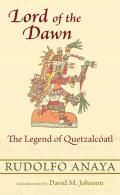
Paperback University of New Mexico Press (February 15, 2012)
ISBN-10: 0826351751 ISBN-13: 978-0826351753
Rudolfo Anaya (Author), David M. Johnson (Introduction)
The legend of Quetzalcóatl is the enduring epic myth of Mesoamerica. The gods create the universe, but man must carefully tend to the harmony of the world. Without spiritual attention to harmony, chaos may reign, destroying the universe and civilization.
The ancient Mexicans, like other peoples throughout the world, wrestled with ideas and metaphors by which to know the Godhead and developed their own concepts about their relationship to the universe. Quetzalcóatl came to the Toltecs to teach them art, agriculture, peace, and knowledge. He was a redeemer god, and his story inspires, instructs, and entertains, as do all the great myths of the world.
Now available in paperback, the Lord of the Dawn is Anaya's exploration of the cosmology and the rich and complex spiritual thought of his Native American ancestors. The story depicts the daily world of man, the struggle between the peacemakers and the warmongers, and the world of the gods and their role in the life of mankind.
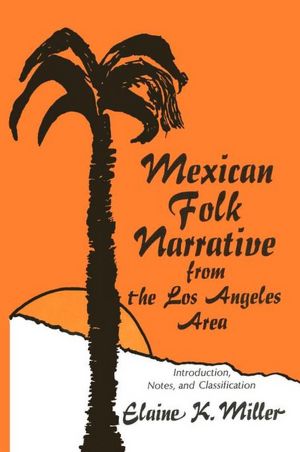
Mexican Folk Narrative from the Los Angeles Area: Introduction, Notes, and Classification
(English and Spanish Edition)
Paperback University of Texas Press; Bilingual edition (February 8, 2012)
Language: English, Spanish
ISBN-10: 029274143X ISBN-13: 978-0292741430
Elaine K. Miller (Author)
Urban Los Angeles is the setting in which Elaine Miller has collected her narratives from Mexican-Americans. The Mexican folk tradition, varied and richly expressive of the inner life not only of a people but also of the individual as each lives it and personalizes it, is abundantly present in the United States.
Since it is in the urban centers that most Mexican-Americans have lived, this collection represents an important contribution to the study of that tradition and to the study of the changes urban life effects on traditional folklore.
The collection includes sixty-two legendary narratives and twenty traditional tales. The legendary narratives deal with the virgins and saints as well as with such familiar characters as the vanishing hitchhiker, the headless horseman, and the llorona. Familiar characters appear in the traditional tales — Juan del Oso, Blancaflor, Pedro de Ordimalas, and others. Elaine Miller concludes that the traditional tales are dying out in the city because tale telling itself is not suited to the fast pace of modern urban life, and the situations and characters in the tales are not perceived by the people to be meaningfully related to the everyday challenges and concerns of that life.
The legendary tales survive longer in an urban setting because, although containing fantastic elements, they are related to the beliefs and hopes of the narrator — even in the city one may be led to buried treasure on some dark night by a mysterious woman.

Hardcover Simon & Schuster Books For Young Readers (February 21, 2012)
ISBN-10: 1442408928 ISBN-13: 978-1442408920
Benjamin Alire Saenz (Author)
Aristotle is an angry teen with a brother in prison. Dante is a know-it-all who has an unusual way of looking at the world. When the two meet at the swimming pool, they seem to have nothing in common. But as the loners start spending time together, they discover that they share a special friendship — the kind that changes lives and lasts a lifetime. And it is through this friendship that Ari and Dante will learn the most important truths about themselves and the kind of people they want to be.
Subscribe to:
Posts (Atom)
Subscribe To Pluma Fronteriza


 Posts
All Comments
Posts
All Comments


