"Chicano writers from El Paso are the most progressive, open-minded, far-reaching, and inclusive writers of them all."

Octavio Romano

Friday, July 02, 2010

Interview with Carlos Morton; El Paso Writer Updates: Joe Olvera, Luis Rodriguez in Inglaterra


 Carlos Morton (UCSB Theater and Dance Website)

Carlos Morton

Gonzo
In a prior interview with Carlos Morton, he described how that during his MEChA days at the University of Texas at El Paso, he did some stories for The Prospector, the UTEP student newspaper.

At that time in the early 1970s, Sunset Heights was a chivaso, den of places to shoot up with heroin and weed.
 
The police had recently done a raid at an apartment complex in El Paso's Sunset Heights neighborhood, beat up some people, broke down doors, and made a mess of the house they raided. 
The police commando unit busted 22 people at 817 W. Yandell. About 100 city police and federal officials took part in the raid overturning furniture, breaking lamps, waking people as they slept. The law enforcement “stormed through at least five apartments.” 

Several bystanders, two female UTEP students were watching from outside, when police went up to them and booked the two girls.

Morton writing for the The Prospector, the UTEP student newspaper, would do a gonzo journalism story on the raid which resulted in him another Prospector journalist getting a supeona from the El Paso grand jury. The two student journalist would refuse to name their sources.

Knowing he had a hot story, Morton later appeared on a new talk radio show with callers and was bombarded by callers defending the police's actions. Adding flame to the fire, Morton would publish an editorial comparing dope to Prohibition. The photos of the aftermath of the raid would be published in the October 9, 1970 Prospector.


BIO

Born in Chicago, Illinois, Morton's father served in the U.S. Army so the family traveled all over the United States and Latin America. His father was from Hidalgo, Mexico and moved to Chicago where he found it hard to find work, so he changed the family name, Perez, to Morton. 

Morton has lived for extended periods of time in Chicago, New York, San Diego, San Francisco, Los Angeles, El Paso, and Mexico. He also lived a few years in Panama and Ecuador, where his father was stationed. 

He spent many summers in El Paso before attending the University of Texas at El Paso where he was involved in the Chicano student movement there as well as in the university's newspaper. 
Even during college, Morton was out and about. In my interview with Morton in the late 1990s, he described how he use to cross over to Cd. Juarez and back again, like Jack Nicholson in the film "The Border" just to see if he could do it. 
 A chance hitchhike in upper-state New York landed him at Woodstock. He hitchhiked through Latin America in the 1970s.

Involved in some way or another in theater as an actor in high school it was seeing the Teatro Campesino come to UTEP in the 1970s that was a tremendous influence. He later worked with the San Francisco Mime Troupe
PUBLICATIONS
Morton's published collected plays include, The Many Deaths of Danny Rosales and Other Plays (1983) and Johnny Tenorio and Other Plays (1992) both published by Arte Publico Press. The Fickle Finger of Lady Death (1996, Peter Lang Press) are English language translations of four plays by contemporary Mexican playwrights.  
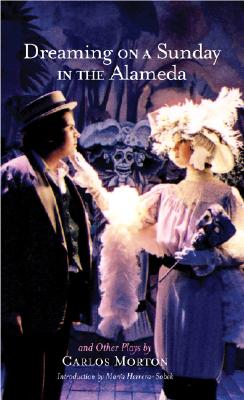
Rancho Hollywood y otras obras del teatro chicano, (1999, Arte Publico Press & Ediciones EL Milagro) is a Spanish language collection of his plays; Dreaming on a Sunday in the Alameda and Other Plays (Chicana & Chicano Visions of the Americas) (2004) on University of Oklahoma Press.

Morton former Mina Shaughnessy Scholar and Fulbright Lecturer to Mexico, Morton holds a M.F.A. in Drama from the University of California, San Diego, and a Ph.D. in Theatre from the University of Texas at Austin. In 1999 he was inducted into the "Writers of the Pass," in El Paso, Texas.


Above, from Morton's "Brown Baby"

INTERVIEW

Ray Rojas (RR): Carlos, last time we updated people on what was "up" with Carlos
Morton, you doing some speaking in Europe back in 2007. What has happened
since then?

Carlos Morton (CM): I went back to Europe this Spring on sabbatical; taught a graduate seminar in Hungary and spoke at several universities in Romania, Poland, and Spain. There is a lot of interest in Chicano/Latino theater in Europe, perhaps more than in the U.S.A. "El Jardin" (play by Morton) has been translated into Polish and Hungarian -- a performance of which I saw in April in Hungary. Although I didn't understand much of it, I laughed along with the audience since I recognized all the action.

I also won the BECA NEBRIJA DE CREADORES (Creative Writing Fellowship) at the University of Alcala de Henares, Spain, where I spent a month in residence writing a play in Spanish called "Frontera Norte."  The prize was 2000 Euros and the publication of the one act play this coming Fall in the Revista CAMINO REAL.

RR: Can you give us a preview of your latest work?

CM: ZONA ROSA The events in this play are based on the life of Dr. Francisco Estrada Valle (1957-1992) whose murder has never been solved. Some events and names have been changed. "Zona Rosa" is an entertainment district in Mexico City where gay people congregate or to quote Vicente Leñero, "La Zona Rosa es un perfume barato en un envase caro" (a cheap perfume in an expensive container).
                                Above, Morton and Russell Copley 
(courtesy of Eaglerock Stage)

RR: You've been doing a lot of cross border networking (with Mexico) within the last 15 years (maybe more). Can you give us your reflections on the violence in Northern Mexico, Cd. Juarez, and the contrary "2nd safest city in the U.S." title that El Paso draws?

CM: My wife (Azalea) and I just came back from a week in Tijuana and Northern Baja California. The tourist areas were ghost towns. No ones goes out after 11 p.m.  The police travel in packs. 

My suegra had her house broken into and we're trying to get her out.  It's a disaster area, 23,000 killed in the last 4 years since Calderon took office.  That is three times the casualties of all the U.S. deaths in Iraq and Afghanistan PUT TOGETHER since 9/11/01. The violence is starting to spill over into Chula Vista, CA. just as it is in El Paso.

RR: Carlos, we just finished another decade in Chicano(a) Lit (2000-2009). What did this decade give to Chicano(a) theater?

CM: We have had new plays by Josefina Lopez (including her movie REAL WOMEN HAVE CURVES), Cherrie Moraga, Luis Alfaro, Jose Cruz Gonzalez, Octavio Solis, and of course the fantastic trio known as CULTURE CLASH.  The Latino Theater Lab in L.A., under the director of Jose Luis Valenzuela, is also doing some fantastic work like Evelina Fernandez's recent piece, SOLITUDE.

RR: What recommendations can you give to someone who wants to give play writing a shot? Is there a text you use in your classes?

CM: I use Playwriting: Writing, Producing, and Selling Your Play, by Louis Catron.  It explains all you need to know about play writing.

RR: With exception of yourself, is there a play by a Chicano(a) playwright we should be giving attention to?

CM: Check out the hilarious NOPAL BOY by Macedonia Arteaga, a real fine example of Chicano humor.

RR: Can you give us a name of an up-and-coming Chicano playwright we should be excited about?

CM: Ray, I put the question to Diane Rodríguez, Associate Producer of New Play Production, Center Theatre Group, Los Angeles. She reads a lot of new work.  Here's what she said:

              "I read very few plays these days from writers that would self identify as Chicana/os. Plays               and writers I'm sure you know already that have recently come  across my desk are:

- "I put the fear of Mexico in 'em" by Matthew Paul Olmos

- "Basilica" and other plays by Mando Alvarado

- "Maelstrom" by Christopher Oscar Pena (Not sure if he is Mex-American)

Tanya Saracho who is Mex American from Chicago via Texas but does not self identify as Chicana

Aside from Mando and Tanya who who are Tejanos I don't even know if Matthew and Christopher are Mexican American and if they are it's doubtful they consider themselves Chicano(a)s.

I (Diane Rodriguez) have a new play that I wrote titled "Living Large in a Mini Kind of Way" that is going to premier in Chicago at Teatro Luna next year. And because I am from that generation that claimed the word Chicana/o, I still identify myself as a Chicana." 

Above, posters courtesy of Eaglerock Stage
More on Eaglerock at www.eaglerockstage.com

CM: So, this leads to a bigger question:  How many young writers identify as Chicanos?  There are some, including a very established El Paso playwright, who thinks we should use the term "Hispanic."

RR: Carlos, in my blogging on chapbooks h in early Chicano Renaissance literature, I mentioned your chapbook White Heroin Winter. My first question, is do you write any poetry now days? Second,
can you describe to our readers how you entered into play writing?

CM: I started out writing and reading my poetry in coffee houses and bars in Chicago and El Paso in the late 1960's and early 1970s.  I loved the immediacy with the audience.  I started writing plays about the same time and found that it gave me more more gratification and recognition.  The excitement and electricity of having a live audience to deal with is what makes both genres worth while in my estimation.


EL PASO WRITER UPDATE

Chicano Moratorium exhibit on view

Speaking of Ruben Salazar, see this story on an exhibit for the Chicano Moratorium: Chicano Moratorium exhibit on view.


Veteran Journalist Joe Olvera Well Done or Medium Rare

The City of El Paso will be honoring veteran journalis and poet, Joe Olvera with its Conquistador Award on July 20 at City Council Chambers. Joe sent me an email say, "I joke that I'm not a Conquistador, just a Conquistado."

Second, there will be a "Cabuleando a Joe Olvera Roast and Fundraiser" at the Cafe Mayapan on Saturday, July 24. Tickets will be $20 a person. It's going to be a fun evening of friends making fun of Joe and "my pompous ways" say Joe.

BorderSenses at 16

The BorderSenses journal has released their 16th volume. They had a release party last night (which I missed, sorry Amit, my car's in the shop).

Blog Posts
Luis Rodriguez sends tiding from England. I posted a post today on his blog.

Coming next week:
Sunday: Small Press Spotlite
 Monday: Lunes con Lalo
Tuesday: Interview with Mike/M. Padilla author of The Girls from the Revolutionary Cantina.


----------------
The link we share with you today is: The Brick Testament. Reading The Bible this way will take you back to your childhood.


Bookmark and Share

Thursday, July 01, 2010

Ballistic Results Official: Gunshots from Cd. Juarez have come to El Paso more than John Cornyn


AP Associated Pest


Ballistic Results Official: Gunshots from Cd. Juarez have come to El Paso more than John Cornyn

by Mando D. Chisme
Posted: 07/01/2010 12:00:00 AM MDT

EL PASO - Ballistics experts said today that gunshots from Cd. Juarez have come to El Paso more than has U.S. Senator John Cornyn.

Gunshots hit the El Paso, Texas city hall building on Tuesday, June 29.

Investigators are sure these shots came from a gun fired from Cd. Juarez, Mexico which is 800-1000 yards from El Paso's City Hall Building.

Cd. Juarez, Chihuahua has been embroiled in a drug war with warring drug cartels since 2008.

“We were astonished to find,” says Juan Balaso, “that in totaling up the number of gunshots that have strayed over the border to El Paso since 1910, they total more than U.S. Senator John Cornyn's visits to the Sun City.”

Cornyn does not have, and has never had, an El Paso office. El Paso is Texas' 6th largest city (or 4th if you count your undocumented tios).

Cornyn's office responded by smoke signals on Wednesday to the Associated Pest's query regarding reasons for having no office along the border, anywhere north of Harlingen, Texas.

Cornyn's press secretary Ottio Morenos said Cornyn will be visiting El Paso soon and will be giving at press conference at the McAllen Miller Airport on Tuesday, Aug. 5, 2010.

“This region, if given state status, would be the poorest state in the union,” says Viva Tirando, ballistics expert investigating the recent gunshots in El Paso.

A mariachi group played at the City Hall building today after the press conference. Violinist, Pepe Fredo E. Menez said, “Cornyn thinks Lubbock is West Texas” before resuming singing, “Sonaron cuatro balazos a las dos de la manana....”


Bookmark and Share

Bullets from Cd. Juarez hit El Paso City Hall: It's like Déjà vu all over again; El Paso Writer Updates on Gilb, Saenz, and Salazar


hit El Paso City Hall: 
It's like Déjà vu all over again

Spectators on roof of the Paso Del Norte Hotel watching 1st Battle of Juarez


With bullets hitting El Paso's City Hall many comparisons are being draw up to the First Battle of Cd. Juarez, the first major battle of the Mexican Revolution.


Tuesday, I think it was, bullets from an Ak-47 crossed over the border despite the wall, and hit El Paso's City Hall. One source told me that one of the bullets entered a room and hit a painting knocking it off the wall. At that point, everyone hit the floor.

I listen to the radio shows yesterday morning and some questioned the distance an Ak-47 bullet can travel and stated that the round had to be sniper.

Above, Revolutionaries near irrigation ditch during 1st Battle of Juarez

On the homepage of today's El Paso Times, they give a diagram showing the trajectory and the article states that is it possible for an AK-47 bullet to stray as much as a mile. Those familiar with El Paso, if you were traveling upriver on the Rio Grande, the river curves northeast right after the Sante Bridge and Chihuahuita. So the radius of of how close you are to Mexico is very great.


In May 1911, when Francisco Madero, Pascual Orozco, and Pancho Villa led an attack on Cd. Juarez, many El Paso Citizens gathered on the El Paso side to watch the battle, many to their detriment.

Many El Pasoan watched from rooftops and train cars. If I remember, about 10 people were killed on the El Paso side from stray bullets.

Just a few months ago, some people were comparing incidents of Nazi Germany to current state in Arizona. It grew some criticism.


Now, there are many comparisons nowadays between the Mexican Revolution in Cd. Juarez and the drug war violence. I'm not much of an advocate of the comparison.  Sure shot are straying over, so the comparisons run, but revolutionaries fighting for tierra y libertad to thugs fighting over drug territories is a far fetch. It's a shame this violence is occurring during the centennial of the Mexican Revolution of 1910.

New Links:


EL PASO WRITER UPDATES


El Paso Writers Mentioned in articles and blogs

Rudolfo Acuna mentions El Paso journalist Ruben Salazar in his article

Mexicans Are Not Dumb: The Schools Fail by Rudy Acuña on

Educational Equity, Politics & Policy in Texas blog: 

 Mexican American journalist Ruben Salazar, killed by Los Angeles Sheriff
deputies while covering the Chicano Moratorium of August 29, 1970,
reacting to educators calling Mexicans “culturally deprived,” wrote in
1963, “Presumably they want to save these poor people terrible void by
giving them culture…What they don’t seem to realize is that Mexican
Americans have a culture…” READ MORE.

Dagoberto Gilb is mentioned by Eric Miles in his interview with Anis Shivani on the Huntington Post: "

"As educational opportunities open up and as minorities become economically and educationally viable, they're telling their stories. Their works, however, are cast off into the category of "minority" fiction. They're stuck on the Literary Short Bus. Fine authors like Dagoberto Gilb, Mark Nesbitt, even Toni Morrison--they're not called great writers."

"They're labeled Minority Writers. The blue collar world is usually associated with white people, Irishmen and Italians and Jews and so forth--peoples who were discriminated against in the late 19th and early 20th centuries. But we're not building railroads anymore, and if we ever do so again, it'll be Hispanics and Blacks doing the dirty work, and they'll be writing the novels about their travails." READ MORE.

Saenz gets Oprah's approval; Saenz on PBS' NewsHour

Benjamin Alire Saenz young adult novel Last Night I Sang to the Monster was named on Oprah.com's top nine books for her Summer Reading List. This book also won the 2010 Paterson Prize for Books for Young People.

Seeing Ben Saenz with the PBS NewHour's footage amazed me.  


"Wealthy people can move anywhere they want. Wealthy people are welcome anywhere in the world, which then we have to say then borders are really to keep out the poor."

                                   ---- Benjamin Alire Saenz, NewHour

                                   READ AND SEE MORE


----------------
NEW ISSUE OF 
"LIBROS, LIBROS" 
IS OUT

Over 50 pages of new and forthcoming books by/on Chicano(a) and Latino(a)s


---------------

TOMORROW: INTERVIEW WITH CARLOS MORTON


The link we share with you today is: MartinEspada.net.


Bookmark and Share

Wednesday, June 30, 2010

NEW CHICANO AND LATINO BOOKS IN 2010: Summer Issue of "Libros, Libros" IS OUT!


NEW ISSUE OF 
"LIBROS, LIBROS" 
IS OUT

Over 50 pages of new and forthcoming books by/on Chicano(a) and Latino(a)s


 ----------


NEW HISPANIC AND MEXICO TOPIC-BOOKS 
IN JUNE 2010

Hispanics in the United States: A Demographic, Social, and Economic History, 1980-2005
(Cambridge University Press; 1 edition June 2010 ISBN-10: 0521718104)
Laird W. Bergad (Author), Herbert S. Klein (Author)

In 1980 the U.S. government began to systematically collect data on Hispanics. By 2005 the Latino population of the United States had become the nation's largest minority and is projected to comprise about one-third of the total U.S. population in 2050. Utilizing census data and other statistical source materials, this book examines the transformations in the demographic, social, and economic structures of Latino-Americans in the United States between 1980 and 2005. 

Unlike most other studies, this book presents data on transformations over time, rather than a static portrait of specific topics at particular moments. Latino-Americans are examined over this twenty-five year period in terms of their demographic structures, changing patterns of wealth and poverty, educational attainment, citizenship and voter participation, occupational structures, employment, and unemployment. The result is a detailed socioeconomic portrait by region and over time that indicates the basic patterns that have lead to the formation of a complex national minority group that has become central to U.S. society.


Hispanic Caribbean Literature of Migration: Narratives of Displacement 
(New Concepts in Latino American Cultures)(Palgrave Macmillan June 22, 2010 ISBN-10: 0230620655)
Vanessa Perez Rosario (Editor)

A collection of thirteen chapters that explores the literary tradition of Caribbean Latino literature written in the U.S. beginning with José Martí and concluding with 2008 Pulitzer Prize winning novelist, Junot Díaz. The essays in this collection reveal the multiple ways that writers of this tradition use their unique positioning as both insiders and outsiders to critique U.S. hegemonic discourses while simultaneously interrogating national discourses in their home countries. The chapters consider the way that spatial migration in literature serves as a metaphor for gender, sexuality, racial, identity, linguistic and national migrations.


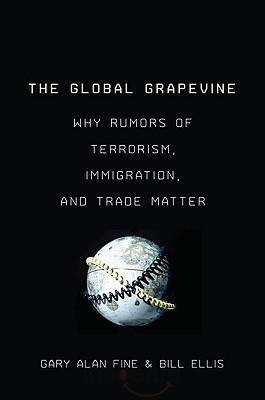
The Global Grapevine: Why Rumors of Terrorism, Immigration, and Trade Matter 
(June 10, 2010)
Gary Alan Fine and Bill Ellis

Soon after 9/11, wild rumors began to spread: that Arab-Americans were celebrating publicly, that some people had been warned, that politicians knew all along. 

The Global Grapevine reveals how--through our everyday thoughts and conversations, and the rumors we spread--we grapple with the new global world. Drawn from diverse sources, the book illuminates urban legends like the claim that a certain t-shirt with a Chinese pictogram brands the wearer as a prostitute, conspiracy theories such as the "9/11 Truth Movement," or stories of tourists infected with AIDS by locals. 

These rumors, the authors argue, reflect our anxieties and fears about contact with foreign cultures--how we believe foreign competition to be poisoning the domestic economy and foreign immigration to be eroding American values. 

Focusing on the threat posed by terrorism, the impact of immigration, the risks involved in international trade, and the dangers faced by naive tourism, the book provides a broad survey of the most widely circulated rumors and examines what these tales reveal about contemporary society.

Hispanic New York: A Sourcebook 
(Columbia University Press June 15, 2010 ISBN-10: 0231148186)
Claudio Iván Remeseira (Editor)
Over the past few decades, a huge wave of immigration has turned New York into a microcosm of the Americas and enhanced its role as the crossroads of the English- and Spanish-speaking worlds. 

Yet far from being an alien group within a "mainstream" and supposedly pure "Anglo" America, people referred to as Hispanics or Latinos have been part and parcel of New York since the beginning of the city's history. 

They represent what Walt Whitman once celebrated as "the Spanish element of our nationality." Hispanic New York is the first anthology to offer a comprehensive view of this multifaceted heritage. Combining familiar materials with other selections that are either out of print or not easily accessible, Claudio Ivan Remeseira makes a compelling case for New York as a paradigm of the country's Latinoization. 

His anthology mixes primary sources with scholarly and journalistic essays on history, demography, racial and ethnic studies, music, art history, literature, linguistics, and religion, and the authors range from historical figures, such as Jose Marti, Bernardo Vega, or Whitman himself, to contemporary writers, such as Paul Berman, Ed Morales, Virginia Sanchez Korrol, Roberto Suro, and Ana Celia Zentella. 

This unique volume treats the reader to both the New York and the American experience, as reflected and transformed by its Hispanic and Latino components.

The Mexican Filmography, 1916 Through 2001 
McFarland & Company 
June 6, 2010 ISBN-10: 0786461225
David E. Wilt 

Mexican cinema has largely been overlooked by international film scholars because of a lack of English-language information and the fact that Spanish-language information was difficult to find and often out of date. 

This comprehensive filmography helps fill the need for a single source for basic information on Mexican films. Arranged by year of release and then by title, the filmography contains entries that include basic information (film and translated title, production company, genre, director, cast), a plot summary, and additional information about the film. 

To be included, a film must meet the following criteria: it must be a Mexican production or co-production, feature length (one hour or more, although exceptions are made for silent films), fictional (documentaries and compilation films are not included unless the topic relates to Mexican cinema; some docudramas and films with recreated or staged scenes are included), and theatrically released or intended for theatrical release.

The Mexican League / La Liga Mexicana: Comprehensive Player Statistics, 1937-2001 Bilingual Edition / Estadisticas Comprensivas De Los Jugadores, 1937-2001 Edicion Bilingue
(McFarland & Company; Bilingual edition June 6, 2010 ISBN-10: 0786461209) 
Pedro Treto Cisneros

While there is dispute among scholars as to where and when the first game of baseball was played in Mexico, there is no doubt that the game is as popular there as it is in America. The popularity of the sport led to the establishment of the Professional Mexican Baseball League in 1925, which continues today.

This text opens with a brief history of Mexican professional baseball and provides, in both English and Spanish, statistical information on the players of the Mexican Baseball League since 1937 (the first year in which the league kept official records). 

Individual batting statistics for each player and pitching statistics for each pitcher are provided, along with tables listing rookie of the year, no hit games, perfect games, triple crown winners and consecutive games, team champions, individual batting champions, individual pitching champions, winning percentage, earned runs, the best batters in each category (runs scored, hits, doubles, triples, etc.), all-time individual batting leaders, the best pitchers in each category (innings pitched, complete games, shutouts, etc.), and all-time individual pitching leaders. 

Members of the Mexican Baseball Hall of Fame are also listed, as are the competitors and results for Mexican League All-Star games. An appendix provides statistics for 85 Mexicans who have played in the Major Leagues.


Leading Them to the Promised Land: Woodrow Wilson, Covenant Theology, and the Mexican Revolution, 1913-1915  
(New Studies in U.S. Foreign Relations) 
(Kent State University Press June 30, 2010 ISBN-10: 1606350250)
Mark Benbow

 How Wilson's religious heritage shaped his response to the Mexican Revolution? The First Amendment of the United States Constitution mandates that government and religious institutions remain separate and independent of each other. 

Yet, the influence of religion on American leaders and their political decisions cannot be refuted. "Leading Them to the Promised Land" is the first book to look at how Presbyterian Covenant Theology affected U.S. president Woodrow Wilson's foreign policy during the Mexican Revolution. 

The son of a prominent southern minister, Wilson was a devout Presbyterian. Throughout his life he displayed a strong conviction that covenants, or formal promises made binding by an oath to God, should be the basis for human relationships, including those between government and public organizations. 

This belief is demonstrated in Wilson's attempt to bring peaceful order to the world with the 1919 Covenant of the League of Nations. Through careful investigation of Wilson's writings and correspondence, along with other contemporary sources, author Mark Benbow shows how Wilson's religious heritage shaped his worldview, including his assumption that nations should come together in a covenant to form a unitary whole like the United States. 

As a result, Wilson attempted to nurture a democratic state in revolutionary Mexico when rivals Venustiano Carranza and Pancho Villa threatened U.S. interests. His efforts demonstrate the difficulty a leader has in reconciling his personal religious beliefs with his nation's needs. 

"Leading Them to the Promised Land" adds to the growing body of scholarship in international history that examines the connections between religion and diplomacy. It will appeal to readers interested in the history of U.S. foreign relations and the influence of religion on international politics.

Without History: Subaltern Studies, the Zapatista Insurgency, and the Specter of History 
(Pitt Illuminations)
(Publisher: University of Pittsburgh Press; 1 edition June 28, 2010 ISBN-10: 0822960656)
Jose Rabasa. 

On December 22, 1997, forty-five unarmed members of the indigenous organization Las Abejas (The Bees) were massacred during a prayer meeting in the village of Acteal, Mexico. 

The members of Las Abejas, who are pacifists, pledged their support to the Zapatista Army of National Liberation, a primarily indigenous group that has declared war on the state of Mexico. 

The massacre has been attributed to a paramilitary group composed of ordinary citizens acting on their own, although eyewitnesses claim the attack was planned ahead of time and that the Mexican government was complicit.

In Without History, José Rabasa contrasts indigenous accounts of the Acteal massacre and other events with state attempts to frame the past, control subaltern populations, and legitimatize its own authority. 

Rabasa offers new interpretations of the meaning of history from indigenous perspectives and develops the concept of a communal temporality that is not limited by time, but rather exists within the individual, community, and culture as a living knowledge that links both past and present.

Due to a disconnection between indigenous and state accounts as well as the lack of archival materials (many of which were destroyed by missionaries), the indigenous remain outside of, or without, history, according to most of Western discourse. 

The continued practice of redefining native history perpetuates the subalternization of that history, and maintains the specter of fabrication over reality.

Rabasa recalls the works of Marx, Lenin, and Gramsci, as well as contemporary south Asian subalternists Ranajit Guha and Dipesh Chakrabarty, among others. 

He incorporates their conceptions of communality, insurgency, resistance to hegemonic governments, and the creation of autonomous spaces as strategies employed by indigenous groups around the globe, but goes further in defining these strategies as millennial and deeply rooted in Mesoamerican antiquity. 

For Rabasa, these methods and the continuum of ancient indigenous consciousness are evidenced in present day events such as the Zapatista insurrection.


Mexican Community Health and the Politics of Health Reform 
(University of New Mexico Press June 15, 2010 ISBN-10: 0826348866)
Suzanne D. Schneider 

The struggle of Mexicans to secure quality health care is the focal point of this study. Large-scale transformations in Mexico's national health care system have resulted in budget cuts, increased user fees and decreased public services. 

At the local level community-based health groups that practice popular medicine are addressing the challenge by training health promoters in a variety of preventive and healing practices and offering low-cost services in community clinics. 

Their health care approach integrates local and global practices ranging from Mexican herbalism to Chinese medicine. Suzanne Schneider's ethnographic study of grassroots health groups in Morelos, Mexico, addresses the lives of the participants and the groups' contributions to community health. 

What draws women to these groups? Are they reacting to their experiences with formal health care? To what extent are the groups' teachings applied in the household and accepted throughout the community? Does group participation offer women new sources of empowerment or avenues to income generation? Does the government support these groups? How do they fit into larger trends of health care reform and the shift toward privatization? 

Taking a political economic approach, Schneider examines the conditions under which community-based health groups are emerging and explores the ways different constituencies address health dilemmas. She delineates future roles for new participants in health care, new models of community health, and a new medical pluralism.

-------------------

The link we share with you today is: http://www.opensecrets.org


Bookmark and Share

Tuesday, June 29, 2010

Book Publishers Announce Moratorium on New Book Submissions


AP Associated Pest

Book Publishers Announce Moratorium on New Book Submissions

By Raymundo Eli Rojas
Published: June 16, 2010

NEW YORK - The Publishers, Editors, and Editor of Text Organization announced today that they will cease accepting new book proposals beginning December 21, 2010.

In a press conference in New York City, various publishing houses gathered to disseminate what is thought to be tiding of bad news to poets and writers. The moratorium on accepting new book proposals is expected to last two years.

“Because it takes about two years for us to review a book proposal, negotiate the contract with the author, go through edits, and more,” says Juan Leer, president of the The Publishers, Editors, Editors of Text Organization, better known as PEETO, “we have decided to have the moratorium to last two years until December 2012."

More specifically, Leer cited Dec. 21, 2010. PEETO has based its decision on the fact that the world will be ending on December 21, 2012.

“No mames,” says Chicano novelist Ray Llenos upon hearing the news. Llenos recently submitted his post-transcendental neo-dystopian novel proposal to a major university press and it was returned to him unopened.

“I knew something was up,” says Llenos, an public defender by day, “when all the White people in my office kept playing Hank Williams, Jr.'s 'A Country Boy Can Survive' over and over again on their IPods.”

“We see no reason for publishing new books,” says Leer, “if no one will be around to read them. It's the end of the world as we know it, but I feel fine.”

PEETO has based their decision on the Second Mayan Calender that predicts the end of the world will be on Dec. 21, 2012.

However, several scholars question the PEETO's recent announcement regarding their refusal to accept new book submissions pending the Apocalypse.

Jerry Curls, a professor of post-Apocalyptic Studies at the University of New Mexico at Orogrande thinks the research PEETO is basing their decision on, is very flimsy to say the least. Curls says, “We think there will be some survivors, we just don't yet know the literacy levels Post-Apocalyptic society.”

Curls is referring to several studies in which post-Apocalyptic scenarios were run at various university labs across the country, all with differing results.

“We looked into punk mohawked, leather-bondage gear-wearing marauding motorcycle gangs and looked at their propensity to read,” continues Curls.

Although no post apocalyptic gangs exist today, scientist thought they would be able to study the Folsom Street Fair in San Francisco and Judas Priest's Rob Halford to provide some incite to what we may expect from post-Apocalyptic society, but in the end settled for a computer model.

Above, relation between literacy and leather bondage gear, unknown
“However,” says Curls, “we found post-Apocalyptic gangs more interested in blowing up oil refineries and playing gladiatorial games to Tina Turner songs, so we knew they were not an option.”

But Curl says the second study was more promising.

“In the second scenario, we focused on the literacy levels of post-apocalyptic zombies.”

What they found shocked the researchers.

Zombies were tested on how they progressed into their zombiatic state. Zombies who became zombie due to some viral pandemic were shown to have limited book appreciation -- much like people today.

However, zombies, who became zombies postmortem, showed considerable interest in the writing of Samuel Huntington and Ronald Reagan's second inaugural address.
Above, Postmortem Zombie preferred Ronald Reagan Speeches

“For this study,” says Curls, “we had to find a population as close to post-Apocalyptic zombies as possible, because, obviously, zombies do not exist today.”

One population they looked to that had similar characteristics was the Ka' Pacho population. “We were lucky to find them,” says Curls, “This population has shown zombie-like characteristics in that they move into land belonging to someone else, and then, claim it as their own  attacking everyone in the process.”

“Ka'Pachos,” continues Curls, “seem to think that they are the indigenous to what ever land they occupy thus resulting to mob attacks, lynching, cannibalism, and more.”

But more pressing research is needed into the Ka'Pachos tendency to gather in large groups and attack people, especially people of color.

“Although several members of the Texas Board of Education are Ka'Pachos, for this study, our research team focused on the Ka'Pacho people of Arizona,” says Curls. “We think they hold similar characteristics to post-Apocalyptic zombies.”

Above, a Arizona Ka'Pacho, hold similar characteristics to post-Apocalyptic zombies

Ka'Pachos barely arrived in what is now Arizona in 1848, and almost immediately, they began showing zombie-like traits.

In another study, out of East West Texas State, the literacy levels and amount of reading were tested on post-Apocalyptic apes.

“These tests did not work so well,” says Curls, “the damn dirty apes kept blowing up their books. We even gave them Cormac McCarthy's The Road and those maniacs! They blew it up! Goddam them all to hell!”

The questions remains whether humans do survive the Apocalypse, what will be the role of writers and publishers in the post-Apocalyptic world?

“If authors survive the Apocalypse,” says Leer, “we encourage authors to send their book proposals after Dec. 21, 2012, but don't press your luck. You (authors) don't believe we're on the eve of destruction?”

Leer described publishers would only publish limited copies of a writer's book due to the smaller population that will exist after Dec. 21, 2012. However, the good news is these books may become collectors items, and those owning them may be pursued by book-loving marauding post-Apocalyptic thugs and goons.

Above, author travels Post-Apocalyptic Americas to sell book

“Authors will have to take to the road,” says Leer, “and travel the country to sell their books or fight off angry critics."


Past Coverage

  • McMcarthy not really from the border (October 16, 2003)
  • Chicano writers ecstatic about new ethnic studies ban in Arizona (May 19, 2010)
Related Searches


Bookmark and Share

Monday, June 28, 2010

Lunes con Lalo: 7-16-79, Mi Mexico, No Tengo Papeles; Dagoberto Gilb Rumpus; Pat Mora, Octavio Solis, Tatiana de la Tierra


LUNES CON LALO

7-16-79

yo ya me voy
Begins a famous Chicano song,
"La Barca de Oro" to be exact.
It talks of farewells.
It is about saying goodbye
to the one you love.
It is a sad, beer song.
So it is that good byes
Willingly or unwillingly
Must be said
To all we love,
to all who love us.
Adios, what an accurate word.
It is Chicano for good bye.
It is as if God does
Collect all things
And we properly send them back to Him.

Updating this verso some seven years later, I am much more in tune to the idea of saying good bye. My 55th birthday is a few days away. I was surprised by a doctor saying I was diabetic and that I needed to go on a diet and start taking insulin tablets, maybe even injections.

I have always enjoyed a very strong love of life. Saying an adios to life itself is going to be extremely hard for me. Yet, I know I am now as ready as I will ever be.
I cannot honestly call it a good bye in terms of my wife, children, and grandchildren. they are an extension of me. They will live for me.
I squeeze as much joy into each minutes and hour of my life. I do not panic because I am vulnerable as all of us humans. Saying good bye to love is not so hard because love is a boomerang which does return to the sender, always.
Who knows, with diets and pills, I may live to be 106.
                                    --- Lalo Delgado
--------                                                 ________________

MI MEXICO

Thinking about it brings me a chill,
thinking that out of my own free will
I have lost the right 
to call you,
--- mi Mexico ---

I am now a foreigner
to my native soil.
 
Today I watch a parade commemorating
Mexico's independence.

I hear the doubling of the drums
and the wailing 
of the bugles
And I feel my
heartbeat
accelerate like a race-car.

My eyes fill with salty water
from the sea,
maybe lagrimas
the eternal
reminders
of my true origin.

I feel like a man loving two women,
the blue skirted one
and the one with the green blouse.

I make my sense of loyalty
much stronger
by breaking it.

I watch the eagle and the serpent
upon the nopal,
the same eagle
dropped the snake
to pick up the spears
and olive branches
and became 
a U.S. symbol.

The tanned olive in my skin
keep insisting
---You're still a Mexican ---

Are there really two different lands
claiming my heart
or is my heart
claiming two nationalities
or do I have two personalities?
  
----- Lalo Delgado
___________


NO TENGO PAPELES

Mis hermanos chicanos
me desconocen y me insultan,
no me abajan de
--- pinche mojado
muerto de hambre.----

Tengo miedo, tengo frió,
lo que no tengo es papeles.

Busco por aca
lo que en mi patria no hay
por tanta explotación americana.


Por tonto que me crean
yo entiendo de economía,
tengo la razón
            pero no tengo papeles.

Me hechan a mi la culpa
por tanta gente sin trabajo
y por los sueldos bajos
y por que la economía
anda por el suelo.

Yo no tengo la culpa ni papeles.

La migra, ah, la migra,
es brazo elástico
del ranchero ventajoso,
de un gobierno conveniencero,
es el mismo que deje en México.

La migra rompe mi cabeza
y me asesina diciendo
que solo fue un accidente.


Todos se lo creen,
yo no tengo la razón
pero no tengo papeles.

Lo poco que gano a veces me alcanza
pa' mandarles un quiotro dólar
a los que deje atrás
pero no las veo llegar,
tengo una familia tan grande,
no tengo papeles.

Sí, es verdad,
la tristeza por estos rumbos
y ese idioma de los perros
es inaguantable y a veces me emborracho y me enamoro,
tengo corazón,
no tengo papeles.

Ni casa tengo, mis patrones
me hacen el gran favor
de dejarme dormir en un gallinero,
se los agradecso,
no tengo papeles.

Nací sin papales
crecí sin a papales,
yo se quien soy, soy mexicano.

Pido trabajo, no pido limosna.

Hay otros aquí sin papeles
ya a ellos nadie los molesta
por que están güeros.

Si, mi espalda esta mojada
pero de sudor, mis huevos también.

No tengo papeles,
no tengo papeles.


Abelardo
enero '74


“7-16-79” © 1979 Abelardo Delgado
Mi Mexico” © Abelardo Delgado
No Tendo Papeles” © Abelardo Delgado

Published with persmision of Dolores Delgado and the Delgado Family


EL PASO WRITER UPDATES


Dagoberto Gilb's Rumpus

The Rumpus posted a post on Dagoberto Gilb's story "Uncle Rock." Wow, this story is still getting allocates!  The Rumpus states, "In the May 10th issue, Dagoberto Gilb’s “Uncle Rock” caught me off guard," READ MORE.

However, Vheissu's review gives the opposite opinion: "Dagoberto Gilb’s “Uncle Rock” (TNY, May 10, 2010) goes nowhere. Yes, you can fish out tiny specks that, stringed together, show that the main character is changing. But the story’s three short pages require much more patience than they should." READ MORE.

The University of Houston-Victoria American Book Review has four new associate editors from prestigious academic settings across the country to further the internationally distributed literary journal’s goal of being the top source for opinion on literary innovation.  One of them is our own Dagoberto Gilb. READ MORE.


The Creation of Raymond Paredes

Paredes has been in the news regarding creationist who want to create a masters in creationist science. Here are several stories:


Texas judge rejects creationist master's degree

Court Smacks Down Creationist Institute Suit « Texas Freedom Network

A Bible-based science degree? Even Texas wouldn't swallow that ...

Judge Sam Sparks Ruling in ICR v. Texas Higher Ed Coordinating Board

Paredes is also mentioned in the San Antonio-Express News in the article "Higher education faces fiscal woes": 

With a projected budget shortfall of $18 billion looming over the state, higher education will likely take a financial beating in the next legislative session and it could not come at a worse time." READ MORE.


Tatiana de la Tierra's Gift


Check out UTEP MFA alumna Tatiana's post on La Bloga:
The Gift: When I Found Out My Daughter was a Lesbian.

El día de las madres ya pasó, pero me quedé pensando en las madres y las hijas que no lo celebraron: en la madre a quien la intolerancia selló su corazón con dolor y en la hija que ...READ MORE.


Magical Realism Made Graphic


Democracy Guest List posted a small post on El Paso's Cinco Puntos Press’ new full-color comic Mr. Mendoza’s Paintbrush by Luis Alberto Urrea. Check it out.


Illustrator of Pat Mora's book wins Belpré Medal


Given annually, the Pura Belpré Medal is awarded to a Latino writer and illustrator whose work best portrays, affirms and celebrates the Latino cultural experience in an outstanding work of literature for children and youth. The award is known worldwide for the high quality it represents and serves as a guideline for educators, parents and bookstores for the best of the best in Latino-themed children’s literature.

John Parra, illustrator of “Gracias. Thanks,” written by El Paso native Pat Mora and published by Lee & Low Books Inc. will be honored. READ MORE.


Octavio Solis' "Lydia"

Octovio Solis play "Lydia" will be featured at the New Play Summit in Denver, Colorado.

from Vermont Public Radio

"Lydia was one of three world premieres at this year's New Play Summit, a conference that Thompson started as a way to showcase readings and full productions of new work. Critics raved about the play, which tells the story of a dysfunctional Mexican-American family in El Paso, Texas. One reviewer compared playwright Solis to Eugene O'Neill and Arthur Miller; another called Lydia a story "filled with mystery and magic."
READ MORE.
 
 The link we share with you today is: Textbook Repression: US Training Manuals Declassified
Bookmark and
Share