"Chicano writers from El Paso are the most progressive, open-minded, far-reaching, and inclusive writers of them all."

Octavio Romano

Tuesday, June 08, 2010

Rocky Mountain Raza: Chicano/a writing in Colorado, Part II


Rocky Mountain Raza: 
Chicano/a writing in Colorado, Part II

by Raymundo Eli Rojas
(c) Raymundo Eli Rojas, 2004

Author's note: This article is republished from the Pluma Fronteriza, Winter 2004, Vol. 4, No. 1. My thanks for Trindad Sanchez, Jr., Lalo Delgado, and Manuel Ramos for their incite into Chicano(a) writers in Colorado. I had the opportunity to visit with them during my summer in Colorado in 2004. As this is an old article, Lalo and Trini, Jr. have since walked on. The folks and scholars mentioned here are where they were in the summer of 2003 when I wrote this article. Many have moved on to other places.

---

As the new Denver metro rail passes by Brother Jeff’s, a poet just out of high school gives his verses with jazz guitar accompaniment and jazz scatting. The women poets go on an expedition of erotic poetry and every performance ends with the M.C. saying, “Can I get an affirmation?”

Rodolfo "Corky" Gonzalez

Colorado has had its share of Chicano writers. Rodolfo “Corky” González of Denver wrote “I Am Joaquin,” though Ricardo Sánchez and José Angel Gutierrez suspect González did not write the watershed poem.* But than again, if you were a Chicano poet in those days and had not been called a vendido, agringado, encholotado, nagonometrico, or gotten into an argument with Ricardo Sánchez, then you really hadn’t made it as a Chicano(a) poet.

Nevertheless, the poem became Chicano Literature’s most famous. In 1977, A Spokesman of the Mexican American movement: Rodolfo "Corky" Gonzales and the fight for Chicano liberation, 1966-1972 (R and E Research) was published by Christine Marín. A few years ago, Arté Público Press published Message to Aztlán: Selected Writings which contains civil rights writings, plays, prose, and more by González. Antonio Esquibel writes the introduction and even explains Gonzales’ lack of publication after “I Am Joaquin.”


Ernesto B. Vigil wrote The Crusade for Justice: Chicano Militancy and the Government's War on Dissent (U of Wisconsin Press) focusing on federal provocateurs and infiltration in the Chicano Movement in Denver.

There are also various writings on the FBI’s CIONTELPRO referencing the Crusade. On the other side of the coin, another Crusade for Justice co-founder, Juan Haro self published The Ultimate Betrayal (ISBN 0-8059-4379), which is both a biography on Haro and exposé on the Crusade for Justice and Gonzáles. Included in the book is a copy the Crusade’s incorporation form and a legal demand letter to Dorrance Publishing Co. threatening to sue the publisher if they published the book.

The letter was ultimately successful, thus Haro had to self publish.+

A note for El Pasoans: In the early 1970s, many El Pasoans (including many members of El Segundo barrio’s Mexican American Youth Association — MAYA) came to Boulder with Salvador “El Huevo” Ramírez with the lure of bien financial aid, the recently founded Chicano Studies program, and the United Mexican American Students (UMAS).

There, they became involved in the student movement. There is a dark history waiting to be told of inter-Chicano rivalry and betrayal concerning the bombings that proliferated the area in those years. Poet, Heriberto Teran was one of the victims. Yet, movimiento veterans I know, tell me it's still not time to let those stories out.

One veteran of that period, another El Pasoan, Ché Luera, died in 2003. He was also known to write poetry.

Ray González (no relation to Corky) spent some time in the Mile High City. He even edited a book called City Kite On A Wire: 38 Denver Poets which included a piece by Lalo Delgado. González is still is the poetry editor of the Bloomsbury Review, which is headquartered in Denver near La Taza Café on Platte Street.

Bernice Zamora was born in Aguilar, Colorado, which is a little north of Trinidad. She attended the University of Southern Colorado in Pueblo and then did graduate studies at Colorado State University in Ft. Collins. She published, along with José Antonio Burciaga, Restless Serpents. Anthony Virgil is another poet from Denver who has put out a chapbook called City in Ranfla.
Ramon del Castillo

Ramon del Castillo, a native of Wichita, Kansas, is also active in the state. I did not meet him that summer, but bumped into him later in Los Angeles. His most recent book Tales from a Michoacano came out last year. Dr. Castillo is a professor at Regis University and teaches at Metro State University in Denver. Del Castillo helped lead the movement that defeated Ron Unz’ anti-bilingual education movement in Colorado.

Alurista, another Chicano poetry pioneer, is seen occasionally in Denver.


      On the dark side of The Force, Linda Chávez, assimilationist and English-only-now-damn-it** crony, graduated from the University of Colorado. She is the author of Out of the Barrio: Toward a New Politics of Hispanic Assimilation (Basic Books) and An Unlikely Conservative: The Transformation of an Ex-Liberal [Or How I Became the Most Hated Hispanic in America] (Basic Books). Rumors remain as whether Chávez is actually a part of the “collective” known as The Borg (“Resistance if futile, prepare to be assimilated.”).

 Lorna Dee Cervantes


      At the University of Colorado in Boulder, Lorna Dee Cervantes teaches in the English department and frequently reads in the Denver/Boulder area. Frederick Luis Aldama, who just edited a collection of unpublished works by Arturo Islas, also teaches at CU. Emma Pérez, the historian, just joined the bunch after leaving UTEP.

In Texas, when someone says “The Valley” or “El Valle,” we know what they are talking about. Apparently, you can say “The Valley” in Colorado too, and people will know you are speaking of the San Luis Valley. One recent book on U of TX Press Alex and the Hobo by José Iñez “Joe” Taylor describes life and growing up in the San Luis Valley in the 1940s.


My job with Colorado Legal Services (CLS) took me to different parts of the state. It was coincidence that writer-attorney Manuel Ramos also worked with CLS. As I waited outside his office to meet him, I saw the Chicano and Tejano conjunto posters smiling at me. Originally from Florence, Colorado, Ramos has published five mystery novels. Active in the Chicano student movement at Colorado State University, he attended law school at Denver University. 

 Manuel Ramos

The University of New Mexico Press has published his most recent novels Brown-on-Brown and Mooney’s Road to Hell. Northwestern University Press is republishing his older novels. Ramos is also one of the past recipients of the Colorado Book Award. His Ballad of Rocky Ruíz became a national bestseller and was a Edgar Award nominee for Best First Mystery. I was impressed with Ramos who had karma of a real cool vato, even before we spoke to each other. (www.manuelramos.com)
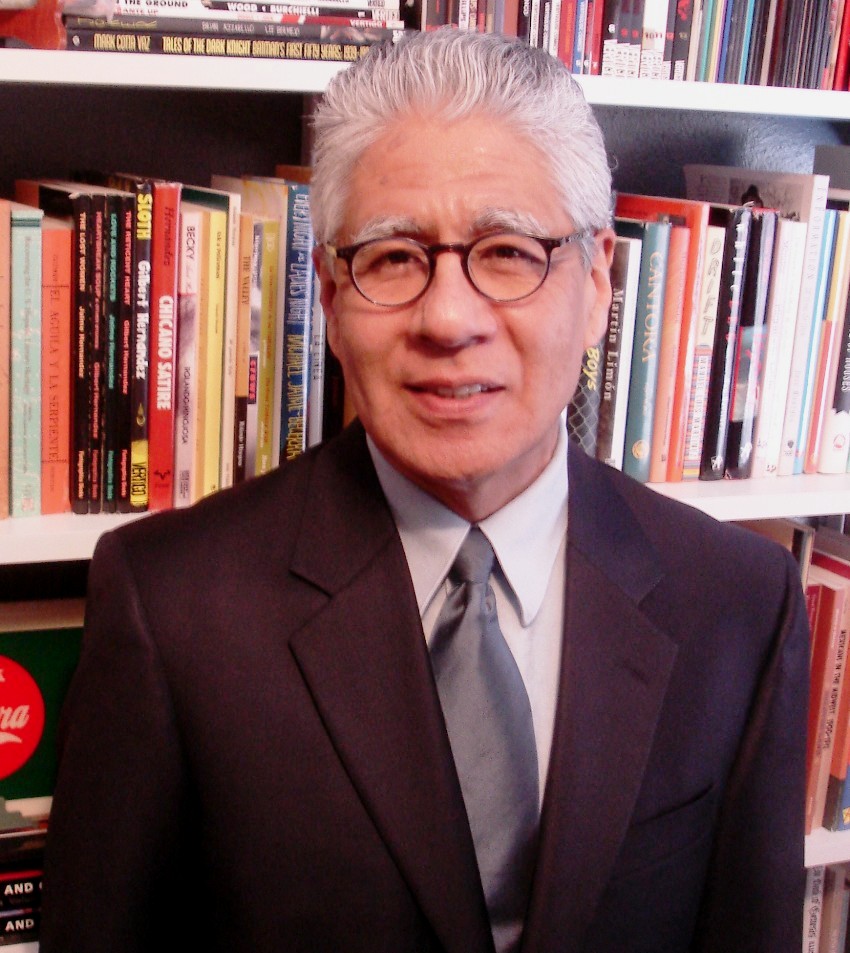
Gloria Velasquez

Gloria Velasquez, author of I Used to be a Superwoman Chicana (Arte Público) and the famed Roosevelt High School Series for young adults (Arté Público) is a native of Loveland, Colorado. She graduated from the University of Colorado before attending Stanford University where she knew El Pasoan José Antonio Burciaga. In 1989, CU inducted her into their Hall of Fame becoming the first Chicana to be honored by such induction. Incidentally, her young adult novel Tommy stands alone, about a boy being chastised in school for being gay, was banned in Colorado.


Colorado even has a Chicano Humanities in Arts Council (www.chacweb.org/), which is a coalition of Chicano artists and artistic and social groups. Delgado was one of its founders. 

There is a thriving teatro and poetry scene in the Denver/Boulder area with many young Chicano and Latino poets. In Boulder, Safalla Press has been publishing for quite awhile. They are publishing a book called Paper Thin and a compilation called Poems From Penny Lane, which is a coffee house in Denver where many poets perform. The compilation is being edited by Gary Pharrish, Jr. and Lee Ann Bifoss. One poet, Ted Vaca, a the founder of the Denver Slam, has been a finalist in the National Poetry Slam and has been featured on the Freedom to Speak National Poetry Slam (duende@interfold.com) anthologies and CDs.

Poet Margie Domingo was born and raised in Denver. She has put out a couple of chapbooks including Mujeres de Aztlán and Let my existence be born (Existence In Verse Press). Geraldina Lawson, raised in Laredo, Texas, also makes her home in Colorado. Lawson, Del Castillo, Delgado, and Domingo released a spoken-word compact disk in 2002 called Chilé Colorado, with Chuy Negrete playing background music. Another poet is Gwylym Cano who is a filmmaker, poet, teacher, and one of the new voices in Denver. He also has published a chapbook, friday nights at the mercury cafe.


Gwylym Cano

In theatre, there is El Centro Su Teatro (www.suteatro.org) at 4725 High St. in Denver. Founded in 1971 during the Chicano Movement, it is a community center that produces theatre, art, and music. It is the third oldest Chicano teatro group in the country after Teatro Campesino and Teatro de La Esperanza. 

Su Teatro hosts the Pablo Neruda Poetry Festival in Denver every year. Also active in the teatro in Denver is Hector Muñoz. He also does poetry. A while ago at La Taza, he had a short play in which individuals performed his poems about immigration. The poems were literally sewn together in an incredible production. He is involved with students at the Migrant Program at Metro State University in Denver. Muñoz has been on Broadway and productions in New York. Having one foot in Piedras Negras and one foot in Denver, Muñoz has helped support Metro State’s Chicano Studies program and gay rights. While we’re on Metro’s Chicano Studies, there is Luis Torres director of the program who has been defending it from being watered down and thrown into “Ethnic Studies.”

In Boulder, the Boulder Public Library and EducArté sponsor the Latino Poetry Festival, which has been a great success. Every year they honor a poet. Last year they honored Father Prohens, a Spanish priest and poet. This past festival they honored Trinidad Sánchez. EducArté (www.educarte.com) is a libreria español in Boulder (2900 Valmont Rd. Suite D2) run by Elena P. Arranda.

Other poets include Kevin Virgil and Carlos Valverde, the latter employed with the Daniels Fund that provides grants and scholarships for students in Colorado, Utah, New Mexico, and Wyoming. Valverde has put out one chapbook. Right before I left Colorado, Cindy Rodríguez began writing a column for The Denver Post. From New York, some of her columns have touched on Latino issues. Her column is published Mondays and Fridays (www.denverpost.com).

I must also mention my friend Juan Sandoval, UTEP research librarian, art and book collector, from Monte Vista. He went to school at Adams State College in Alamosa. And for those of you from El Segundo barrio in El Paso, Congressional Medal of Honor winner Ambrioso Guillen was born and lived some time in La Junta in Southeast Colorado.

With the demise of the courts as a useful weapon against racism and the growing worthlessness of our votes, Chicano(as) are looking for new ways to reclaim our rights. 

This is where writers enter because they record the social, political, and sexism evils of our times. 

Though there are many Chicano(a), Mexicans, and Latinos in Colorado, the state remains very conservative. One recent article in the Denver Post covered the problems in Catholic churches around the state regarding the influx of Spanish-speaking parishioner. With some whites, but not all, going to church with “brown people” is too much a heavy chore to handle. 

Then there are outright racist like U.S. Representative Tom Tancredo, who Trinidad Sánchez has written a few verses poking fun of: “I’m sure you will say writing this poem is illegal.”

In every part of the state, migrant farmworkers come to find work. This comes with problems for these workers, with what some may see as small problems like lack of drinking water in the fields to failure to pay wages and shootings of workers.

The stories about the pig ear tortas under the overpass in Downtown Denver will have to wait. 

The Denver skyline is very inviting as one drives from Kansas into the state. 

The gradual incline brings you to the beauty of a city in summer. Despite high parking costs, the places, poets, and people give a good welcome.

As out burritos de chorizo con huevos arrive, Alberto, Lalo, Trini, and I begin our meal among conversation of writers, rights, and recuerdos

 FIN


* See “Some Notes on “Entelequia III’” by Ricardo Sánchez; The Making of a Chicano Militant: Lessons from Cristal (U of Wisconsin Press) by José Angel Gutierrez; Chicano Timespace: The Poetry and Politics of Ricardo Sánchez by Miguel R. López (TX A&M Press). Sánchez even went so far as to say the poem was written by a wife of a prominent Chicano lawyer and that the poem was translated to Spanish by Alurista or Lalo Delgado. In Message to Aztlan: Selected Writings (Hispanic Civil Rights Series), by Rodolfo "Corky" Gonzáles, and Antonio Esquibel claim that the lack of Gonzáles’ literary output after writing “I Am Joaquin” was due to his busy involvement in the Chicano Movement and government bothering.
** I borrow this term from Adrian Villegas.
+ Copies of this book my have run out, but the letter published in the book gives an address of Juan Haro at 2818 Eliot St., Denver, CO 80211

Bookmark and Share

Monday, June 07, 2010

Rocky Mountain Raza: Chicano/a writing in Colorado, Part I; News on Dagoberto Gilb, Octavio Solis


 Rocky Mountain Raza:  
Chicano/a writing in Colorado, Part I

by Raymundo Eli Rojas
(c) Raymundo Eli Rojas 2004

Author's note: This article is republished from the Pluma Fronteriza, Winter 2004, Vol. 4, No. 1. My thanks for Trindad Sanchez, Jr., Lalo Delgado, and Manuel Ramos for their incite into Chicano(a) writers in Colorado. I had the opportunity to visit with them during my summer in Colorado in 2004. A year later, Lalo would pass away, and still later Trini would follow. I do not know if Trini would ever qualify himself as a Denver writer he was very immersed in the scene.


Entry, Summer 2003. Alberto Mesta visits me while I am in Colorado this summer. An old UTEP MEChA colleague, Alberto Mesta sits besides me in La Taza Café (now closed) at 1550 Platte Street in downtown Denver. It was Alberto who first made me realize that El Paso had many Chicano(a) writers. Like El Paso, Colorado has also had its Chicano writers, in particular Denver.

I told Alberto I wanted him to meet certain people while in Denver. Trinidad Sánchez, Jr. one of the few Chicano writers from Detroit, moved to Colorado from San Antonio. In La Oreja, he was part of the thriving literary scene alive in the city. In San Tony, the readings he hosted were noted for being attended by ethnically diverse groups.


Trini’s wife Regina Chávez y Sánchez is the daughter of Santiago Chávez, one of the founders of Denver’s Crusade for Justice. When Regina’s father passed away, she wanted to be closer to the family, so she and Trini packed up to go north. Ricardo Sánchez called Trini the “heir apparent” of writers like himself and Abelardo Delgado. Trini’s poems Why Am I So Brown?, Let’s Stop the Madness, and Who Am I? became very popular in the Chicano poetry genre, which had not seen a poet with such energy in many years. Becoming one of the bestseller poetry collections of the 1990s, Trini Sánchez is still seen as too political by some publishers who cater to the watered-down Latino writers. (www.trinidadjr.org/)


Entry: As we wait for our food, euphoric on the smell of chorizo that filled the room, the Don of Chicano Poetry walks in. Abelardo Delgado gives us his famous smile. Delgado, who has gain more of an international fame in the last few years, takes out his latest chapbook, and gives my friend Alberto a copy. “Here vato,” says Lalo, “here’s a souvenir.”

Poet Laureate of Aztlan, Lalo Delgado with Ricardo Sanchez cancer survival t-shirt

Delgado had moved to Denver in the early 1970s to head the Colorado Migrant Council. After a brief and humorous return to El Paso to work for UTEP, he worked in the Northwest in migrant programs, founded the Idaho Migrant Council, and then took a position a the University of Utah. When the Colorado Migrant Council needed an executive director again, they turned to Lalo.

Despite being renowned as an El Paso writer from Mesa y la Quinta Streets in the El Paso’s Segundo Barrio, Denver has been part of Lalo for almost 30 years. A few years ago, he received the Colorado Governor’s Award for Excellence in the Arts and he was honored by the city of Denver with a day declared as “Lalo Delgado Day.”

Entry: I ask Trini and Lalo, who both knew Ricardo Sánchez well, “So what do you think of Ricardo Sánchez leading our troops in Iraq?”

Trinidad Sanchez, Jr.

With his original chuckle, Lalo says, “Yea, vato, I thought my carnal had passed away and then I hear he’s the mero mero of the army in Iraq.” Lalo laughs as he continues, “My poor carnal is probably rolling in his grave right now.”


On a July 4 evening, Trini takes me to the Mercury Café (www.mercurycafe.com) at 2199 California St. in Denver. The café features open mics and Sunday-night poetry slams. Other poets, refusing to celebrate our independence, join us as small hints of burning cigarettes fill the air. After several readers go up to the podium, the owner of “The Merc” gives her poems and then tops them off with the burning of the U.S. flag. The aroma of the burnt flag fill the room.

On another night, Trini takes me to Brother Jeff’s Cultural Center and Café (www.brotherjeff.com) in the historic Five Points neighborhood of Denver at 2836 Welton St. Earlier, when I needed directions, Lalo’s granddaughter Vanessa Delgado, a journalism major and poet in her own right, gave them out. She humorously said that I didn’t want to end up in Five Points, a neighborhood with a dangerous rep. But Brother Jeff’s was far from dangerous. A venue for many African American poets, it was every few minutes that a poet would come up to Trini and welcome him. Brother Jeff’s is a place not to miss.

Trini has walked the line between Chicano and African American poets for many years. Growing up in Detroit, African Americans and Chicanos shared the same neighborhoods. In Detroit, when Trini was looking for a poets group, he found what he was looking for in a Black poet’s group. There, he came under the mentorship of Black poet Ron Allen. Recently, Trini was presented the James Ryan Morris Memorial Tombstone Award for Poetry at Denver Poets Day last August. He was also presented the 2003 Spirit of Tlatelolco Art & Culture Award by Escuela Tlatelolco, Denver.

As the new Denver metro rail passes by Brother Jeff’s, a poet just out of high school gives his verses with jazz guitar accompaniment and jazz scatting. The women poets go on an expedition of erotic poetry and every performance ends with the M.C. saying, “Can I get an affirmation?”

To be continued.... 


Latest news on some El Paso writers
Dagoberto Gilb

Please check out the Victoria Advocate for an article on Dagoberto Gilb:

"National magazines publish works by UHV writer."

Octavio Solis

Also, here some more news on Octavio Solis new play:

Summer preview: Cal Shakes, Octavio Solis team up on Steinbeck's 'Pastures of Heaven'

And see this segment on Octavio Solis at Allvoices.


 Out of El Paso

This past Sunday's book review was on Up Jump the Boogie by John Murrillo.Check it out.


Bookmark and Share

Sunday, June 06, 2010

Sunday Small Press Spotlight: First Texas Publishers; Update: Sheryl Wins Award; Premiere of Octavio Solis new play


Bueno Raza,

Our Sunday press spotlight is First Texas Publishers.

This small press out of San Juan, Texas in the Texas valley.


First Texas has recently released Strawberry Fields by Chuy Ramirez. Strawberry Fields is a migrant tale in the South Texas tradition of Tomas Rivera. A novel in short stories, the protagonist, a former farmworker, now attorney, tries to solve the a the strawberry fields murder in six stories. In his journey to solve the murder, he revisits his migrant past as a farmworkers on the migrant stream through the Midwest.


Chuy Ramirez grew up in the city of San Juan in South Texas and is presently an attorney in McAllen Texas. He attended Pan American University in Edinburg Texas and the University Texas Law School.

UPDATES
Sheryl Luna, Octavio Solis

I saw on Sheryl Luna's blog received that she's received the Alfredo Cisneros del Moral Foundation Award funded by Sandra Cisneros and fellowships from Ragdale (Guild Complex, U. of Notre Dame) the Anderson Center. Congrads! to Sheryl

premiered yesterday at Cal Shakes' Bruns Amphitheater in Orinda, CA
Octavio Solis
Written by Octavio Solis
Developed in collaboration with Word For World Performing Arts Company
Directed by Cal Shakes Artistic Director Jonathan Moscone

June 2-27
Previews June 2-4 at 8pm
Opening June 5 at 8pm
Tuesdays through Thursdays at 7:30pm
Fridays and Saturdays at 8pm
Saturday Matinee, June 26 at 2pm
Sundays at 4pm
Grounds open two hours prior to showtime for picnicking.
 Developed in collaboration with Word For World Performing Arts Company
Directed by Cal Shakes Artistic Director Jonathan Moscone 

A brand new play adapted by one of our country’s most talented and prolific playwrights. This richly theatrical play—commissioned especially for Cal Shakes—celebrates the art of storytelling as it depicts comic and heartbreaking characters in search of happiness in the seemingly idyllic landscape of Steinbeck’s own Salinas Valley.

Based on The Pastures of Heaven © 1934 John Steinbeck.


John Steinbeck’s The Pastures of Heaven has been selected as a National Endowment for the Arts Distinguished New American Play as part of the NEA New Play Development Program, hosted by Arena Stage.
Today, Saturday, June 5 8:00p
Price: $20
Phone: (510) 548-9666
Age Suitability: Teens and up 
Read the Blog: Visiting the Real Pastures of Heaven
Last weekend several of us from Cal Shakes and Word for Word Performing Arts Company went to Salinas to hold some events in anticipation of our upcoming world premiere, John Steinbeck’s The Pastures of Heaven

Entering into The Pastures of Heaven
So folks, we just ended a full week of workshopping the first complete draft of Octavio Solis’ adaptation of Steinbeck’s The Pastures of Heaven. We’re premiering it next year on our Main Stage, and it was quite a week.

Steinbeck Blog Prompt #3 by Jonathan Moscone

The third and last in our series of three prompts, designed to help inform our upcoming Steinbeck Project workshop. The Cal Shakes New Works/New Communities program would love for you to leave your input in the "comments" section below, via prose, poetry, links to video, imagery, or audio, and whatever else you can think of.

Tomorrow, throwback article from Pluma Fronteriza on Colorado Chicano writers!


Bookmark and Share

Saturday, June 05, 2010

Retro Review Revisited: "Living Life on His Own Terms: Poetic Wisdom of Abelardo 'Lalo' Delgado"


The poet persists

New collection shows how Chicano writer has grown over half a century

Raymundo Elí Rojas
Special to the Times

Note: This review ran in April 7, 2002 in the El Paso Times.

After more than 50 years of being a writer, activist and family man, Abelardo B. Delgado is still living life on his own terms. So titled is his new collection of poetry, "Living Life on His Own Terms: Poetic Wisdom of Abelardo 'Lalo' Delgado" (Barrio Publications, $10).

This book includes old and new poems from the don of Chicano poetry, whom Chicano scholar Felipe de Ortego y Gasca called the "Poet Laureate of Aztlán."

Even before the Chicano Movement of the late 1960s, Delgado was one of the main community organizers in South El Paso. Beginning in the 1950s with Father Harold J. Rahm, Delgado started on a path of activism that continues to this day. Working with youth in the Segundo Barrio of El Paso, he helped found the Mexican American Youth Association, or MAYA, and once fasted 30 days for better housing.

Delgado, who graduated from Texas Western College (now the University of Texas at El Paso) and was among the top 10 graduates in his Bowie High School class, has also had a lifelong devotion to education.

His newest book is edited by Colorado poet Michael Evans-Smith and Chicano poet Trinidad Sánchez Jr. of "Why Am I So Brown?" fame.

These poems reflect on his past 50 years of writing. In "More than fifty," Delgado describes buying his first Underwood typewriter.

Also included is the poet's bid for tolerance in the age of AIDS. In "Bring In the Lions," Delgado focuses on the "leprosy of our days." He adds that "Those with AIDS are not IMMUNE to hate and in their tender hearts there is no love DEFICIENCY. The SYNDROME is unconcern ACQUIRED throughout the ages." In 1999, when Delgado visited El Paso, he performed this poem in honor of fellow El Paso author Arturo Islas.

His mother, who died in 2000, is honored in "My Mother." "At Socorro High" gives us an example of the many poems he has written for various high schools around the nation where he has performed.

The book swings beautifully between Spanish and English, taking readers from the heat of El Paso's Second Ward to the snowy streets of Denver, where Delgado now makes his home. Even the Rio Grande does not escape:

Jorobado y arrugado

Como Viejo mal cuidado

Va mi Río Grande

Ya menos apurado

Con el soquete del tiempo manchando,

Por dos paises maltratado.

In the late 1960s, in the era Ortego y Gasca has called the Chicano Renaissance, Delgado was one of the first Chicano writers to publish a poetry collection. It was called "Chicano: Twenty-five Pieces of A Chicano Mind." His most famous poem, "Stupid America," became an anthem of the Chicano Movement:

stupid America, remember that chicanito

flunking math and English

he is the Picasso

of your western states

but he will die

with one thousand masterpieces

hanging only from his mind.

The poetry of Lalo Delgado has gone beyond "Stupid America" and other works of 30 years ago. However, he still emphasizes a humanitarian cause, from his attacks on "English Only" to poems about his grandchildren. Delgado brings us his thirst for justice and human rights.

Perhaps the most tender part of this collection is the introduction by his late mother. It is a lindo essay on her "little boy," describing Delgado as a combination of Tom Sawyer and Attila the Hun: "Certainly he has the boyishness, the honesty, humor capacity for adventure and zest for life of a Sawyer. ... He is the man power -- the strength of the King of the Huns."

A 1943 passport photo (the year Delgado and his mother entered the United States) of Delgado and his mother ends this magnificent work. For those who know him, the picture shows us that he has not changed much. He is still the chicanito running through la Quinta (5th Street, now Father Rahm Street), la calle Mesa, y la Oregon in El Segundo, and carving Christ figures with a knife on wooden benches. He is still the street poet without paper and pencil shouting curses on the street.

No wonder Delgado has been called el gran abuelo de los literateros. He is still the epitome of the activist-poet, the poet of the people -- maybe even the Abelard of our Western states with one thousand more masterpieces hanging from his mind.


Raymundo Elí Rojas is the editor of Pluma Fronteriza, a publication for El Paso and Ciudad Juárez Chicano, Latino and Mexican writers.


Bookmark and Share

Thursday, June 03, 2010

New Creative Literature in June 2010; Troncoso blog; Diego Vazquez, Jr. link and other updated links


New Chicano(a) and Latino Books in 
June 2010
(with some non-chicano/latino stuff)


Brando Skyhorse.
Free Press (June 1, 2010) ISBN-10: 1439170800

We slipped into this country like thieves, onto the land that once was ours.
With these words, spoken by an illegal Mexican day laborer, The Madonnas of Echo Park takes us into the unseen world of Los Angeles, following the men and women who cook the meals, clean the homes, and struggle to lose their ethnic identity in the pursuit of the American dream. 

When a dozen or so girls and mothers gather on an Echo Park street corner to act out a scene from a Madonna music video, they find themselves caught in the crossfire of a drive-by shooting. In the aftermath, Aurora Esperanza grows distant from her mother, Felicia, who as a housekeeper in the Hollywood Hills establishes a unique relationship with a detached housewife.

The Esperanzas’ shifting lives connect with those of various members of their neighborhood. A day laborer trolls the streets for work with men half his age and witnesses a murder that pits his morality against his illegal status; a religious hypocrite gets her comeuppance when she meets the Virgin Mary at a bus stop on Sunset Boulevard; a typical bus route turns violent when cultures and egos collide in the night, with devastating results; and Aurora goes on a journey through her gentrified childhood neighborhood in a quest to discover her own history and her place in the land that all Mexican Americans dream of, "the land that belongs to us again." 

Like the Academy Award–winning film Crash, The Madonnas of Echo Park follows the intersections of its characters and cultures in Los Angeles. In the footsteps of Junot Díaz and Sherman Alexie, Brando Skyhorse in his debut novel gives voice to one neighborhood in Los Angeles with an astonishing— and unforgettable—lyrical power.


Cambridge University Press June 2010
ISBN-10: 0521514703
Kevin R. McNamara (Editor)

Los Angeles has a tantalizing hold on the American imagination. Its self-magnifying myths encompass Hollywood glamour, Arcadian landscapes, and endless summer, but also the apocalyptic undertow of riots, environmental depredation, and natural disaster. This Companion traces the evolution of Los Angeles as the most public staging of the American Dream - and American nightmares.

The expert contributors make exciting, innovative connections among the authors and texts inspired by the city, covering the early Spanish settlers, African American writers, the British and German expatriates of the 1930s and 1940s, Latino, and Asian LA literature.

The genres discussed include crime novels, science fiction, Hollywood novels, literary responses to urban rebellion, the poetry scene, nature writing, and the most influential non-fiction accounts of the region. Diverse, vibrant, and challenging as the city itself, this Companion is the definitive guide to LA in literature. Including works by Rosaura Sanchez and Beatrice Pita.. Eric Avila.


La Luna Roja / Red Moon
Luis Leante
Punto De Lectura June 25, 2010 
ISBN-10: 8466323880

A Turkish writer, Emin Kemal was in the midst of a career decline when he dies under strange circumstances. His Spanish translator is implicated in the writer s death, and finds himself caught up in a plot that will force him to uncover his own past and the life of Emin Kemal in Istanbul. And in the center stands an ambitious woman neither of them can escape.

This new novel by Premio Alfaguara Luis Leante, is a carefully crafted house of mirrors, a disquieting tale of the role identity and literature play in our existence. A story of the love for books, for stories, for storytelling.

Una novela sobre secretos y pasiones, sobre el amor por los libros, por las historias y por contarlas. Las vidas paralelas de un escritor, Emin Kemal, y su traductor, frustrado por su falta de talento literario. Y en el centro, una mujer ambiciosa a cuyo alrededor giran los dos hombres incapaces de escapar del circulo. 

Un autor turco en el declive de su carrera muere en extranas circunstancias. Su traductor al castellano se vera envuelto en la muerte del escritor y en una trama que lo obligara a destapar su propio pasado y el de Emin Kemal en Estambul. En la atmosfera de confusion flota la presencia oscura de Derya, esposa y amante.
Un conmovedor viaje por el tiempo, por paisajes y personajes que nos resultan cercanos y exoticos a la vez gracias a la habilidad narrativa de Luis Leante, Premio Alfaguara de Novela. La Luna Roja es un minucioso juego de espejos, un inquietante relato sobre la identidad y la literatura como parte de la vida.


Into the Beautiful North: A Novel
Luis Alberto Urrea
Back Bay Books (June 16, 2010)
ISBN-10: 0316025267

Nineteen-year-old Nayeli works at a taco shop in her Mexican village and dreams about her father, who journeyed to the US when she was young. Recently, it has dawned on her that he isn't the only man who has left town. In fact, there are almost no men in the village--they've all gone north. While watching The Magnificent Seven, Nayeli decides to go north herself and recruit seven men--her own "Siete Magníficos"--to repopulate her hometown and protect it from the bandidos who plan on taking it over. 


The Wind Doesn't Need a Passport: Stories from the U.S.-Mexico Borderlands
Tyche Hendricks
University Of Chicago Press (June 1, 2010)
ISBN-10: 0226184781

Award-winning journalist Tyche Hendricks has explored the U.S.-Mexico borderlands by car and by foot, on horseback, and in the back of a pickup truck. She has shared meals with border residents, listened to their stories, and visited their homes, churches, hospitals, farms, and jails. In this dazzling portrait of one of the least understood and most debated regions in the country, Hendricks introduces us to the ordinary Americans and Mexicans who live there--cowboys and Indians, factory workers and physicians, naturalists and nuns. 

A new picture of the borderlands emerges, and we find that this region is not the dividing line so often imagined by Americans, but is a common ground alive with the energy of cultural exchange and international commerce, burdened with too-rapid growth and binational conflict, and underlain with a deep sense of history.


Hyperion; 1 edition (June 1, 2010)
ISBN-10: 1401323340

Oscar Hijuelos The Mambo Kings Play Songs of Love is a Pulitzer Prize-winning contemporary American classic, a book that still captivates and inspires readers twenty years after its first publication. Now, in Beautiful Maria of My Soul, Oscar Hijuelos returns to this indelible story, to tell it from the point of view of its beloved heroine, Maria.

She's the great Cuban beauty who stole musician Nestor Castillo's heart and broke it, inspiring him to write the Mambo Kings' biggest hit, ''Beautiful Maria of My Soul.'' Now in her sixties and living in Miami with her pediatrician daughter, Teresa, Maria remains a beauty, still capable of turning heads. But she has never forgotten Nestor, and as she thinks back to her days--and nights--in Havana, an entirely new perspective on the Mambo Kings story unfolds.


UPDATES

I have updated most of the El Paso Writer links (including their blogs) on the left side of this blog. I still need to work on the non-El Paso writers. I've also updated the "places" links. Feel free to email me suggestions for Places links and any writers with websites or blogs, feel free to send me an email to put a link on this blog.

Please check out Sergio Troncoso's blog Chico Lingo. Please check out Diego Vazquez, Jr.'s website. I have also linked Mouthfeel Press under local presses. As I cold email many Chicano (a) writers regularly, this Steve Martin response letter reminded me of some Chicano(a) writers.


Bookmark and Share

Wednesday, June 02, 2010

The Chapbook and Chicano(a) Literature, party deux


THE CHAPBOOK &
THE SURVIVAL OF 
CHICANA(O) LITERATURE

The chapbook is important to Chicano literature in that it made us survive.

It's like the plane crash of Ritchie Valens, the Big Bopper, and Buddy Holly, rock 'n roll almost died. There were so few rock n' rollers back then – Elvis was drafted, Jerry Lee Lewis was marrying little girls, that rock 'n roll almost died that day.

There were so few Chicano(a) writers back at the beginning of the Chicano Renaissance, you could count them on one hand.

The writers at the beginning of the Chicano Renaissance mostly published in the chapbook form. I am sure many thought their books were not chapbooks but actual books, nevertheless, the printing style was that of a chapbook.

Now when talking about Chicano Renaissance publishing, what I am referring to is the historical categories that Felipe de Ortego y Gasca (Felipe Ortego) implemented in his landmark thesis on Chicano literature. Ortego puts the Chicano Renaissance beginning around 1966 and the publications before that era are described at the Pre-Chicano Period or the "Mexican American Period" has historian Mario Garcia has termed it.

Remember, what some consider the one of the first “Chicano” novel did not come out until The Unscaled Fortress  (Bennett Printing) by Antonio Serna Candelaria in 1966, although John Rechy, Mario Suarez, Luis Perez, Fray Angelico Chavez, and Jose Antonio Villarreal had published novels before that time, scholar do not consider these distinctly Chicano(a).

Collections of short fiction were pretty much barren between Fray Angelico Chavez' 1940 publication of New Mexico Tripych and Sabine Ulibarri's Tierra Amarilla (Univ of New Mexico, 1971). I do not know the publication quality or type of the Pre-Chicano publications of poetry. There are many with Pre-Chicano Period authors such as Chavez and Josefina Niggli.

The first chapbook that I am aware was Felipe Ortego's The Wide Well of Hours (New World Society of Pittsburgh) in 1952, but even Ortego would admit to you he did not publish as a Chicano as he describes in other publications his journey through becoming Mexican American and subsequently – Chicano.

But around 1966, we began having a flourishing of published Chicano poetry, mostly in chapbooks:

Al cielo se sube a pie (Madrid - Barcelona: Alfaguara), Sabine R. Ulibarrí (1966);
I am Joaquín/Yo soy Joaquín (privately printed) by Rodolfo “Corky” Gonzáles (1967);
The Fast (Self printed 1968) by Abelardo Delgado;
Chicano: 25 Pieces of a Chicano Mind, Abelardo Delgado (1969);
Los cuartro (Barrio 1970) by Abelardo Delgado, Ricardo Sánchez, Raymundo “Tigre” Pérez, and Juan Valdez (Magdleno Avila);
Free, Free at Last, Raymundo (Tigre) Pérez; and
Crazy Gypsy (Origenes Publication 1970) by Luis Omar Salinas.

I am not sure about Salinas and Ulibarri's book, but most of the above I have seen and could be called chapbooks. I know Ulibarri's was a paperback published in Spain.

1971: The Year of the Chicano

The year 1971 would follow with the publications of a mix of hardbacks and paperbacks. One really well-printed hardback was Canto y grito mi liberación (y lloro mis desmadrazgos . . .)(hardcover later reissued in paper back) by Ricardo Sánchez.

Other 1971 poetry publications included:

Floricanto en Aztlán (hardcover Chicano Studies Center, University of California, Los Angeles ) by Alurista;
El ombiligo de Aztlán (paperback) by Alurista and Jorge González;
Encanto chicano by Javier Galvez;
Phases (paperback) by Raymundo (Tigre) Pérez;
Primeros cantos (San Francisco: Pocho-Che, 1971  )by Roberto Vargas;
Selected Poems, (chapbook) by Richard García;
Shadows in Ecstasy and Other Poems (hardcover on Vantage Press )by John Reyna Tapia;
Tarde Sobira by Alurista;
This Side and Other Things (paperback San Francisco Ediciones Pocho-Che 1971) by Elías Hruska y Cortes;
Vida de ilusiones (paperback El Tercer Sol Book Store )by Heriberto Terán;
White Heroin Winter (One Eye Press chapbook) by Carlos Morton, and
Yellow Lane by Bernardino Verastique.

It's safe to say that I don't know if all of these paperbacks mentioned above were chapbooks, but Teran and “Tigre” Perez usually published in the chapbook mode. Morton's book was a chapbook.

The chapbook for Chicano(a)s was a form of rebellion. We were not being published by the big publishers or even small publisher, and until 1971, we were not published by the university presses. We make a big deal about supporting small presses today, because aside of university presses, small presses publish most Chicano(a) literature. Remember, as today, small presses were mostly owned or run by Whites, and there was a time they were not publishing us either. It is not so long ago.


So Chicano(a)s began to set up our own presses. We began publishing out of our garages, and getting collectives together to publish our own books, newspapers, and magazine. I think even The Plum Plum Picker by Raymond Barrio, at least it's first edition, was garage published.

I remember seeing one presentation at the National Association of Chicana and Chicano Studies on the proliferation of print publishing in the late 1960s and 1970s, unmatched today. Our literature was outside the mode, and we took in in ourselves to self published.

Although Floyd Salas' Tattoo the Wicked Cross was published by Grove in 1967, and with exception of John Rechy's work, it was only later that New York presses began publishing Chicano literature, although they mostly published novels like: Chicano by Richard Vasquez.The New York presses republished other titles that had been self-published or published with small presses.

In 1971 and 1972 would then see the publication of y no se lo tragó la tierra (1971) by Tomás Rivera and Bless me, Ultima (1972) by Rudolfo Anaya on Octavio Romano's Quinto Sol Publications on hardback. Autobiography of a Brown Buffalo (Strait Arrow Books 1972) by Oscar “Zeta” Acosta later picked up by a New York press.

However, novels were too long for chapbooks, so chapbook publishers mostly published short stories and poetry.

Chapbooks in the 1970s

Many mention the Chicano Chapbook Series as vital, but this series did not come out until after 1977. Between 1971 and 1979, there was a mother load of poetry book published. Just looking at who the authors were, one can tell most of these were chapbooks.

1972 – 14 poetry books
1973 – 10 poetry book-length
1974 – 10 poetry books
1975 – 20 poetry books
1976 – 21 poetry books
1977 – 22 poetry books
1978 – 10 poetry books
1979 – 11 poetry books

Of course this is not comprehensive and I probably have missed a ton of other publishings, but the numbers are impressive.

In comparison, short story collections were minimal with maybe less then 10 in the decade.

Nevertheless, Mango Publications was the most prolific in publishing chapbooks, most after 1977, and was probably most influential to other presses like Momotombo Press and M & A Editions.

Mango Publications, founded by Lorna Dee Cervantes, later included the help of Gary Soto, Orlando Ramirez and Adrian Rocha, these Bay area writers put out the regular stream of chapbooks introducing writers such as Sandra Cisneros, Jimmy Santiago Baca, Victor Martinez, Ernesto Trejo, Jim Sagel, and Alberto Rios.

Gary Soto admits in an interview with Francisco Aragon that the publishing of women was minimal as not many women were submitting. Soto also asks us to take note that they published more short story chapbooks then poetry in their first wave of the Chicano Chapbook Series.

There were few Chicano writers out there and it seem, according to Soto, when they would meet someone they'd ask if they wanted to get published. Mango didn't really solicit manuscripts. Soto only remember rejecting one manuscript during the “first wave” of the Chicano Chapbook Series.

Chapbooks in the last decades of the 20th Century and the beginning of the 21st
(your right, I missed the 80s, I'm still looking at that decade)

What could be called the “second wave” of the Chicano Chapbook Series involved more from Gary Soto and came out in the late 1990s. He states that had become more selective. Writers had to be under 35 and had to have a college degree. He felt the college degree filtered out some of the lesser-quality manuscripts. Among the well-known writers we see today that got published in that second wave include; Rich Yanez, Michael Jayme, Neomi Sanchez, Manuel Munoz, Rigoberto Gonzalez, Francisco Aragon, and John Olivares Espinoza.

(above) Chicano Chapbook Series title

Looking at Rich Yanez' Sacred Heart, the chapbook is staple bound of four 8 ½ X 11 pages with a 8 ½ x 11 cover on harder paper. What is beautiful about the Chicano Chapbook Series and other series like it, they did not try to overdo the chapbooks. An artist was used to do some art, maybe include an introduction and title page, the poetry or he short story, and that was it. That was it – basic. No prize in the Cracker Jack box, no glossy cover.

The Chicano Chapbook Series was not the only chapbook publisher. Calaca Press and Red CalacaArts Publications would put out a series beginning in the 1990s targeted at Chicano(a) writers. Francisco Aragon would run a chapbook series through Momotombo Press. Other presses that published Chicano(a)s were Red Wing Press, Moving Parts Press, and Pudding House Press.

 Moving Parts Press/Chusma House chapbook by the late Alfred Arteaga

Moving Parts, who published Alfred Arteaga, Elba Rosario Sanchez, as well as two compendiums of poetry illustrated by Jose Antonio Burciaga, also published some hard-core, more complex publishings like CODEX ESPANGLIENSIS from Columbus to the Border Patrol by Guillermo Gómez-Peña. This was not a chapbook, but I just thought I would throw it in (if you have not seen it, there's a copy at Special Collections in the UTEP library unless it was on lone).

Moving Parts Press CODEX ESPANGLIENSIS

The RedCalaca Arts series would be a more radical series then the Chicano Chapbook Series publishing writers such as Raymond R. Beltran, Sara Rebeca Duran Garibay, Olga A. Garcia, and Sandra C. Munoz. I can say they were popular among Chicano(a) student activists, as I was one at the time and the activism and human rights direction that RedCalaca pushed was a breath of fresh air. 

Swan Scythe Press would publish several Chicano and Latino writers, though not necessarily focusing on Chicano and Latino writers. These included John Olivares Espinoza and Maria Melendez. M&A Editions published several chap books. Co-founded by Angela de Hoyos it published such writers as Trinidad Sanchez, Jr. Wings Press also runs a series called the Whitebird Chapbook Series. 

Calaca Press chapbook

There are so many more to mention, but most other chapbook series are not necessarily dedicated to publishing Chicano(a)s, and I will probably get some chastising from friends from not mentioning their press or books, but oh well. Please view my Sunday Press Spotlights of the last few weeks to see more on City Works Press and Mouthfeel Press.

The chapbooks keep our literature alive, it rebels against the establishment (even our own), it's cheap, and it bring to light new authors.

But as you have seen, there is always someone to go through, even when publishing a chapbook. Whether it be a small press, a generous writer's publishing a series, a university press editor -- there is always some type of barrier -- for good or bad or the ugly.

So my question and follow up are: Why go through that barrier? And why you should...

To be continued...


Share

Tuesday, June 01, 2010

Are chapbooks losing their chapyness?


Are chapbooks losing their chapyness?

I have always been a fan of the chapbook. This small, cheaply-made book of knowledge, sometimes aimed at introducing new writers or writers ignored by the bigger presses. 

Many smaller presses put out chapbooks or run contests and publish the winner in the chapbook. There are even many well-known university presses that will publish a chapbook line.

I get chapbooks in the mail of and on to review. However, sometimes, some chapbooks I receive look like --- well, books.

But advertising themselves as chapbooks.

So that is my questions for this evening, these chapbooks which are suppose to be chaparito, are losing there chappyness.


What is a Chapbook? Nobody really knows.

The Oxford English Dictionary defines chapbook as “a small pamphlet containing tales, ballads, or tracts, sold by pedlars.” So make sure the next time you see a representative from a small press, to call him or her a pedlar. Okay, so maybe the guys at Oxford don't have the best definition.

Let's cross the ocean and ask Webster: a small pamphlet containing tales, poetry, ballads, or tracts, sold by pedlars. Well at least Webster includes poetry. You poeta peddlers and sigh relief.

Nevertheless, Oxford does gives us some etymology about the word chapbook. It gives the origin from chapman, which in turn comes from Old English meaning “cheap.” Webster gives the origins of the word around 1798. In fact, peddlers who sold chapbooks were called "Chapman" ("Give me one reason to stay here...").

All in all, the term “chapbook” is a pretty generic term. When you look at the history of what was called “chapbook,” it included a whole lot of printed material, and not necessarily the small printed books with a staple or two that we equate with chapbooks today.

We know this, chapbooks are small paper-covered booklets. Usually folded single-sheets into various lengths.

Some put chapbooks at 24 pages, that is six 8 ½ x 11 sized pages put together, although some chapbooks like the famous Guy of Warwick was 144 pages. Historically, the paper used in making chapbooks was inexpensive. Other examples that were not book-like included the broadside and slip poems.

Another trait of the chapbook is how many are published. For example, the famed Chicano Chapbook Series published only 300 prints of each chapbook. 

As for binding, I've seem many differnt types. Most chapbooks nowadays are end-bounded and others saddle stitched. Some larger chapbook are perfect bound, which gives the appearance of a paperback book. I have even seen some chapbooks spiral bounded and comb bounded. Check out this photo of a "modern chapbook."


Born from rebellion: Censorship and the flourishing of the chapbook

The chapbook has always had a bit of rebellion in it. My knowledge of non-English publishing is not great, so I'll focus on some English history.

We need to look to the Germans first. The Gutenberg Revolution, or the change in medium with the invention of the Gutenberg printing press, began in 1440. That is just 50 years before Columbus “discovered” America. From the reign of Henry VIII onward is the era we are talking about. The printing press was first brought to England in 1476. A Renaissance printer could put out about 3,600 pages of print a day doing about 240 impression an hour.

But even before Gutenberg's invention and its subsequent arrival in England, England has a type of censorship in that publishing was controlled by the monarchy.

When I tell writers that the development of copyright was more to benefit publishers than creators of the work, many writers get mad at me. Nevertheless, this is the case and in my opinion still remains the case. This has origins in the monopoly the English monarchy gave the Stationers.

A group of printers, call the Stationers (hence the word stationary), received exclusive license to publish. In 1557, the Stationers' Company received a royal charter, and it was responsible for setting and enforcing copyright until famous Statute of Anne in 1709. 

This is important, as this quasi-censorship takes us through the Protestant Reformation and the English Civil War. The Stationers had a monopoly on publishing.

But what often happens with censorship, plays, and other writings were published illegally, usually in small publications – chapbooks.

There were about 24 licensed printers in London (part of the censorship was that printing was also limited to London). However, by the 1600, London had hundreds of unlicensed printers. By 1620, some innovations in type face, made printing cheaper, and printing flourished, especially cheap printing like chapbooks (pamphlets, handbills, etc.).

This was just in time for the Civil War and probably played a part in creating the rise in publishing as those opposed to the monarchy relished the fact that so much anti-monarchy literature was being published and distributed. 

On the flip side, the Roundheads who dethroned Charles I would later institute their own censorship to literature being published that was against the Protectorate. With the Civil War closing in, both sides published their propaganda. Charles I was known to respond to anti-monarchy pamphlets.

Though newspapers could be somewhat controlled, pamphlets flourished as well as stage plays. Pamphlets were easy to carry from town to town, could be sent through the mail without much interference from overburdened censors, and often contained pictures that were not to flattering. It's easy to see why the public ate these up.

Publications of pamphlets flourishing despite the censorship and monopoly

This flourishing of publications was occurring despite severe punishments for printing unlicensed work. Nevertheless, by the end of the 1600s and the beheading of Charles I, the enforcement of the licensing crumbled with the monarchy.

After this period, publishing reached one of its greatest heights in England.

In Freedom of the Press in England, 1476-1776 , Fredrick Siebert states that in 1640 only 22 pamphlets were published, but in the four year following more than 1,000 were printed in each year. The tremendous increase in publishing had no real economic incentive for the pamphlet author and publisher. The spread of ideas was what was driving this printing increase.

Like chapbooks today, there is not a lot of economic incentive for the publishers of chapbooks. Publication of chapbooks relies on the want to distribute knowledge.

What does this have to do with chapbooks published by Chicanas and Chicanos. It is the rebelliousness of the chapbook that I draw comparison.

With the advent of the Protectorate, Cromwell instituted censorship laws. In 1649, Parliament passed the Printing Act. Though the king had been executed, much to public appeal, when the act finally did happen, the public had a much different response then expected and this was driven by pamphleteers. The Printing Act limited printing to London and instituted licensing again and outlawed “scandalous” printing especially.

However, by that time the free flow of information had become unstoppable.

It was actually the proliferation of the newspaper serials that helped abate the pamphleteers. The expansion of newspapers was encouraged and even assisted by parliament as newspapers could be better controlled.

After the restoration and the Glorious Revolution, time had changed and Parliament passed the Statue of Anne whose actual title reference the “encouragement of learning.”

So you see the chapbook has rebellious beginnings which remain to this day in that they exist in opposition to the establishment. Small enough for the sometimes “non-reading” public to read. Cheap enough to give a writer a name creating an alternative pathway into publication.

Again, you're asking, what the hell does this have to do with Chicana(o) literature?

Like what the Protectorate found when it tired to censor or limit publication -- chapbooks made Chicano(a) literature unstoppable.

To be continued....

Share